
The Pulse of the Planet: How Environmental Education Through Service Learning Creates Stewards of the Earth
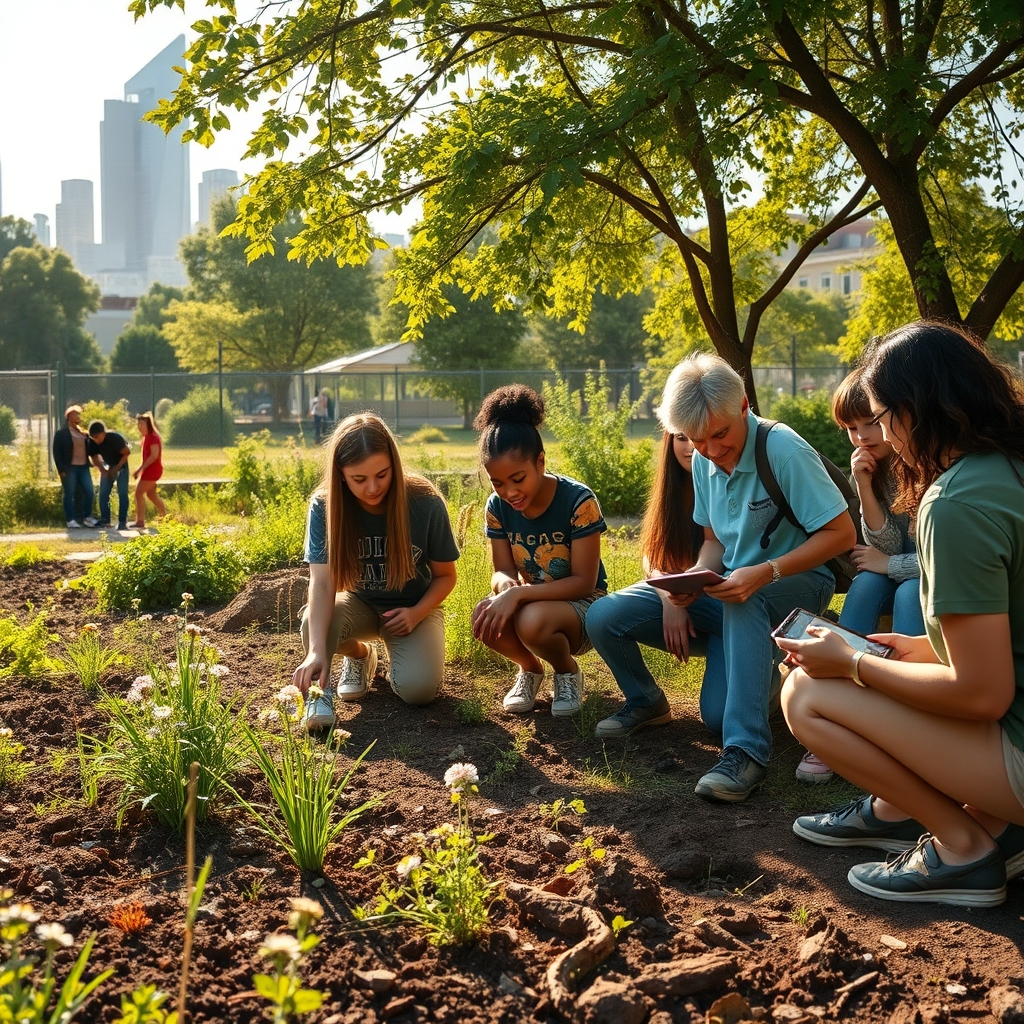
In a world where screens often dominate attention and concrete landscapes replace green spaces, the call to reconnect with the natural world grows louder. Environmental education, when woven into the fabric of service learning, does more than teach—it transforms. It turns abstract concepts into lived experiences, fostering a generation of learners who don’t just understand the planet’s challenges but feel compelled to act. This approach doesn’t just educate; it cultivates stewards, advocates, and problem-solvers who see themselves as part of the solution.
The Heart of Service Learning in Nature
Service learning is more than community service; it’s a pedagogy that blends meaningful action with intentional reflection. When applied to environmental education, it becomes a powerful tool for deepening understanding while addressing real-world issues. Imagine students restoring a degraded wetland, not as a one-off volunteer activity, but as part of a semester-long project where they study water quality, interview local stakeholders, and present their findings to city officials. This is learning with purpose—where the classroom extends into the community, and the curriculum is shaped by the needs of the environment.
Programs like these often begin with a simple question: *How can we make a difference here?* That question becomes the compass, guiding students through hands-on work that is as much about science as it is about empathy. They learn to see the land not as a resource to be exploited, but as a living system that sustains—and is sustained by—human and non-human communities alike. In the process, they develop skills that textbooks alone cannot teach: collaboration, critical thinking, and the ability to translate knowledge into action.
From Observation to Advocacy
One of the most compelling aspects of service learning in environmental education is its ability to move students from passive observation to active advocacy. Take, for example, a group of high school students in a coastal town who notice the decline of local shellfish populations. Through field-based inquiry, they discover the impact of pollution and overharvesting. Instead of stopping at research, they partner with marine biologists, design educational campaigns for their community, and even testify at town hall meetings. Their work doesn’t just raise awareness—it changes policies.
This shift from learning *about* the environment to learning *for* the environment is where the magic happens. It’s the difference between memorizing the water cycle and standing in a rainstorm, measuring runoff from a parking lot versus a forest floor. When students see the tangible results of their efforts—whether it’s a newly planted urban garden, a restored trail, or a policy change—they begin to understand their own agency. The environment is no longer something distant or abstract; it’s something they can touch, influence, and protect.
The Role of Place in Shaping Perspective
Place-based education lies at the core of this approach, anchoring learning in the unique ecology, history, and culture of a specific location. A river isn’t just a body of water; it’s the lifeblood of a community, a source of stories, conflicts, and opportunities. When students engage with their local environment through service learning, they develop a sense of place—a deep, personal connection to the land and its people. This connection is the foundation of environmental stewardship.
Consider a school in an urban neighborhood where students transform a vacant lot into a pollinator garden. They research native plants, interview elders about the neighborhood’s history, and work with local artists to create educational signage. The project becomes a living textbook, where every plant, every conversation, and every challenge teaches them something new. They’re not just learning about ecology; they’re learning about justice, equity, and the power of collective action. The garden becomes a symbol of what’s possible when a community comes together to heal the land and, in turn, heal itself.
Citizen Science: Bridging the Gap Between Classrooms and the Wild
Citizen science projects offer another avenue for service learning in environmental education. These initiatives invite students to contribute to real scientific research, often in collaboration with universities, nonprofits, or government agencies. Whether they’re monitoring air quality, tracking bird migrations, or documenting the spread of invasive species, students become part of a larger effort to understand and protect the planet. Their work has real-world implications, and the data they collect can inform policy decisions and conservation strategies.
For example, a middle school class participating in a global amphibian monitoring program might discover a decline in local frog populations. Their findings could prompt further investigation into habitat loss or pesticide use in their area. Suddenly, their science project isn’t just an assignment—it’s a call to action. They might organize a community clean-up, write letters to local representatives, or create a social media campaign to raise awareness. In the process, they learn that science isn’t just for scientists; it’s a tool for everyone to use in the service of the planet.
The Ripple Effects of Hands-On Learning
When students engage in environmental service learning, the impact extends far beyond the individual. Their projects often inspire others—peers, families, and community members—to get involved. A single school garden can spark a movement, leading to the creation of community gardens across a city. A student-led campaign to reduce plastic waste in a school cafeteria can influence district-wide policies. These ripple effects demonstrate the power of experiential learning to create systemic change.
Moreover, the skills and values developed through these experiences stay with students long after the project ends. They learn to see themselves as part of something larger than themselves, to approach problems with curiosity and resilience, and to act with a sense of responsibility toward the planet and its inhabitants. These are the qualities of a generation that doesn’t just inherit the Earth but actively works to protect and restore it.
As the sun sets over a restored prairie or a newly planted forest, it’s easy to see the tangible results of environmental service learning. But the true impact lies in the hearts and minds of the students who rolled up their sleeves and got their hands dirty. They’ve learned that the Earth isn’t just a place to visit—it’s a home to care for, a story to be part of, and a future to shape. And in that realization, they’ve taken the first steps toward becoming the stewards the planet so desperately needs.



