
The Unseen Bridge: How AI and Digital Literacy Are Crafting the Future of Inclusive and Experiential Learning
In an era where technology permeates every facet of our lives, education stands at a pivotal crossroads. The integration of Artificial Intelligence in Education is not merely a trend but a transformative force, reshaping how we perceive learning, teaching, and equity in the classroom. As classrooms evolve into dynamic ecosystems, the synergy between AI and Digital Literacy is emerging as the unseen bridge connecting learners to a world of possibilities, regardless of their background or abilities.
The Rise of AI-Driven Personalized Learning
Gone are the days when one-size-fits-all education could suffice. Today, Personalized Learning powered by AI is revolutionizing how students engage with content. Intelligent systems analyze individual learning patterns, adapting in real-time to meet the unique needs of each learner. Whether it’s through Intelligent Tutoring Systems that provide instant feedback or Learning Analytics that identify knowledge gaps, AI is enabling educators to craft tailored experiences that foster deeper understanding and retention. This shift is not just about efficiency; it’s about empowering students to take ownership of their learning journeys, making education more inclusive and accessible than ever before.
The Role of Generative Tools in Fostering Creativity
Generative AI tools are no longer confined to the realm of science fiction. In classrooms, they are becoming catalysts for creativity and innovation. From generating interactive lesson plans to assisting students in brainstorming ideas for Project-Based Learning, these tools are breaking down barriers to expression. For instance, students with language difficulties or learning disabilities can leverage AI-powered writing assistants to articulate their thoughts more clearly. Similarly, STEM Education benefits from generative tools that simulate complex experiments, allowing learners to explore concepts in a risk-free, virtual environment. The result? A classroom where creativity flourishes, and every student has the tools to succeed.
Blended Learning: The Best of Both Worlds
The pandemic accelerated the adoption of Hybrid Learning, but its true potential lies in its ability to blend the best of traditional and digital education. AI enhances this model by providing data-driven insights that help educators optimize their teaching strategies. For example, Learning Analytics can track student engagement in both physical and virtual classrooms, identifying which methods resonate most with learners. This hybrid approach also supports Inclusive Education by accommodating diverse learning styles, whether through asynchronous video lectures, interactive quizzes, or collaborative online projects. By leveraging AI, educators can create a seamless learning experience that bridges the gap between the classroom and the digital world.
Microlearning and Gamification: Engaging the Modern Learner
Attention spans are shrinking, and traditional teaching methods are struggling to keep pace. Enter Microlearning and Gamified Learning, two AI-driven approaches that are redefining engagement in education. Microlearning breaks down complex topics into bite-sized, digestible modules, making learning more manageable and less overwhelming. Meanwhile, gamification introduces elements of competition, rewards, and interactivity, transforming education into an immersive experience. AI-powered platforms can dynamically adjust the difficulty of gamified lessons, ensuring that students remain challenged but not frustrated. This approach not only boosts motivation but also fosters Critical Thinking and problem-solving skills, preparing students for the complexities of the real world.
The Intersection of AI and Experiential Learning
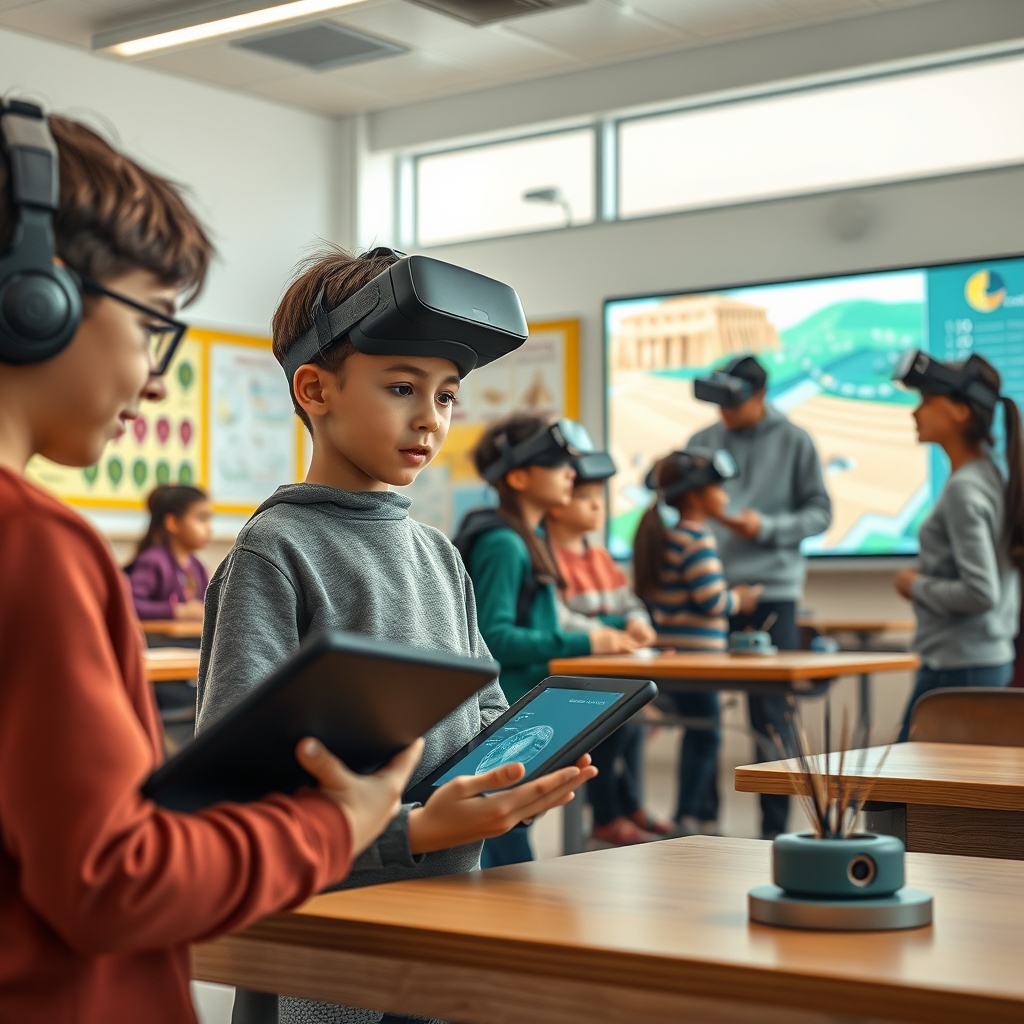
Experiential learning has long been hailed as one of the most effective ways to engage students, and AI is taking it to new heights. Through Virtual Reality (VR) and Augmented Reality (AR), AI is creating immersive environments where students can explore historical events, conduct virtual dissections, or even simulate space missions. These experiences are not just engaging; they are transformative, allowing learners to apply theoretical knowledge in practical, real-world scenarios. Moreover, AI can personalize these experiences, adapting them to individual learning styles and paces. For example, a student struggling with a concept in Science Technology Engineering Mathematics (STEM) can receive additional guidance within the VR environment, reinforcing their understanding through hands-on practice.
Digital Literacy: The Foundation of Future-Ready Education
As AI becomes more integrated into education, Digital Literacy is no longer optional—it’s a necessity. Students must not only learn how to use technology but also understand its implications, from data privacy to ethical considerations. AI can play a crucial role in developing these skills by providing interactive lessons on digital citizenship, critical evaluation of online sources, and responsible use of generative tools. By fostering digital literacy, educators are equipping students with the tools they need to navigate an increasingly digital world, ensuring they are not just consumers of technology but informed, ethical creators.
Bridging the Equity Gap with AI
One of the most profound impacts of AI in education is its potential to bridge the Educational Equity gap. Intelligent systems can identify and address disparities in access to resources, ensuring that all students, regardless of their socioeconomic background, have the opportunity to thrive. For example, AI-powered platforms can provide real-time translation services for non-native speakers, or offer text-to-speech capabilities for students with visual impairments. Additionally, Online Degree Programs and Lifelong Learning initiatives powered by AI are making education more accessible to adult learners and those in remote or underserved communities. By democratizing access to quality education, AI is not just leveling the playing field—it’s redefining what’s possible.
The journey of integrating AI into education is still in its early stages, but its potential is undeniable. As we stand on the brink of this digital transformation, the focus must remain on harnessing technology to create learning experiences that are not only innovative but also inclusive, equitable, and deeply human. The future of education is not about replacing teachers with machines but about empowering educators and learners alike with the tools they need to explore, create, and grow in a world where the boundaries of knowledge are constantly expanding. In this evolving landscape, AI is not just a tool—it’s a partner in shaping a brighter, more inclusive future for all.



