
Beyond the Classroom Walls: How Place-Based Education Ignites Lifelong Curiosity
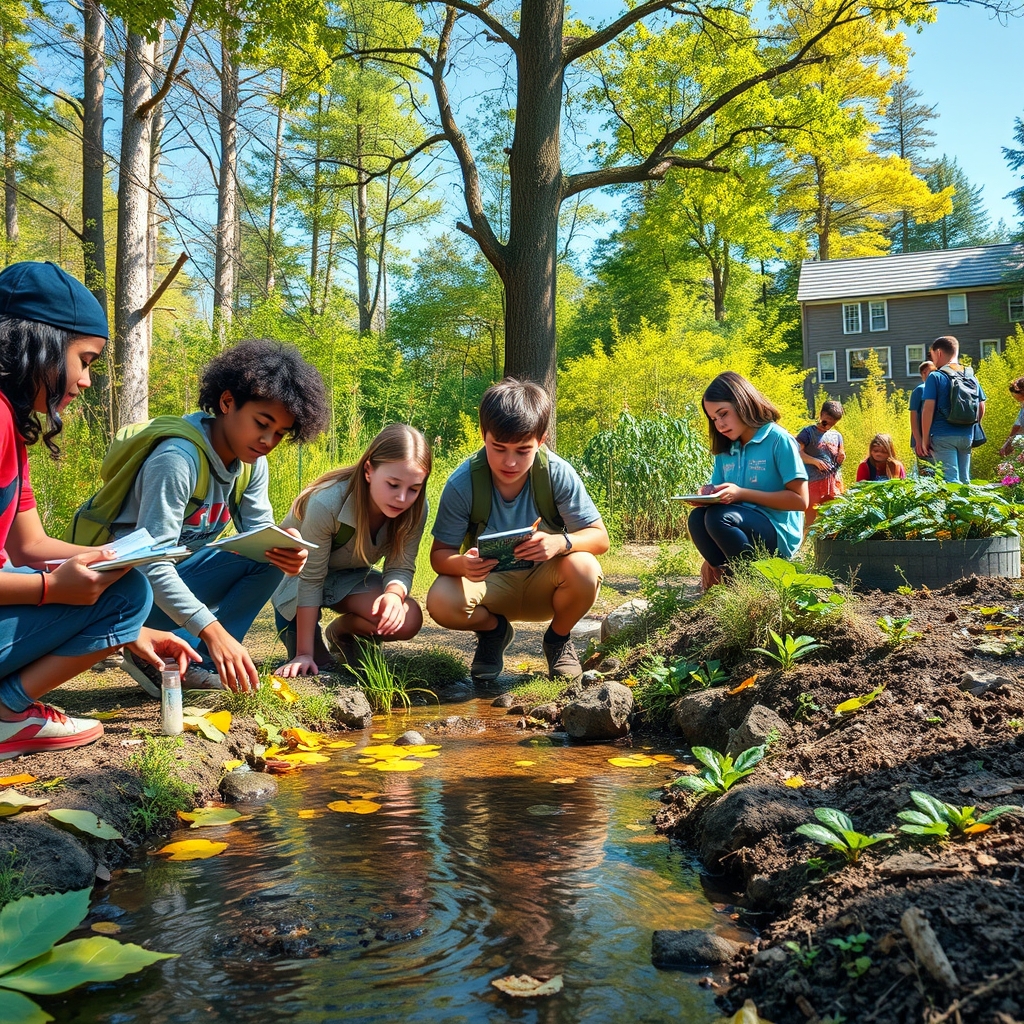
Imagine a classroom where the boundaries extend far beyond four walls, where the rustling leaves, the babbling brook, and the urban hum of a bustling neighborhood become the textbooks. This is the essence of place-based education, a pedagogical approach that roots learning in the local environment, culture, and community. It’s not just about taking students outside; it’s about immersing them in the world around them, transforming abstract concepts into tangible, lived experiences. In an era where screens dominate attention and standardized tests dictate curricula, place-based education offers a refreshing antidote—one that fosters curiosity, connection, and a deep sense of belonging.
The Philosophy Behind Place-Based Learning
At its core, place-based education is built on the belief that learning is most meaningful when it is relevant to the learner’s context. This philosophy draws from the work of educational theorists like John Dewey, who championed experiential learning, and Paulo Freire, who emphasized the importance of education that is rooted in the realities of students’ lives. Unlike traditional classroom settings, where knowledge is often siloed into subjects, place-based education weaves together disciplines—science, history, art, and social studies—into a cohesive narrative that reflects the complexities of the real world.
For example, a unit on water conservation might begin with a field trip to a local river, where students test water quality, interview community members about historical usage, and explore the ecological impact of pollution. Back in the classroom, they might design a public awareness campaign or create art installations using recycled materials. The learning isn’t confined to a worksheet or a textbook; it’s alive, dynamic, and deeply personal.
Why the Outdoors Becomes the Ultimate Teacher
The natural world is one of the most powerful classrooms available to us. Research has shown that time spent outdoors enhances cognitive function, reduces stress, and fosters creativity. In place-based education, nature isn’t just a backdrop for learning—it’s an active participant. Whether it’s a forest school in Scandinavia, where children spend entire days exploring woodlands, or a citizen science project in a suburban park, where students collect data on local biodiversity, the outdoors provides endless opportunities for hands-on learning.
Consider the story of a middle school in Portland, Oregon, where students transformed a vacant lot into a thriving community garden. Over the course of a year, they learned about soil composition, plant biology, and sustainable agriculture. They also grappled with larger questions about food security, urban planning, and social justice. The project didn’t just teach them about science; it taught them about their role in the world and the power of collective action. This is the magic of place-based education—it turns abstract ideas into concrete actions, and students into active citizens.
The Role of Community in Shaping Learning
Place-based education thrives on collaboration. It breaks down the barriers between schools and communities, inviting local experts, elders, and organizations to become co-educators. In a small town in Appalachia, students might work with historians to document oral histories of coal mining families. In a coastal city, they might partner with marine biologists to monitor the health of coral reefs. These partnerships not only enrich the learning experience but also strengthen the bonds between schools and the communities they serve.
Service learning is a natural extension of this approach. When students engage in projects that address real community needs—such as organizing a recycling program, restoring a wetland, or teaching younger children about local ecology—they develop empathy, leadership skills, and a sense of agency. They see firsthand how their actions can make a difference, and this realization often sparks a lifelong commitment to civic engagement.
Overcoming Challenges: From Logistics to Mindset
Despite its many benefits, place-based education is not without its challenges. Teachers may face logistical hurdles, such as securing transportation, obtaining permissions for field trips, or navigating safety concerns. There’s also the challenge of aligning place-based projects with standardized curricula and assessments. However, many educators have found creative solutions to these obstacles. Some schools adopt a hybrid model, blending classroom instruction with outdoor experiences. Others leverage technology, using apps and digital tools to document learning in the field and share it with a wider audience.
Perhaps the biggest hurdle is shifting the mindset around what education should look like. For decades, the dominant model has been one of rote memorization and passive learning. Place-based education, by contrast, demands active participation, critical thinking, and adaptability. It requires teachers to step into the role of facilitators rather than lecturers, guiding students as they explore, question, and create. This shift can be daunting, but the rewards—engaged students, vibrant communities, and a generation of learners who see themselves as stewards of the world—are well worth the effort.
Cultivating a Generation of Lifelong Learners
The true power of place-based education lies in its ability to cultivate a love of learning that extends far beyond the school years. When students see the relevance of their education in their daily lives, they become more motivated, more curious, and more resilient. They learn to ask questions, seek answers, and take initiative—skills that are invaluable in an ever-changing world. Moreover, by connecting with their local environment and community, they develop a sense of place and purpose that grounds them in an increasingly globalized society.
In a world where children spend an average of seven hours a day in front of screens, place-based education offers a vital counterbalance. It reminds us that learning isn’t something that happens only within the confines of a classroom. It happens in the garden, the forest, the city street, and the community center. It happens when we roll up our sleeves, get our hands dirty, and engage with the world in all its messy, beautiful complexity. And perhaps most importantly, it happens when we realize that we are not just passive recipients of knowledge, but active participants in shaping our own education—and our own futures.
The ripple effects of this approach are profound. Students who learn through place-based education often carry its lessons with them long after they leave school. They become adults who value collaboration over competition, who see challenges as opportunities for growth, and who understand that their actions have consequences—not just for themselves, but for the world around them. In this way, place-based education doesn’t just teach content; it shapes character, fosters resilience, and inspires a lifelong love of learning that transcends the boundaries of any single subject or setting.



