
Beyond the Textbook: How AI and Project-Based Learning Are Cultivating Tomorrow’s Innovators
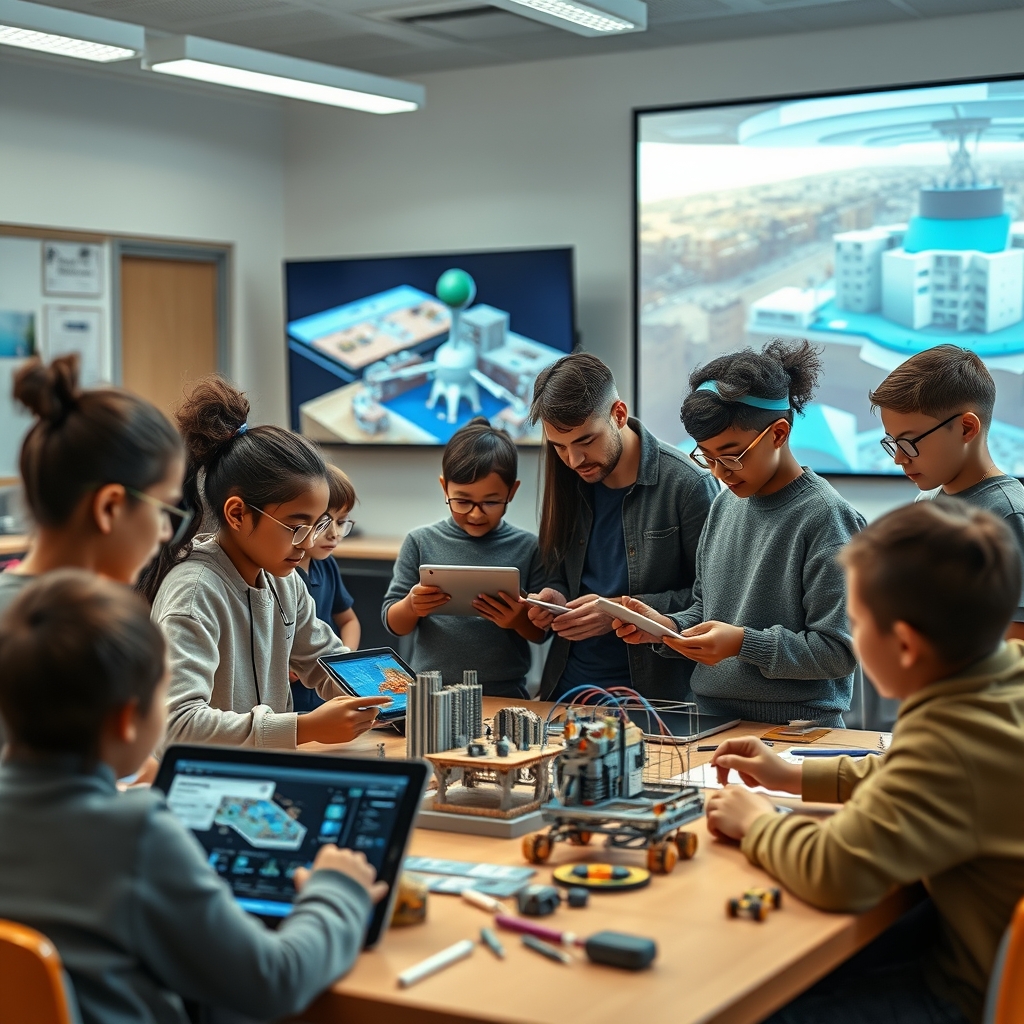
Education is no longer confined to the static pages of a textbook or the rigid structure of a traditional classroom. As digital transformation reshapes industries, it is also redefining how we approach learning, particularly through the integration of Artificial Intelligence (AI) and Project-Based Learning (PBL). These methodologies are not just enhancing education—they are revolutionizing it by fostering critical thinking, interdisciplinary learning, and experiential learning in ways previously unimaginable. For educators, students, and lifelong learners, this shift represents an opportunity to move beyond memorization and embrace a dynamic, hands-on approach to knowledge acquisition.
The Power of Project-Based Learning in a Digital Age
Project-Based Learning is an instructional method where students gain knowledge and skills by working for an extended period to investigate and respond to an authentic, engaging, and complex question, problem, or challenge. Unlike traditional rote learning, PBL encourages students to explore real-world issues, collaborate with peers, and develop solutions that have tangible impacts. This approach aligns seamlessly with the demands of the modern workforce, where problem-solving, creativity, and adaptability are highly valued.
However, PBL is not without its challenges. Designing meaningful projects that align with curriculum standards, ensuring equitable participation, and providing personalized feedback can be daunting for educators. This is where AI steps in as a game-changer. By leveraging generative tools and learning analytics, teachers can create more effective, inclusive, and scalable PBL experiences. For instance, AI can help generate project ideas tailored to students’ interests and skill levels, ensuring that each learner is both challenged and engaged.
AI as the Catalyst for Personalized and Inclusive PBL
One of the most significant advantages of AI in education is its ability to personalize learning experiences. In a PBL context, AI can analyze student performance data to identify strengths, weaknesses, and learning preferences. This enables educators to differentiate instruction and provide targeted support, ensuring that no student is left behind. For example, an AI-powered platform might suggest additional resources for a student struggling with a particular concept or recommend advanced challenges for those who have mastered the material.
Moreover, AI can enhance inclusive education by accommodating diverse learning needs. Students with disabilities, language barriers, or different cognitive styles can benefit from AI-driven tools such as real-time transcription services, adaptive learning interfaces, and personalized feedback systems. These tools not only level the playing field but also empower students to take ownership of their learning journey. By integrating AI into PBL, educators can create environments where every student has the opportunity to thrive.
Bridging Disciplines: The Role of Interdisciplinary Learning
The challenges of the 21st century—climate change, global health crises, and technological disruption—are complex and interconnected. Addressing them requires more than expertise in a single discipline; it demands interdisciplinary learning, where students integrate knowledge and skills from multiple fields to solve real-world problems. PBL is inherently interdisciplinary, as projects often require students to draw from science, technology, engineering, mathematics (STEM), humanities, and the arts.
AI can further enhance interdisciplinary learning by facilitating connections between disparate subjects. For example, a project on sustainable urban development might require students to apply principles of environmental science, economics, and civic engagement. AI tools can help students navigate these connections by providing curated resources, suggesting collaborative workflows, and even generating interdisciplinary project ideas. By breaking down the silos between subjects, AI and PBL prepare students to think holistically and innovate across boundaries.
Experiential Learning in a Virtual World
Experiential learning—the process of learning through experience—is a cornerstone of PBL. Traditionally, this has involved hands-on activities, field trips, or internships. However, the rise of digital tools has expanded the possibilities for experiential learning, making it more accessible and scalable. Virtual reality (VR), augmented reality (AR), and AI-driven simulations allow students to engage in immersive experiences that would otherwise be impossible or impractical.
For instance, students studying marine biology can explore coral reefs through VR, while aspiring engineers can design and test prototypes in a virtual lab. AI enhances these experiences by providing real-time feedback, adapting scenarios based on student performance, and even generating dynamic challenges. These tools not only make learning more engaging but also help students develop practical skills in a risk-free environment. By blending the physical and digital worlds, AI and PBL create opportunities for experiential learning that are limited only by imagination.
The Future of Education: Lifelong Learning and Beyond
As the pace of technological change accelerates, the concept of education as a finite phase of life is becoming obsolete. Lifelong learning—the continuous, self-motivated pursuit of knowledge—is now essential for personal and professional growth. AI and PBL are uniquely positioned to support this shift by making learning more flexible, accessible, and engaging. Online degree programs, microlearning modules, and gamified learning platforms are just a few examples of how AI is democratizing education, allowing learners of all ages to acquire new skills at their own pace.
For educators, this means rethinking traditional roles and embracing a facilitator mindset. Rather than being the sole source of knowledge, teachers become guides who help students navigate complex projects, leverage AI tools, and develop critical thinking skills. This shift is not without challenges, but it also presents an exciting opportunity to redefine what it means to be an educator in the digital age. By integrating AI and PBL, schools can create learning environments that are not only more effective but also more equitable, ensuring that every student has the tools they need to succeed in an ever-changing world.
The fusion of AI and Project-Based Learning is more than a trend—it is a fundamental reimagining of education. By moving beyond the textbook and embracing hands-on, interdisciplinary, and personalized learning experiences, we are not just preparing students for the future; we are empowering them to shape it. The classroom of tomorrow is not a place where knowledge is passively received but a dynamic space where curiosity is nurtured, challenges are embraced, and innovation is the norm. As we continue to explore the possibilities of these tools, one thing is clear: the future of learning is not just about what students know, but what they can do with what they know.



