
Where the Wild Things Teach: How Citizen Science Projects Bridge Classrooms and the Natural World
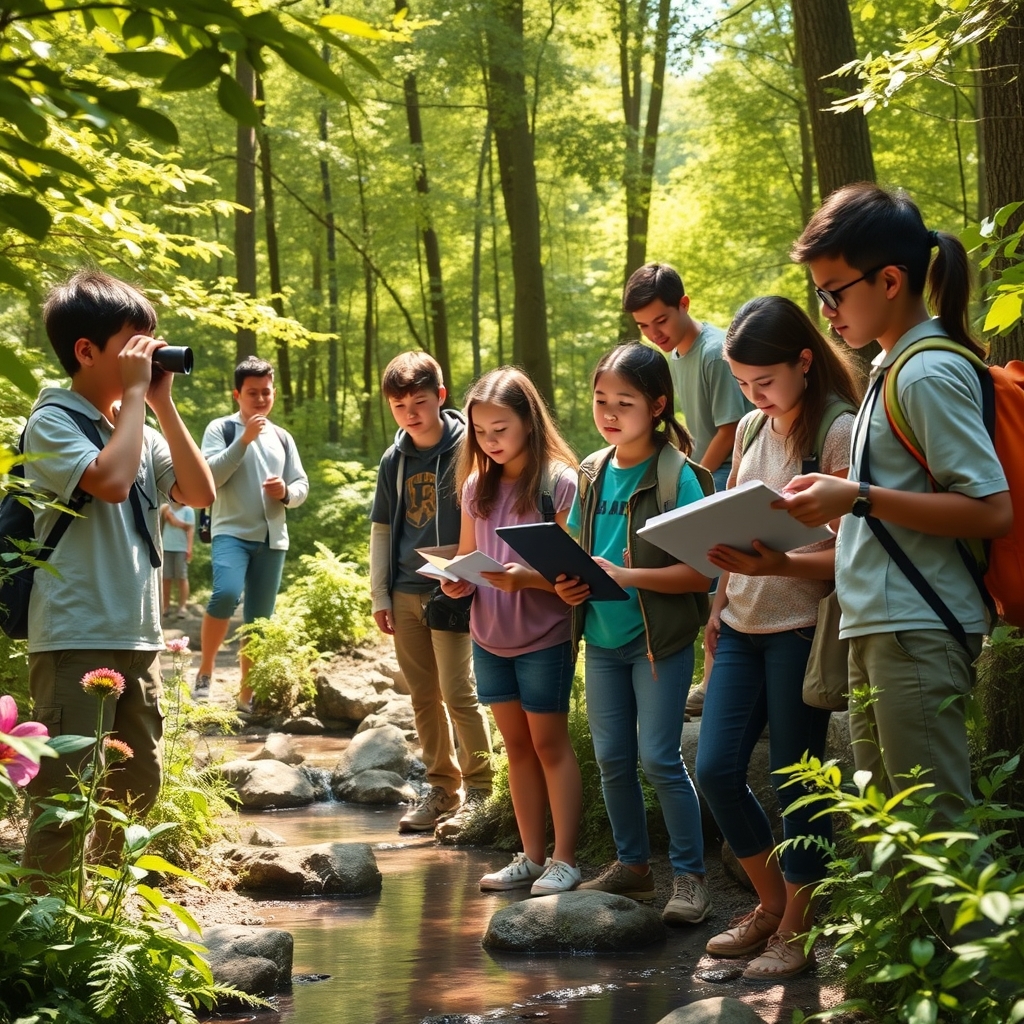
In an era where screens dominate attention and concrete jungles replace green ones, the call to reconnect with nature grows louder—and more urgent. Yet, the solution isn’t just about spending more time outdoors; it’s about reimagining how we learn there. Citizen science projects offer a compelling answer, blending the rigor of scientific inquiry with the wonder of real-world exploration. These initiatives transform students from passive observers into active participants in the scientific process, fostering a deeper understanding of the environment while contributing to global research efforts.
The Power of Participation
Citizen science isn’t a new concept, but its integration into education has revolutionized how students engage with the natural world. Unlike traditional classroom experiments, which often feel abstract or disconnected, citizen science projects immerse learners in authentic research. Whether tracking bird migrations, monitoring water quality in local streams, or documenting urban biodiversity, students collect real data that scientists use to address pressing environmental challenges. This hands-on approach doesn’t just teach scientific methods; it instills a sense of ownership and responsibility toward the planet.
For example, programs like eBird and iNaturalist invite participants to record observations of wildlife, turning everyday walks into opportunities for discovery. Students learn to identify species, recognize ecological patterns, and understand the impact of human activity on ecosystems. The data they contribute becomes part of a larger, global dataset, giving their work purpose beyond the classroom. This shift from hypothetical scenarios to real-world impact is a cornerstone of experiential learning, where knowledge is constructed through direct experience rather than rote memorization.
From Data to Action: The Ripple Effect of Citizen Science
The benefits of citizen science extend far beyond academic achievement. These projects cultivate critical thinking, collaboration, and problem-solving skills—qualities essential for navigating an increasingly complex world. When students analyze their findings, they’re not just crunching numbers; they’re grappling with questions like, “Why are pollinator populations declining in our community?” or “How does urbanization affect local waterways?” These inquiries spark conversations about sustainability, ethics, and civic engagement, bridging the gap between science and society.
Moreover, citizen science fosters a sense of place, a key tenet of place-based education. By focusing on local environments, students develop a deeper connection to their communities. They begin to see themselves as stewards of the land, capable of making a difference. This shift in perspective is particularly powerful in urban settings, where nature might feel distant or inaccessible. Projects like Tree Pittsburgh’s urban forest monitoring or Riverkeepers’ water testing initiatives bring the wild into the city, proving that science—and learning—can happen anywhere.
Breaking Down Barriers
One of the most transformative aspects of citizen science is its ability to democratize education. Traditional science education often relies on expensive equipment, specialized knowledge, and controlled environments, which can create barriers for many learners. Citizen science, by contrast, thrives on accessibility. A smartphone, a notebook, and curiosity are often all that’s needed to get started. This low barrier to entry makes it an ideal tool for informal learning environments, such as after-school programs, community centers, or even family outings.
For educators, citizen science offers a flexible framework that can be adapted to any curriculum or setting. Whether teaching biology, environmental science, or even social studies, teachers can integrate projects that align with their learning objectives. For instance, a history class might explore how land use has changed over time by comparing historical maps with current citizen science data. A math class could analyze trends in local wildlife populations using statistical methods. The possibilities are as vast as the natural world itself.
Building Community Through Shared Discovery
Citizen science also strengthens community bonds by bringing people together around a common goal. Schools, local organizations, and scientists collaborate to design projects that address community needs, fostering a sense of collective ownership. For example, a neighborhood might rally around a project to restore a degraded wetland, with students leading the charge in data collection and advocacy. These experiences teach cooperation, leadership, and the power of collective action—skills that extend far beyond the realm of science.
Service learning, a pedagogical approach that combines community service with academic learning, finds a natural partner in citizen science. When students apply their scientific knowledge to address real-world problems, they see the tangible impact of their efforts. This not only reinforces their learning but also builds empathy and a sense of civic responsibility. Whether planting native species to support pollinators or organizing a community clean-up, students learn that their actions matter.
The Future of Learning: Wild, Connected, and Curious
As education continues to evolve, the demand for learning experiences that are relevant, engaging, and meaningful grows stronger. Citizen science projects meet this demand by offering a dynamic blend of inquiry, exploration, and real-world application. They remind us that the best classrooms aren’t always four-walled spaces but the vast, untamed landscapes where curiosity thrives. By turning students into scientists, these projects don’t just teach about the natural world—they inspire a lifelong relationship with it, one observation at a time.
In a world where the boundaries between humans and nature often feel blurred, citizen science offers a way to reconnect, not just with the environment, but with the very process of discovery. It’s a reminder that learning isn’t confined to textbooks or tests but is alive in every rustling leaf, every chirping bird, and every ripple in a stream. And perhaps most importantly, it shows that when we step outside, we don’t just find nature—we find ourselves.



