
The Alchemy of Dirt and Discovery: How Project-Based Learning in Nature Forges Unshakable Minds
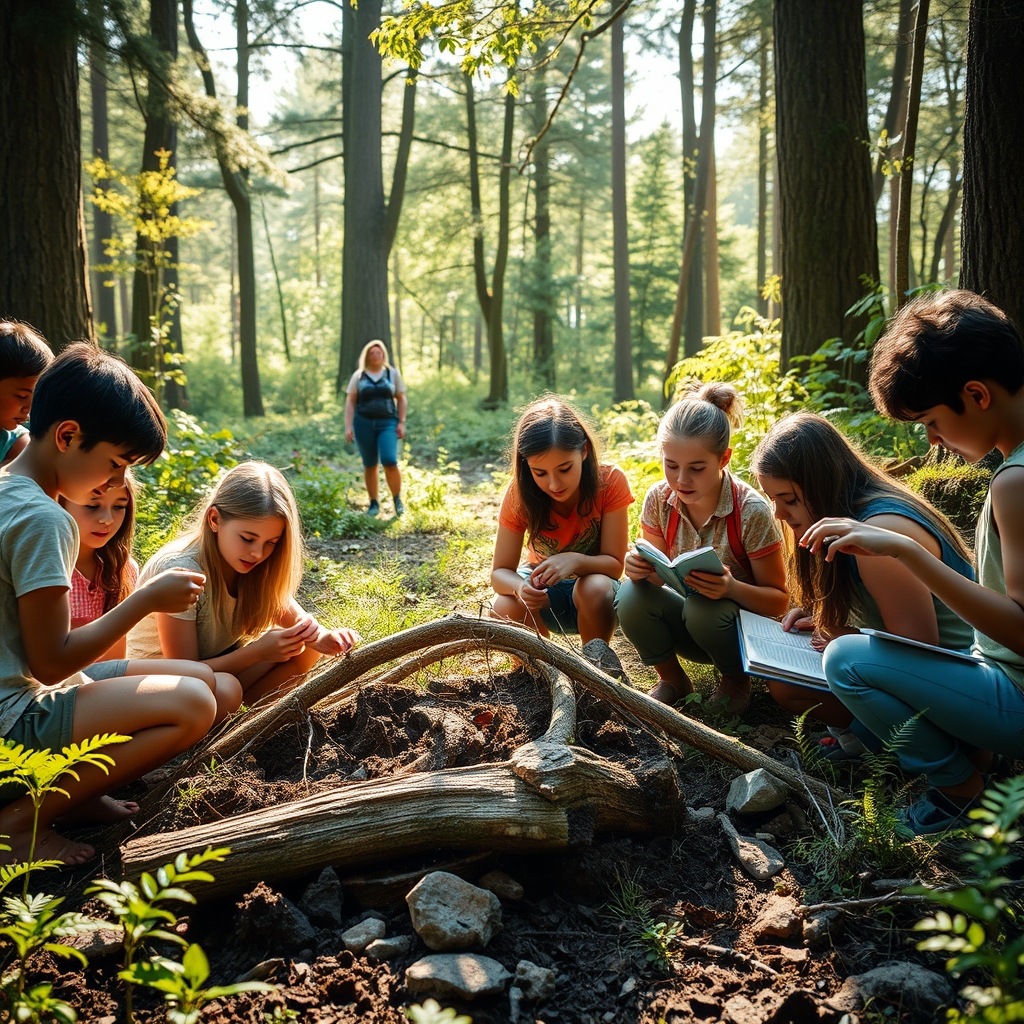
There is a quiet magic in the way a child’s fingers sift through damp earth, the way their eyes widen at the sudden skitter of a beetle across a sunlit log. These moments are not mere distractions from learning—they are the learning. Project-based learning (PBL) in outdoor settings transforms the natural world into a living laboratory, where curiosity is the compass and the environment itself becomes the most patient of teachers. Unlike traditional classrooms, where knowledge is often delivered in neat, predetermined packages, the outdoors demands engagement, adaptability, and a willingness to embrace the unpredictable. It is here, amid the messiness of real-world exploration, that the most profound lessons take root.
The Pedagogy of Possibility
At its core, project-based learning is an educational approach that anchors learning in complex, real-world challenges. When transplanted into outdoor or nature-based settings, PBL transcends the boundaries of textbooks and whiteboards, inviting students to grapple with questions that have no easy answers. Imagine a group of middle schoolers tasked with restoring a degraded urban wetland. Their project isn’t just about memorizing the stages of ecological succession; it’s about testing soil samples, interviewing local conservationists, and designing a restoration plan that balances human needs with environmental stewardship. The wetland becomes their classroom, their data, and their motivation.
This kind of learning is inherently interdisciplinary. A single project might weave together ecology, mathematics (for data analysis), writing (for grant proposals or public awareness campaigns), and even art (for designing interpretive signs). The outdoors doesn’t respect the artificial silos of academic subjects—it presents problems that demand holistic thinking. For students, this means their work feels meaningful, not because a teacher says so, but because it has tangible, visible consequences in the world around them.
Why the Outdoors Amplifies PBL
The natural world is the ultimate catalyst for project-based learning, and the reasons are both psychological and practical. First, nature is inherently engaging. The sensory richness of a forest, a riverbank, or even a city park stimulates curiosity in ways that a sterile classroom cannot. The rustle of leaves, the scent of rain on soil, the texture of bark—these experiences awaken a sense of wonder that is the foundation of deep learning. When students are emotionally invested in their surroundings, their motivation to explore, question, and create skyrockets.
Second, the outdoors is unpredictable. A project that begins with a simple question—”Why are the frogs disappearing from this pond?”—can quickly spiral into a web of interconnected investigations. Maybe the water quality is poor. Maybe invasive species are outcompeting native plants. Maybe human activity is altering the habitat. This unpredictability mirrors the complexity of real-world problems, teaching students to adapt, pivot, and persist in the face of uncertainty. It’s a far cry from the linear, step-by-step problems of a worksheet, and it prepares students for the kinds of challenges they’ll encounter in their adult lives.
The Role of Failure in Nature’s Classroom
One of the most valuable lessons the outdoors teaches is that failure is not the opposite of success—it’s a part of it. In a traditional classroom, failure is often stigmatized, a mark of inadequacy. But in nature, failure is inevitable. A student’s carefully constructed erosion-control barrier might wash away in a storm. A hypothesis about which plants attract the most pollinators might be disproven by observation. These setbacks aren’t roadblocks; they’re opportunities to refine, rethink, and try again. This iterative process is at the heart of both scientific inquiry and project-based learning.
Consider a high school group designing a citizen science project to monitor local air quality. Their first attempt at building sensors might yield inconsistent data. Instead of giving up, they troubleshoot, consult experts, and revise their approach. Through this process, they learn not just about electronics and environmental science, but about resilience, collaboration, and the value of persistence. These are the kinds of lessons that stick, long after the project is over.
Community as a Living Textbook
Project-based learning in outdoor settings often blurs the line between school and community. When students step outside, they encounter a network of potential mentors, collaborators, and stakeholders. A project on urban gardening might connect them with local farmers, nutritionists, or city planners. A study of local waterways could involve partnerships with environmental agencies, Indigenous knowledge keepers, or even other schools. These interactions enrich the learning experience, exposing students to diverse perspectives and real-world applications of their work.
Community involvement also amplifies the impact of student projects. When learners see that their work matters to others—when a community garden they designed feeds families, or a trail they mapped becomes a resource for hikers—their sense of agency grows. They begin to see themselves not just as students, but as contributors to something larger than themselves. This shift in identity is one of the most powerful outcomes of PBL in nature.
Designing Projects That Stick
Not all outdoor projects are created equal. The most effective ones share a few key characteristics. First, they are authentic. They tackle real problems with real stakes, whether it’s designing a wildlife corridor, advocating for a local policy change, or creating a field guide for a nearby park. Authenticity fuels motivation because students see the relevance of their work.
Second, they are student-driven. While teachers provide scaffolding and guidance, the best projects emerge from students’ own questions and interests. A project on bird migration might start with a student’s casual observation: “Why do we see more robins in the spring?” That question can blossom into a full-fledged investigation, with students designing experiments, analyzing data, and presenting their findings to local birding groups.
Finally, they are collaborative. The outdoors is a shared space, and the best projects reflect that. Students work in teams, pooling their strengths and learning to navigate differences in opinion, skill level, and work style. These collaborative skills are invaluable, not just in school, but in life.
The Ripple Effect
The benefits of project-based learning in nature extend far beyond academic achievement. Students who engage in these experiences often report higher levels of confidence, creativity, and a sense of connection to the natural world. They develop a toolkit of skills—critical thinking, problem-solving, communication—that serve them well in any field. Perhaps most importantly, they cultivate a mindset of curiosity and stewardship. They learn that the world is not a static place to be observed from a distance, but a dynamic, interconnected system in which they play an active role.
There is no single “right” way to integrate PBL into outdoor education. Some schools might start with short, structured projects—a day-long bioblitz to document local biodiversity, or a week-long service-learning trip to build trails. Others might adopt a more immersive approach, like a semester-long forest school program where students spend most of their time outdoors, learning through hands-on projects. The key is to start small, reflect often, and let the projects evolve organically. The goal isn’t perfection; it’s engagement, growth, and a deepening relationship with the world outside the classroom walls.
The dirt under a student’s fingernails, the callouses on their hands from building a bridge across a stream, the quiet pride in their eyes when they present their findings to a room of adults—these are the markers of a different kind of education. One that doesn’t just fill minds with facts, but shapes them into curious, capable, and compassionate problem-solvers. The outdoors doesn’t just change how students learn; it changes how they see themselves and their place in the world. And in a time when the challenges facing our planet demand creative, collaborative solutions, that might be the most important lesson of all.



