The AI-Powered Learning Ecosystem: How Intelligent Systems Are Crafting Dynamic, Equity-Driven Pathways for Lifelong Learners
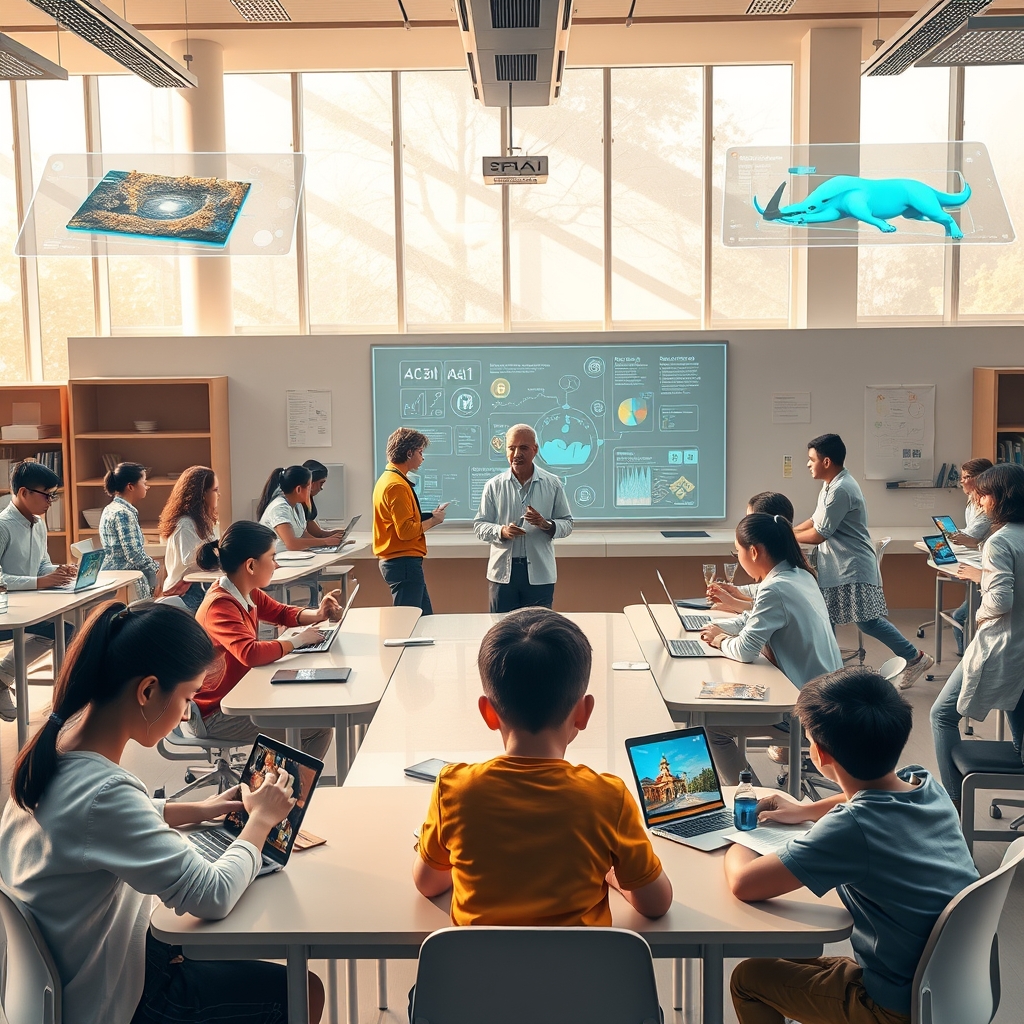
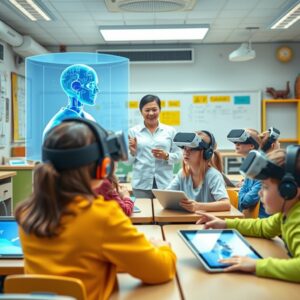
Imagine a classroom where every student’s unique strengths, challenges, and curiosities are not just acknowledged but actively nurtured—where the rhythm of learning adapts in real time, like a living organism responding to its environment. This is no longer a distant vision but a rapidly unfolding reality, thanks to the integration of artificial intelligence in education. AI is not merely augmenting traditional teaching methods; it is redefining the very architecture of learning, creating ecosystems that are dynamic, equity-driven, and deeply personalized. At the heart of this transformation lies a powerful synergy between technology and pedagogy, one that promises to dismantle barriers and unlock potential for learners of all ages and backgrounds.
The Rise of Adaptive Learning Environments
Adaptive learning, powered by AI, is one of the most groundbreaking advancements in modern education. Unlike the one-size-fits-all model of traditional classrooms, adaptive learning systems use algorithms to analyze a student’s performance, learning style, and pace, then tailor content and resources to meet their individual needs. Platforms like DreamBox, Knewton, and ScribeSense leverage machine learning to adjust difficulty levels, provide targeted feedback, and even predict where a student might struggle next. This level of personalization ensures that learners are neither bored by material that is too easy nor overwhelmed by concepts that are too advanced.
For educators, adaptive learning tools act as force multipliers, freeing them from the administrative burden of tracking progress manually. Instead, they can focus on what they do best: fostering critical thinking, creativity, and emotional intelligence. In a study conducted by the Bill & Melinda Gates Foundation, students using adaptive learning software showed significant improvements in math and reading comprehension, particularly among those who had previously struggled. The data underscores a critical truth: when technology meets pedagogy, the results can be transformative.
Bridging Gaps with Inclusive and Equitable Design
One of the most profound promises of AI in education is its potential to democratize learning. Historically, educational equity has been hampered by factors like socioeconomic status, geographic location, and learning disabilities. AI-driven tools are beginning to dismantle these barriers by providing accessible, high-quality learning experiences to students regardless of their circumstances. For instance, speech-to-text and text-to-speech technologies empower students with dyslexia or visual impairments, while AI-powered translation tools break down language barriers for non-native speakers.
Moreover, AI can help identify and mitigate biases in educational content. Tools like IBM’s AI Fairness 360 analyze textbooks, assessments, and curricula to detect implicit biases, ensuring that learning materials reflect diverse perspectives and experiences. This is particularly crucial in subjects like history and literature, where traditional narratives have often excluded marginalized voices. By fostering inclusivity, AI is not just leveling the playing field—it is redefining what the playing field looks like.
The Role of Learning Analytics in Shaping Outcomes
Learning analytics, another AI-driven innovation, is revolutionizing how educators understand and improve student outcomes. By collecting and analyzing data on student behavior, engagement, and performance, these systems provide actionable insights that can inform instructional strategies. For example, if a learning analytics platform detects that a group of students is consistently struggling with a particular concept, it can alert the teacher and suggest targeted interventions, such as additional resources or small-group instruction.
Beyond the classroom, learning analytics can help institutions identify broader trends and patterns. Universities and online learning platforms use these insights to refine course designs, improve retention rates, and even predict which students might be at risk of dropping out. The result is a more responsive and proactive educational system, one that prioritizes student success at every stage of the learning journey.
Generative AI and the Future of Experiential Learning
Generative AI, with its ability to create content, simulations, and interactive experiences, is opening new frontiers in experiential learning. Tools like OpenAI’s ChatGPT and Google’s Gemini can generate personalized learning scenarios, such as historical simulations, scientific experiments, or even creative writing prompts, tailored to a student’s interests and learning objectives. These AI-generated experiences allow learners to engage with content in a hands-on, immersive way, deepening their understanding and retention.
For example, a history teacher could use generative AI to create a virtual debate between historical figures, allowing students to explore different perspectives and develop critical thinking skills. Similarly, a science teacher might use AI to simulate complex experiments that would be too dangerous or expensive to conduct in a traditional lab. By blending creativity with technology, generative AI is transforming passive learning into an active, participatory process.
The Human Element: Balancing Technology and Empathy
While AI’s capabilities are undeniably powerful, it is essential to remember that technology alone cannot replace the human element in education. The most effective learning ecosystems are those that strike a balance between AI-driven personalization and the empathy, intuition, and emotional intelligence that only human educators can provide. Teachers play a crucial role in guiding students through complex social and emotional challenges, fostering collaboration, and instilling a love of learning that goes beyond test scores.
AI should be viewed as a tool that enhances, rather than replaces, the teacher-student relationship. For instance, an AI tutoring system might help a student master algebraic equations, but it is the teacher who inspires them to see the beauty and relevance of mathematics in the real world. By working in tandem, AI and educators can create learning experiences that are not only effective but also deeply meaningful.
The Path Forward: Lifelong Learning in the AI Era
As AI continues to evolve, so too will its impact on education. The future of learning is not static but dynamic, shaped by the interplay of technology, pedagogy, and human ingenuity. Microlearning platforms, gamified experiences, and intelligent tutoring systems are already making education more accessible and engaging, but the true potential of AI lies in its ability to foster lifelong learning. In a world where skills and knowledge become obsolete at an unprecedented pace, the ability to learn, unlearn, and relearn is more critical than ever.
AI-powered tools can help learners of all ages acquire new skills, explore new interests, and adapt to changing career landscapes. For example, platforms like Coursera and Udacity use AI to recommend courses based on a learner’s goals and past performance, creating personalized pathways for professional development. Meanwhile, corporate training programs leverage AI to deliver just-in-time learning, ensuring that employees have the skills they need to thrive in an ever-changing workplace.
The integration of AI in education is not just about preparing students for the future—it is about reimagining what education can be. By harnessing the power of intelligent systems, we can create learning ecosystems that are adaptive, inclusive, and deeply human. These ecosystems will not only equip learners with the knowledge and skills they need to succeed but also inspire them to become lifelong explorers, innovators, and problem-solvers. In this new era of education, the possibilities are as limitless as the curiosity of the learners themselves, and the journey has only just begun.