The Digital Canvas: How AI and Experiential Learning Are Painting the Future of Interdisciplinary Education
Education is no longer confined to the static pages of textbooks or the rigid structures of traditional classrooms. The digital transformation sweeping across industries has reached the heart of learning, reshaping how knowledge is acquired, applied, and mastered. At the intersection of artificial intelligence and experiential learning lies a dynamic canvas where students don’t just consume information—they interact with it, mold it, and see its real-world implications unfold before their eyes. This shift is not merely about integrating technology into education; it’s about reimagining the very essence of how we learn, teach, and grow in an increasingly complex world.
The Rise of the Digital Playground
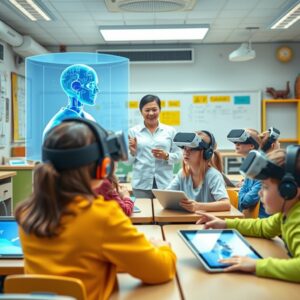
Imagine a classroom where history isn’t just read about but experienced through immersive simulations, where students step into the shoes of historical figures to navigate the challenges of their time. Picture a science lab where experiments are no longer limited by physical constraints, where AI-powered simulations allow learners to manipulate variables in real-time, observing outcomes that would be impossible to replicate in a traditional setting. This is the promise of experiential learning in the digital age—a playground where curiosity is the only prerequisite, and failure is not a setback but a stepping stone.
AI acts as the invisible architect of these experiences, adapting scenarios to the unique needs and learning paces of each student. For instance, an AI-driven platform might adjust the complexity of a historical simulation based on a student’s prior knowledge, ensuring they are neither overwhelmed nor underchallenged. This level of personalization transforms learning from a one-size-fits-all model into a tailored journey, where every student’s strengths and weaknesses are acknowledged and addressed. The result? A deeper, more meaningful engagement with the material, where learning is not just memorized but internalized.
Breaking Down Silos: The Power of Interdisciplinary Learning
The challenges of the 21st century do not fit neatly into the silos of traditional academic disciplines. Climate change, global health crises, and technological disruption require solutions that draw from multiple fields of knowledge. Yet, our education systems have long been structured around isolated subjects, leaving students ill-prepared to connect the dots between them. AI and experiential learning are dismantling these barriers, creating opportunities for interdisciplinary exploration that mirrors the complexity of the real world.
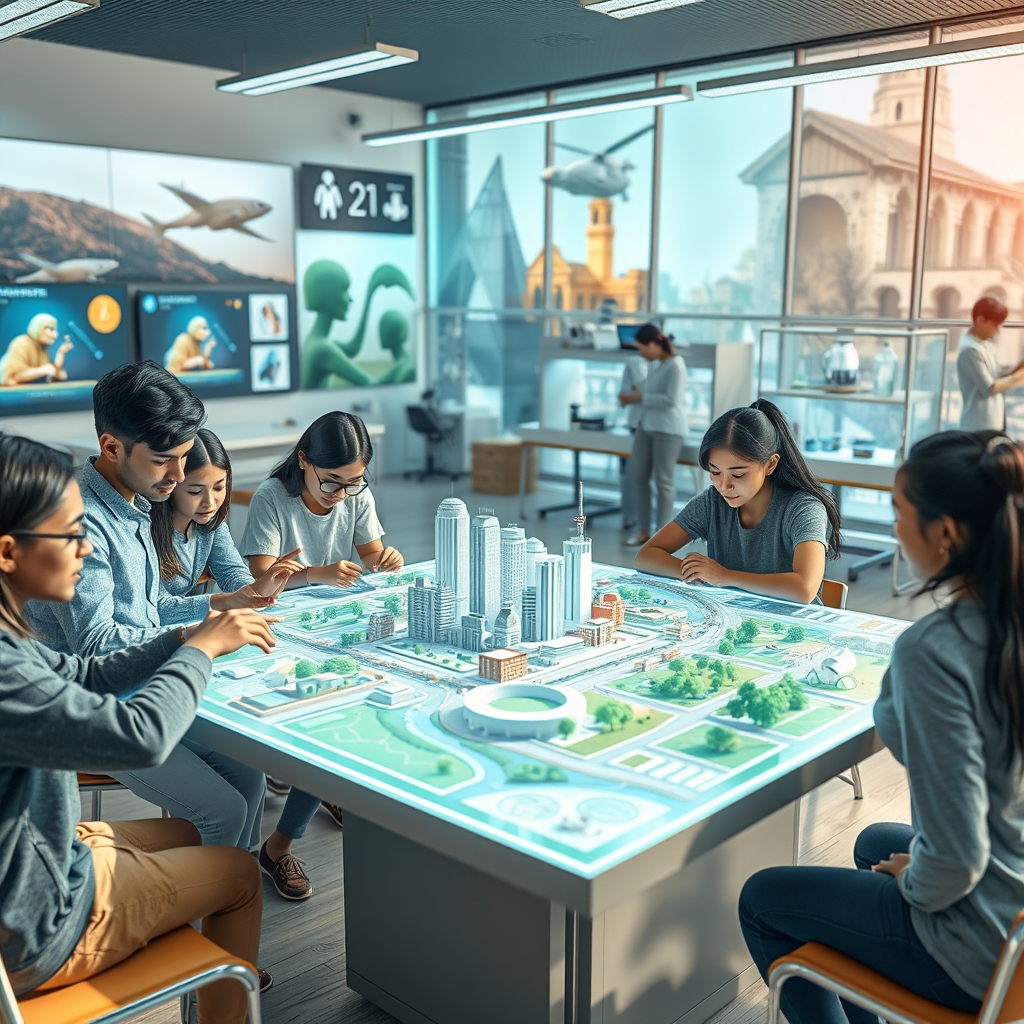
Consider a project where students are tasked with designing a sustainable city. This endeavor requires an understanding of environmental science, urban planning, economics, and even sociology. AI-powered tools can provide real-time data, simulate the impact of design choices, and offer feedback that integrates insights from all these disciplines. Students are no longer passive recipients of fragmented knowledge; they become active problem-solvers, weaving together threads from diverse fields to create holistic solutions. This approach not only enhances their understanding of individual subjects but also cultivates the critical thinking skills necessary to tackle multifaceted challenges.
The Role of Generative Tools in Crafting Dynamic Learning Experiences
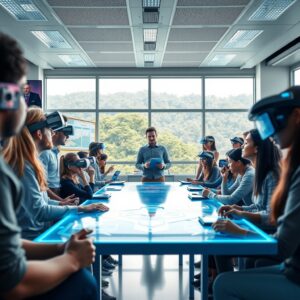
Generative AI tools are pushing the boundaries of what’s possible in experiential learning. These tools can create custom content, from interactive stories to virtual environments, that adapt to the learner’s progress and interests. For example, a generative AI might craft a narrative where students must use their knowledge of biology and chemistry to solve a medical mystery, with the story evolving based on their decisions. This level of interactivity makes learning feel less like a chore and more like an adventure, where every choice has consequences and every outcome is a lesson.
Moreover, generative tools can democratize access to high-quality educational experiences. Students in under-resourced schools or remote areas can benefit from AI-generated simulations and interactive content that would otherwise be out of reach. This not only levels the playing field but also ensures that every learner, regardless of their background, has the opportunity to engage with material in a way that resonates with them. The potential for inclusivity is immense, as AI can tailor content to accommodate different learning styles, languages, and abilities.
Learning Analytics: The Compass for Educators
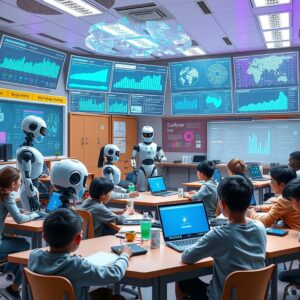
While AI and experiential learning are transforming the student experience, they are also providing educators with unprecedented insights into the learning process. Learning analytics, powered by AI, can track a student’s progress in real-time, identifying patterns and pinpointing areas where they may be struggling. This data-driven approach allows teachers to intervene early, offering targeted support before small challenges become significant obstacles.
For example, an AI system might detect that a student is consistently struggling with a particular concept in a physics simulation. The system can then suggest additional resources, adjust the difficulty of future tasks, or even alert the teacher to provide one-on-one guidance. This proactive approach ensures that no student is left behind, fostering a more equitable learning environment where every individual has the opportunity to succeed. Furthermore, learning analytics can help educators refine their teaching strategies, identifying which methods are most effective and where adjustments are needed.
The Human Element: Balancing Technology and Connection
As we embrace the possibilities of AI and experiential learning, it’s essential to remember that technology is a tool, not a replacement for human connection. The most effective learning experiences strike a balance between digital innovation and the irreplaceable role of educators as mentors, guides, and facilitators. AI can provide the data, simulations, and personalization, but it is the human touch that inspires, motivates, and fosters a sense of community in the classroom.
Educators must be empowered to integrate these tools into their teaching in a way that enhances, rather than diminishes, the human element of learning. Professional development opportunities, collaborative platforms, and ongoing support are crucial to ensuring that teachers feel confident and capable in this new landscape. When technology and humanity work in harmony, the result is a learning environment that is not only innovative but also deeply human, where students feel seen, supported, and inspired to reach their full potential.
The future of education is not a distant dream but a reality that is unfolding before our eyes. As AI and experiential learning continue to evolve, they are painting a new picture of what it means to learn—one where curiosity is nurtured, boundaries are pushed, and every student has the opportunity to thrive. The digital canvas is vast, and the possibilities are limitless. The question is no longer whether we can transform education, but how far we are willing to go to make it a reality for every learner, in every corner of the world.