
The Invisible Mentor: How Intelligent Tutoring Systems Are Redefining Personalized and Experiential Learning
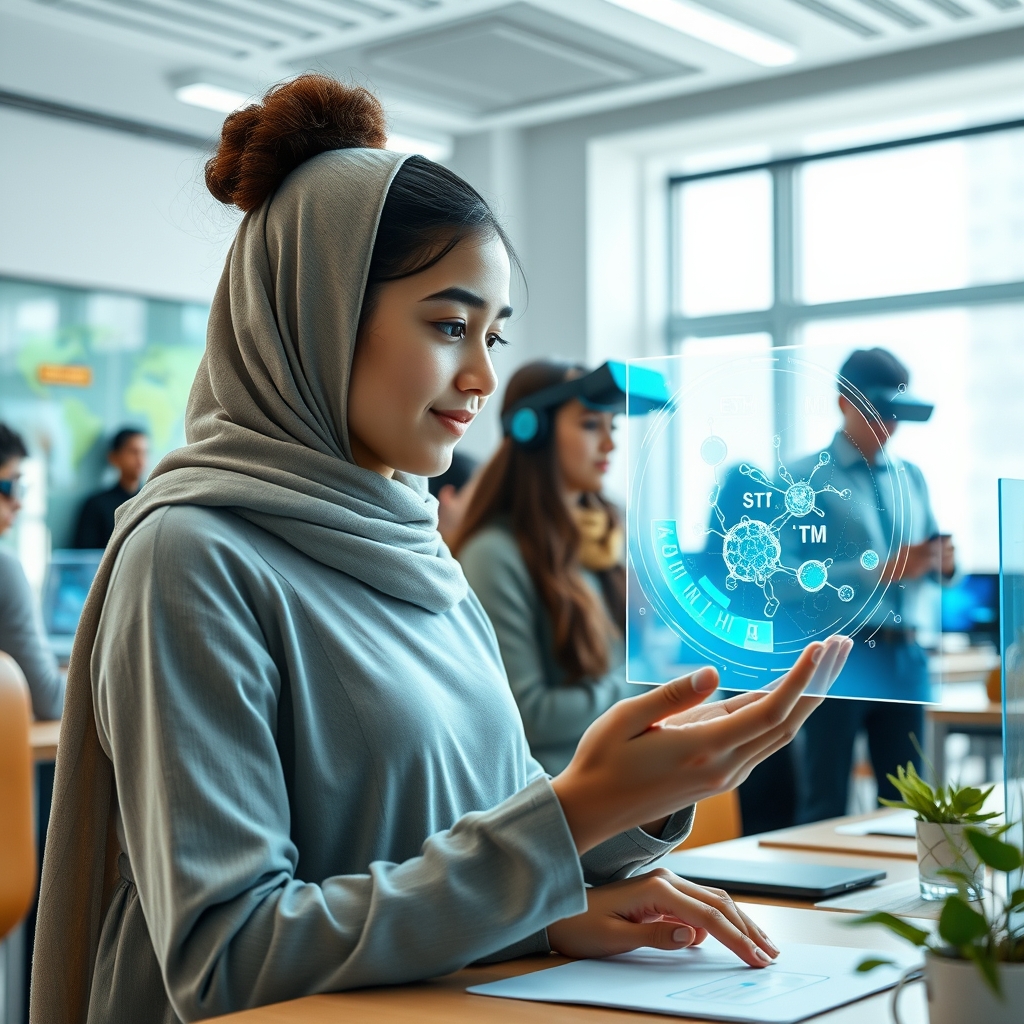
Imagine a classroom where every student has a dedicated mentor, one who understands their strengths, weaknesses, and unique learning style. This mentor doesn’t tire, doesn’t judge, and is available around the clock, ready to guide, challenge, and inspire. While this might sound like an educator’s dream, it is rapidly becoming a reality through the power of Intelligent Tutoring Systems (ITS). These AI-driven platforms are not just supplementing traditional education—they are transforming it, making personalized and experiential learning accessible to students regardless of their background or location.
The Evolution of Intelligent Tutoring Systems
Intelligent Tutoring Systems have come a long way since their inception in the 1970s. Early iterations were rudimentary, often limited to rule-based interactions that felt more like programmed drills than genuine mentorship. However, advancements in artificial intelligence, particularly in machine learning and natural language processing, have propelled ITS into a new era. Today’s systems can adapt in real-time to a student’s progress, offering tailored feedback, adjusting difficulty levels, and even identifying emotional cues to provide encouragement or additional support.
One of the most significant breakthroughs in ITS is their ability to simulate one-on-one tutoring. Unlike traditional classrooms, where a single teacher must divide their attention among dozens of students, ITS can focus entirely on the individual. This level of personalization is particularly impactful in subjects like mathematics and science, where students often progress at vastly different paces. For example, a student struggling with algebraic concepts might receive step-by-step guidance, while another who grasps the material quickly could be challenged with advanced problems or real-world applications.
Bridging the Gap Between Personalization and Experiential Learning
Personalized learning and experiential learning have long been seen as distinct approaches, but ITS are merging these methodologies in ways that were previously unimaginable. Experiential learning, which emphasizes hands-on, real-world experiences, thrives when students can explore concepts at their own pace and in their own way. ITS facilitate this by creating dynamic, interactive environments where students can experiment, fail, and iterate without fear of judgment.
Consider a biology student using an ITS to learn about cellular respiration. Instead of passively reading a textbook or watching a lecture, the student might engage in a virtual lab where they manipulate variables like oxygen levels or glucose concentrations to observe their effects on ATP production. The ITS can guide the student through the process, offering hints when they struggle, asking probing questions to deepen understanding, and even connecting the experiment to broader ecological or medical concepts. This blend of personalization and experiential learning not only enhances comprehension but also fosters a deeper, more lasting engagement with the material.
The Role of Learning Analytics in Shaping the Future
At the heart of ITS lies learning analytics, a field that harnesses data to improve educational outcomes. By tracking a student’s interactions with the system—such as the time spent on tasks, the types of mistakes made, and the strategies used to solve problems—ITS can generate a detailed profile of the learner’s progress. This data is then used to refine the tutoring approach, ensuring that each student receives the support they need to succeed.
Learning analytics also enable educators to identify broader trends and patterns. For instance, if a significant number of students are struggling with a particular concept, teachers can adjust their instruction to address the gap. Similarly, ITS can flag students who may be at risk of falling behind, allowing educators to intervene early with targeted support. This proactive approach to education is particularly valuable in promoting educational equity, as it ensures that no student is left behind due to a lack of resources or attention.
Democratizing Education Through Accessibility and Inclusivity
One of the most profound impacts of ITS is their potential to democratize education. In many parts of the world, access to quality education is limited by factors such as geography, socioeconomic status, or physical disabilities. ITS can help bridge these gaps by providing high-quality, personalized learning experiences to students regardless of their circumstances. For example, a student in a rural area with limited access to advanced STEM courses can use an ITS to explore complex topics like quantum physics or genetic engineering, guided by the same level of expertise as their peers in urban centers.
Moreover, ITS are playing a crucial role in inclusive education by adapting to the needs of students with disabilities. For instance, systems equipped with speech recognition and text-to-speech capabilities can support students with visual or hearing impairments, while those with adaptive interfaces can accommodate students with motor skill challenges. By removing barriers to learning, ITS are helping to create a more equitable educational landscape where every student has the opportunity to thrive.
The Human Element: Balancing Technology and Empathy
While ITS offer incredible potential, it’s essential to recognize that they are not a replacement for human educators. Instead, they serve as powerful tools that can augment and enhance the teaching process. The most effective implementations of ITS are those that strike a balance between technology and human connection. For example, an ITS might handle the bulk of personalized instruction and feedback, freeing up teachers to focus on building relationships, fostering collaboration, and providing the emotional support that students need to succeed.
Furthermore, the data generated by ITS can help educators better understand their students’ needs, allowing them to tailor their teaching strategies accordingly. This symbiotic relationship between technology and human insight is key to creating learning environments that are both high-tech and high-touch. It ensures that while students benefit from the precision and adaptability of AI, they also receive the empathy, encouragement, and mentorship that only a human can provide.
Preparing Students for a Future Shaped by AI
As ITS become more integrated into education, they are not only transforming how students learn but also what they learn. In an era where artificial intelligence is reshaping industries and job markets, digital literacy and critical thinking are more important than ever. ITS can help students develop these skills by exposing them to AI-driven tools and encouraging them to think critically about the role of technology in their lives. For example, a student using an ITS to learn coding might also explore the ethical implications of AI, such as bias in algorithms or the impact of automation on employment.
Additionally, ITS can foster interdisciplinary learning by connecting concepts across subjects. A student studying climate change might use an ITS to explore the scientific principles behind global warming, analyze economic policies aimed at reducing carbon emissions, and even create a digital art project to raise awareness about the issue. This holistic approach not only deepens understanding but also prepares students for the complex, interconnected challenges they will face in the future.
The rise of Intelligent Tutoring Systems marks a pivotal moment in education, one where technology and pedagogy converge to create learning experiences that are as unique as the students themselves. By harnessing the power of AI, these systems are breaking down barriers, personalizing instruction, and making experiential learning accessible to all. Yet, their true potential lies not in replacing human educators but in empowering them to do what they do best: inspire, guide, and connect with students on a deeply personal level. As we look to the future, the invisible mentors of ITS will continue to redefine what it means to learn, ensuring that every student has the tools and support they need to succeed in an ever-changing world.



