
Bridging Worlds: How Virtual Exchange Programs Are Redefining Global Education
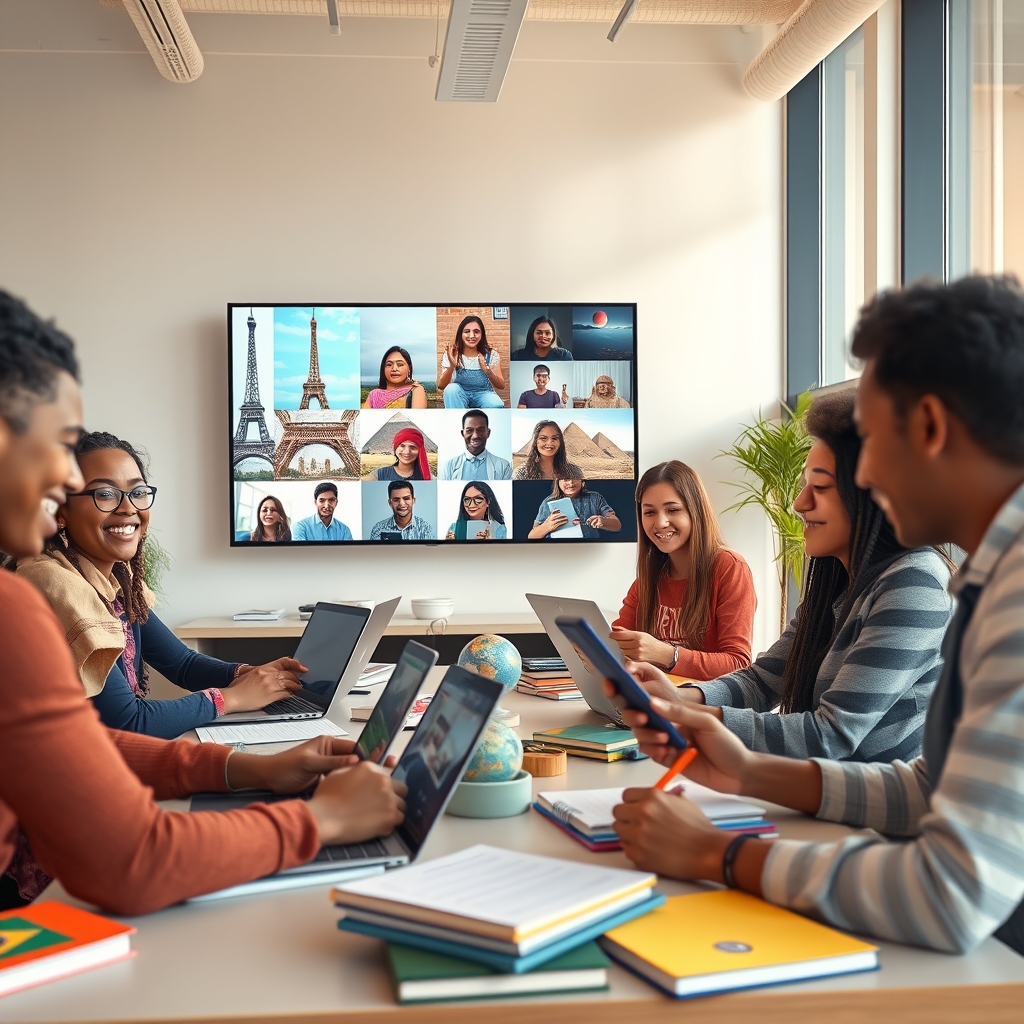
In an era where physical borders are increasingly permeable yet occasionally restrictive, the landscape of international education is undergoing a profound transformation. While traditional study abroad programs have long been the gold standard for fostering intercultural competence and global citizenship, a new paradigm is emerging—one that leverages technology to democratize access to cross-cultural learning. Virtual exchange programs are not merely a stopgap solution for those unable to travel; they represent a revolutionary shift in how we conceptualize and deliver global education.
The Rise of Virtual Exchange: A Response to Modern Challenges
The COVID-19 pandemic served as a catalyst for the rapid adoption of virtual learning environments, but the roots of virtual exchange programs stretch back further. Initiatives like the Stevens Initiative, funded by the U.S. Department of State, have been connecting classrooms across continents since 2015, long before the term “Zoom fatigue” entered our collective vocabulary. These programs pair students from different countries in collaborative projects, discussions, and even language exchange programs, all conducted through digital platforms.
What makes virtual exchange particularly compelling is its ability to transcend the limitations of traditional study abroad. High costs, visa restrictions, and personal circumstances often prevent students from participating in semester abroad or short-term study abroad programs. Virtual exchange eliminates these barriers, offering a low-cost, inclusive alternative that can be integrated into existing curricula without the need for tuition waivers or complex credit transfer systems. For institutions, this means the ability to scale global learning experiences without the logistical challenges of host family placements or pre-departure orientations.
Cultural Immersion in the Digital Age
Critics of virtual exchange often argue that it cannot replicate the depth of cultural immersion experienced during a physical stay abroad. While it’s true that sharing a meal with a host family or navigating the streets of a foreign city offers unparalleled opportunities for cross-cultural adaptability, virtual exchange programs are not designed to replace these experiences. Instead, they complement them by fostering intercultural competence in ways that are uniquely suited to the digital age.
For example, a student in Brazil might collaborate with peers in Japan on a project about sustainable urban development, using real-time translation tools to bridge language gaps. Through structured discussions and reflective exercises, participants develop foreign language fluency, empathy, and a nuanced understanding of global issues—skills that are increasingly vital in our interconnected world. Moreover, virtual exchange can serve as a gateway to future physical mobility, inspiring students to pursue Erasmus Plus scholarships or other study abroad opportunities once circumstances allow.
The Role of Intercultural Competence in Virtual Settings
Intercultural competence—the ability to communicate and interact effectively across cultures—is often cited as the most valuable outcome of study abroad programs. Virtual exchange programs are proving that this skill can be cultivated without ever leaving one’s home. By engaging in structured dialogues, role-playing scenarios, and collaborative problem-solving, students learn to navigate cultural differences in real time. These interactions are not passive; they require active listening, adaptability, and a willingness to challenge one’s own assumptions.
Programs like Soliya’s Connect Program, which brings together students from the Middle East, North Africa, and the United States, demonstrate how virtual exchange can foster meaningful connections even in politically sensitive contexts. Participants report increased empathy, reduced stereotypes, and a greater sense of global citizenship—outcomes that rival those of traditional study abroad programs.
Educational Tourism Reimagined
The concept of educational tourism has traditionally been associated with physical travel, whether through short-term study abroad programs or cultural exchange initiatives. However, virtual exchange is expanding this definition to include digital exploration. Students can now “visit” museums in Paris, attend lectures at universities in Nairobi, or participate in language exchange programs with native speakers in Buenos Aires—all from their laptops.
This shift has significant implications for institutions and educators. Virtual exchange programs can be integrated into existing courses, allowing professors to incorporate global perspectives without the need for extensive planning or additional resources. For students, this means access to a broader range of experiences, from virtual internships with international organizations to collaborative research projects with peers across the globe. The flexibility of virtual exchange also makes it an ideal option for non-traditional students, such as working professionals or those with family commitments, who may not have the time or resources to participate in traditional study abroad programs.
Challenges and Opportunities
Despite its promise, virtual exchange is not without challenges. Time zone differences, technological disparities, and language barriers can hinder participation, particularly for students in low-resource settings. Additionally, the lack of physical presence can make it difficult to build the same level of trust and camaraderie that often develops during in-person exchanges. However, these challenges are not insurmountable. Innovative solutions, such as asynchronous collaboration tools and culturally sensitive facilitation, are helping to bridge these gaps.
For institutions, the key to success lies in thoughtful design. Virtual exchange programs should be more than just video calls; they require clear learning objectives, structured activities, and opportunities for reflection. Pre-departure orientations—even in a virtual format—can help prepare students for the cultural and technical aspects of the experience. Moreover, partnerships with local organizations can enhance the authenticity of the exchange, providing students with real-world contexts for their learning.
The Future of Global Learning
As we look to the future, it’s clear that virtual exchange will play an increasingly important role in global education. The lessons learned during the pandemic have accelerated the adoption of digital learning tools, and institutions are now more open than ever to hybrid models that combine virtual and physical mobility. For example, a student might begin their global learning journey with a virtual exchange program, later transitioning to a semester abroad or a short-term study abroad experience. This blended approach not only reduces costs but also allows students to build confidence and cultural competence before embarking on a physical journey.
Moreover, virtual exchange has the potential to make global education more sustainable. By reducing the carbon footprint associated with international travel, these programs align with the growing emphasis on environmental responsibility in higher education. They also offer a scalable solution for institutions looking to expand their global reach without the logistical complexities of traditional study abroad programs.
The world is changing, and so too must our approach to education. Virtual exchange programs are not a replacement for the transformative power of cultural immersion, but they are a powerful tool in their own right—one that can make global learning more accessible, inclusive, and adaptable to the needs of a diverse student population. As we continue to navigate an increasingly interconnected yet complex world, the ability to connect, collaborate, and learn across cultures will be more important than ever. Whether through a screen or in person, the journey toward global citizenship begins with a single step, and virtual exchange is making that step possible for millions of students around the world.



