
The AI-Powered Classroom: How Intelligent Systems Are Fostering Critical Thinking and Interdisciplinary Mastery
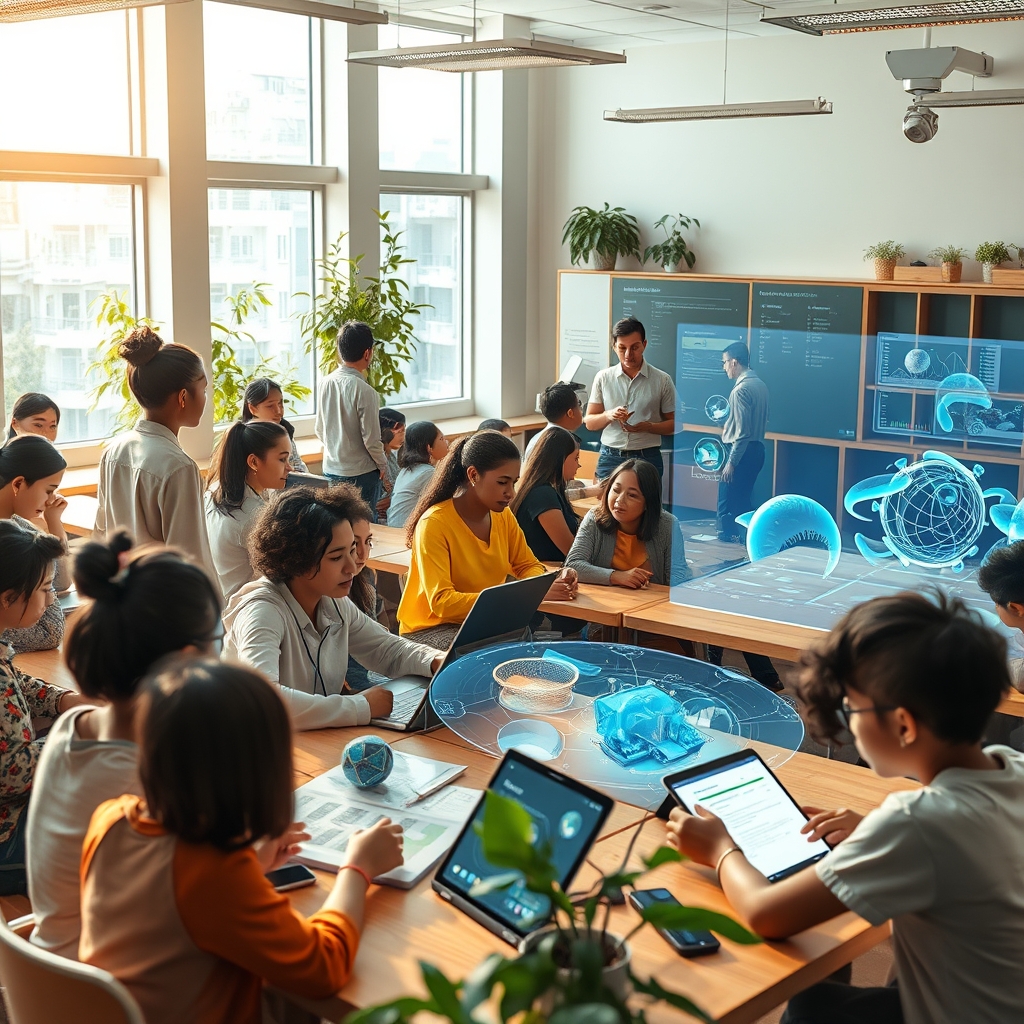
The modern classroom is no longer confined to four walls or bound by the limitations of traditional pedagogy. As artificial intelligence (AI) continues to permeate educational ecosystems, it is not merely automating administrative tasks or personalizing learning paths—it is fundamentally reshaping how students engage with knowledge, solve problems, and connect disciplines. The fusion of AI with critical thinking and interdisciplinary learning is creating a dynamic environment where education is not just about absorbing information but about mastering the art of thinking, questioning, and innovating.
The Evolution of Critical Thinking in the Age of AI
Critical thinking has long been hailed as a cornerstone of education, but its definition and application are evolving in the digital age. Traditionally, critical thinking involved analyzing arguments, evaluating evidence, and constructing logical conclusions. While these skills remain essential, AI is expanding the scope of what it means to think critically. Today, students must also learn to interrogate the biases of algorithms, question the ethical implications of AI-generated content, and discern the reliability of information in an era of deepfakes and misinformation.
Intelligent tutoring systems (ITS) are playing a pivotal role in this evolution. Unlike conventional digital learning tools, ITS platforms like Carnegie Learning’s MATHia or ScribeSense adapt in real-time to a student’s cognitive processes, identifying gaps in reasoning and prompting deeper reflection. For example, when a student struggles with a math problem, an ITS doesn’t just provide the correct answer—it guides them through the steps, asks probing questions, and encourages them to explore alternative solutions. This iterative process fosters metacognition, enabling students to become more aware of their own thinking patterns and refine their problem-solving strategies.
From Silos to Synthesis: AI as the Catalyst for Interdisciplinary Learning
Education has historically been structured around disciplinary silos—math, science, literature, and history often exist as separate entities with little overlap. However, the complex challenges of the 21st century, from climate change to global health crises, demand a more integrated approach. AI is breaking down these barriers by enabling interdisciplinary learning experiences that mirror real-world problem-solving.
Generative AI tools, such as large language models (LLMs) and AI-powered simulation platforms, allow students to explore connections between seemingly unrelated fields. For instance, a project on sustainable urban development might require students to apply principles of engineering, economics, environmental science, and sociology. AI can facilitate this by generating case studies, simulating urban growth scenarios, or even creating interactive models that visualize the impact of policy decisions. Platforms like LabXchange, developed by Harvard University, use AI to curate personalized learning pathways that weave together content from multiple disciplines, helping students see the bigger picture.
Moreover, AI-driven project-based learning (PBL) is taking interdisciplinary education to new heights. In a PBL environment, students work on extended projects that require them to draw on knowledge from various subjects. AI can enhance this process by providing real-time feedback, suggesting resources, or even acting as a collaborative partner. For example, an AI tool like IBM’s Watson can analyze a student’s research on renewable energy and recommend connections to historical energy policies, ethical considerations, or advancements in materials science. This not only deepens their understanding but also cultivates the ability to synthesize information from diverse sources.
Bridging the Gap: AI and Educational Equity in Interdisciplinary Spaces
While AI holds immense potential for fostering critical thinking and interdisciplinary learning, its benefits must be accessible to all students, regardless of their background. Educational equity remains a pressing challenge, particularly in underserved communities where access to technology and high-quality resources is limited. AI can help bridge this gap by democratizing access to personalized and interdisciplinary learning experiences.
One way AI is promoting equity is through adaptive learning platforms that tailor content to individual needs. For students who may lack foundational knowledge in a subject, AI can provide targeted support, ensuring they are not left behind. For advanced learners, AI can offer enrichment opportunities that challenge them to explore interdisciplinary connections. For example, platforms like DreamBox Learning use AI to adjust the difficulty of math problems in real-time, ensuring that each student is engaged at their optimal level of challenge.
AI is also making interdisciplinary learning more inclusive by accommodating diverse learning styles and abilities. For students with disabilities, AI-powered tools like speech-to-text software, real-time captioning, and predictive text can remove barriers to participation. Additionally, AI can help educators design more inclusive curricula by identifying and addressing biases in instructional materials. For instance, an AI tool might flag a history textbook that overlooks the contributions of marginalized groups, prompting educators to supplement it with more diverse perspectives.
The Role of Educators in an AI-Augmented Classroom
Despite the transformative potential of AI, the role of educators remains irreplaceable. AI is not a substitute for human interaction but a tool that can amplify the impact of great teaching. In an AI-augmented classroom, educators shift from being the sole source of knowledge to facilitators of learning, guiding students as they navigate complex interdisciplinary projects and develop critical thinking skills.
Teachers can leverage AI to gain deeper insights into student learning. Learning analytics tools, powered by AI, can track student progress across subjects, identify patterns in their thinking, and highlight areas where they may be struggling. This data allows educators to intervene early, providing targeted support and fostering a growth mindset. For example, if a student consistently struggles with connecting concepts across disciplines, an educator can design activities that explicitly encourage interdisciplinary thinking, such as debates or simulations that require synthesizing knowledge from multiple fields.
Furthermore, educators play a crucial role in ensuring that AI is used ethically and responsibly. They must teach students how to critically evaluate AI-generated content, recognize algorithmic biases, and understand the limitations of AI tools. By fostering digital literacy, educators empower students to use AI as a partner in their learning journey rather than a crutch.
The Future of Learning: A Symphony of Human and Machine Intelligence
The integration of AI into education is not about replacing human intelligence but about creating a symphony where technology and human ingenuity harmonize to unlock new possibilities. As AI continues to evolve, it will enable even more sophisticated forms of critical thinking and interdisciplinary learning, preparing students to tackle the multifaceted challenges of the future. Imagine a classroom where AI-powered simulations allow students to explore the ethical implications of genetic engineering, or where virtual reality experiences transport them to historical events, enabling them to analyze the interplay of culture, politics, and science. These are not distant fantasies but tangible realities on the horizon.
Yet, the true power of AI in education lies not in the technology itself but in how we choose to use it. By embracing AI as a tool for fostering critical thinking, breaking down disciplinary barriers, and promoting educational equity, we can create learning environments that are not only more effective but also more inclusive and inspiring. The future of education is not about students passively consuming information but about them actively engaging with the world, asking bold questions, and forging connections across disciplines. In this future, AI is not the teacher—it is the catalyst that empowers both educators and students to reach new heights of understanding and innovation.



