The Unseen Curriculum: How Cooperative Learning in Nature Builds Communities of Curious Minds
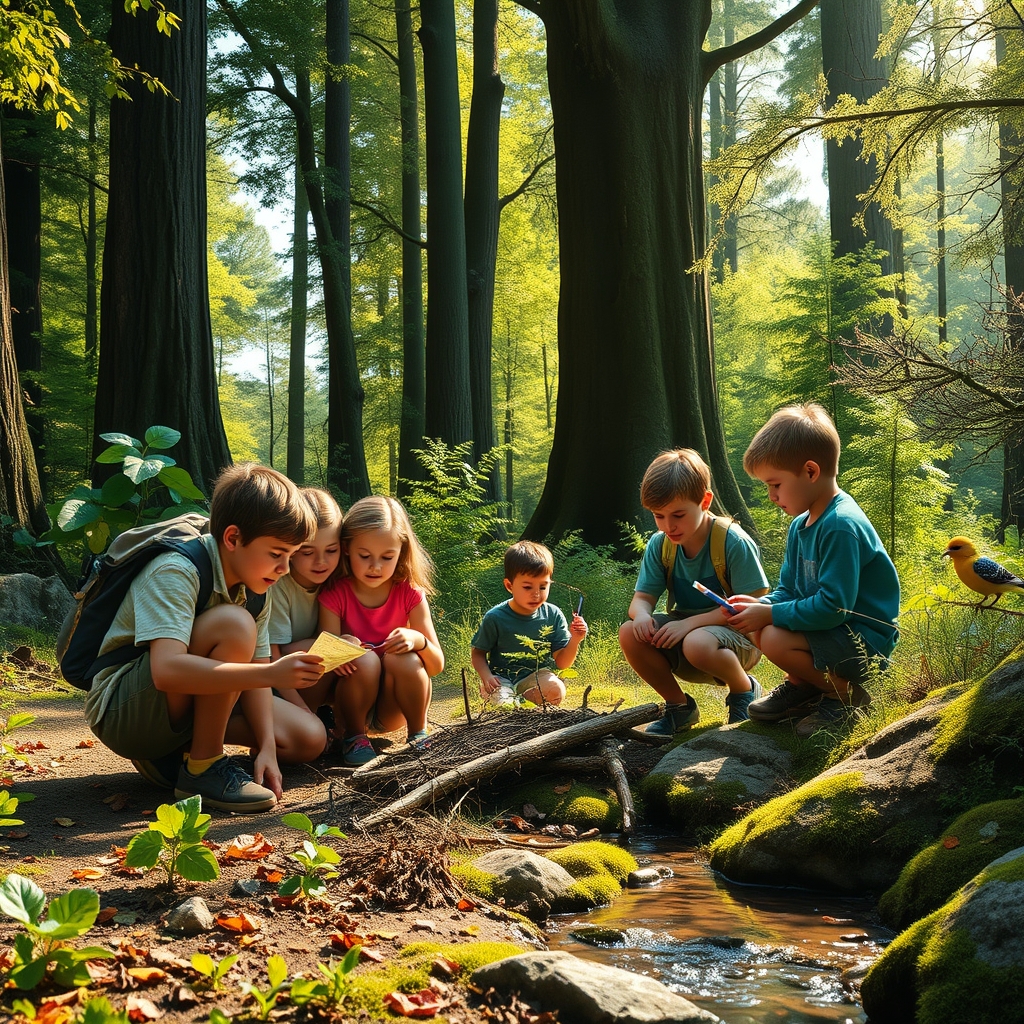
There is a quiet revolution happening where the rustling leaves and the murmur of a nearby stream become the most compelling teachers. It’s not about replacing traditional education but reimagining it—where desks are exchanged for dirt paths, and textbooks are supplemented with the living, breathing world. Cooperative learning in nature isn’t just an alternative; it’s a return to the way humans have always learned best: together, through shared experience, and with the natural world as both classroom and collaborator.
The Essence of Cooperative Learning
Cooperative learning is more than group work; it’s a structured approach where students rely on one another to achieve shared goals. When transplanted into outdoor settings, this method takes on a new dimension. The challenges of navigating a forest trail, building a shelter, or conducting a citizen science project demand communication, problem-solving, and mutual trust. These aren’t just academic skills—they’re life skills, honed in the crucible of real-world exploration.
Research has shown that cooperative learning fosters higher levels of engagement, retention, and social development compared to individual or competitive learning. When students work together outdoors, these benefits are amplified. The natural environment introduces unpredictability, which requires adaptability and creativity. A group of students measuring water quality in a local stream, for example, must divide tasks, interpret data collectively, and present their findings in a way that makes sense to their peers. The process mirrors the collaborative nature of scientific inquiry, where no single person holds all the answers.
Nature as the Ultimate Facilitator
The outdoors doesn’t just provide a backdrop for cooperative learning; it actively shapes the experience. Unlike a classroom, where interactions are often confined to predetermined roles, nature encourages organic collaboration. A fallen log becomes a meeting place, a shared discovery of wildlife sparks collective excitement, and the physical demands of an activity—like setting up a micro campsite—require teamwork to overcome. These moments create a sense of shared purpose, where the success of the group is tied to the contributions of each individual.
In forest schools, this principle is foundational. Children are given the freedom to explore, but they’re also encouraged to work together to solve problems. Whether it’s building a fire, identifying plants, or creating art from natural materials, the emphasis is on collective effort. The result? Students who are not only more confident in their abilities but also more empathetic and attuned to the needs of others. They learn that leadership isn’t about being the loudest voice but about listening, adapting, and supporting one another.
From Theory to Practice: Real-World Applications
Cooperative learning in nature isn’t limited to structured programs like forest schools or adventure education. It can be woven into traditional curricula through place-based education, where local environments become the focus of inquiry. Imagine a middle school class studying local ecology by partnering with a community garden. Students might work in teams to research soil health, design planting layouts, and even organize a harvest festival for the neighborhood. The project isn’t just about biology—it’s about community building, service learning, and hands-on problem-solving.
Service learning takes this a step further by connecting cooperative projects to real-world needs. A high school environmental science class, for instance, could collaborate with a local conservation group to restore a degraded wetland. The students don’t just learn about ecosystems; they become stewards of their environment, applying their knowledge to make a tangible difference. The sense of ownership and accomplishment that comes from such projects is unmatched by any textbook lesson.
The Role of the Educator
In cooperative outdoor learning, the role of the educator shifts from lecturer to facilitator. Instead of delivering information, they create the conditions for discovery. This might mean setting up a challenge—like building a bridge from natural materials—and then stepping back to let students navigate the process. The educator’s job is to ask questions, provide guidance when needed, and help students reflect on their experiences. This approach not only deepens learning but also empowers students to take charge of their own education.
Self-directed study is another key component. When students are given the autonomy to explore their interests within a cooperative framework, their engagement skyrockets. A group of students fascinated by birds, for example, might design a citizen science project to track local species. They could build birdhouses, create identification guides, and present their findings to the school or community. The project becomes a vehicle for learning across disciplines—biology, math, art, and communication—all while fostering a sense of agency and curiosity.
The Ripple Effects of Cooperative Outdoor Learning
The benefits of cooperative learning in nature extend far beyond the immediate experience. Students who engage in these activities develop a deeper connection to their environment, which often translates into a lifelong commitment to sustainability. They also build social skills that are increasingly rare in a digital world—face-to-face communication, conflict resolution, and the ability to work with diverse groups of people. These are the skills that will serve them in college, careers, and civic life.
Moreover, cooperative outdoor learning democratizes education. It levels the playing field by valuing different types of intelligence—kinesthetic, interpersonal, and naturalistic—alongside traditional academic skills. A student who struggles with reading might excel at navigating a trail or leading a group discussion. In a cooperative setting, these strengths are celebrated, and every student has the opportunity to shine.
Perhaps most importantly, cooperative learning in nature fosters a sense of belonging. In a world where isolation and division are all too common, these experiences remind us of our interconnectedness. Whether it’s a group of students working together to plant a tree or a community coming together to clean up a local park, the message is clear: we are stronger when we learn from and with one another. The natural world, with its endless lessons and boundless opportunities for discovery, is the perfect place to cultivate this understanding. It doesn’t just teach us about the environment—it teaches us about ourselves and the communities we’re capable of building when we work together.