
From Roots to Canopies: How Forest Schools Cultivate Resilient Minds Through Nature
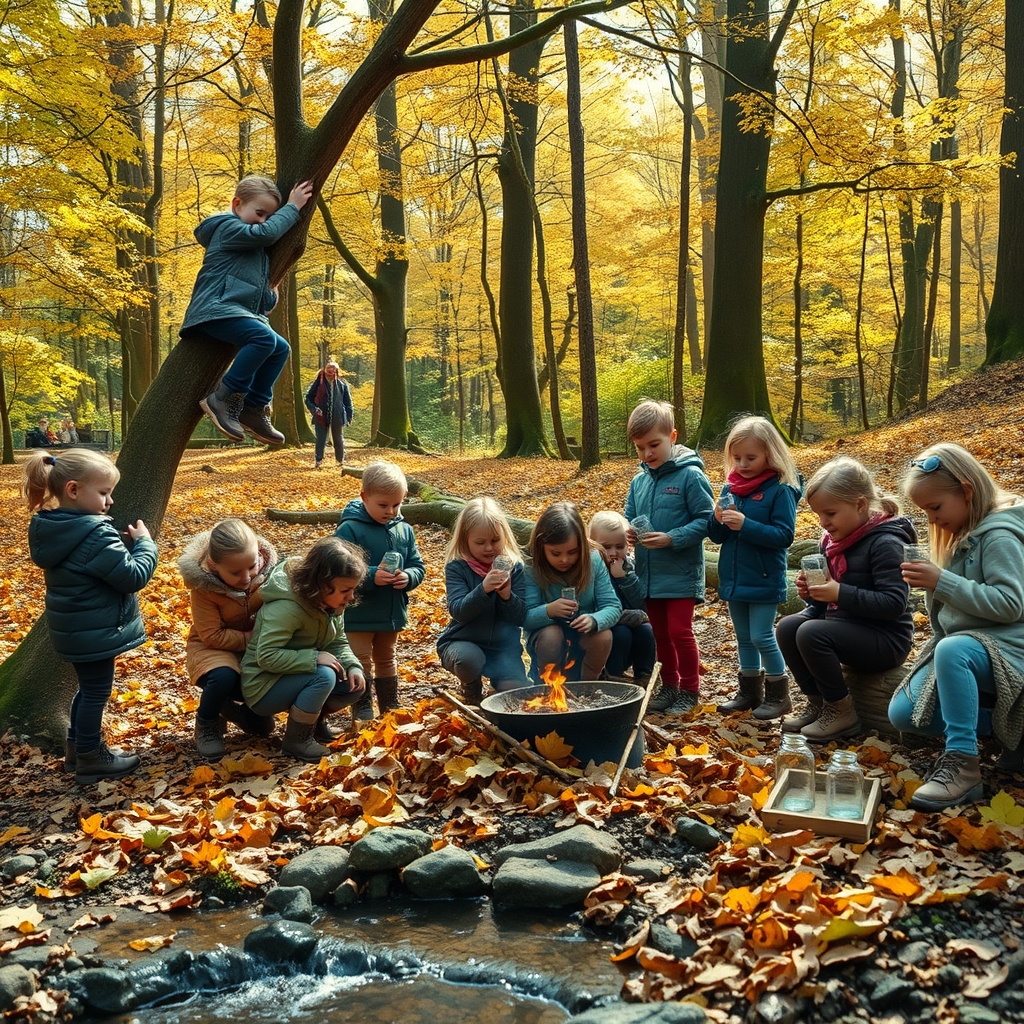
In an era where screens dominate attention and standardized tests dictate success, a quiet revolution is taking root—one that swaps fluorescent-lit classrooms for sun-dappled forests and rigid lesson plans for the unpredictable magic of the natural world. Forest schools, an educational approach with deep roots in Scandinavian pedagogy, are gaining global traction as parents, educators, and researchers recognize the profound impact of learning among trees, streams, and open skies. Unlike traditional schooling, where children are often passive recipients of information, forest schools place them at the center of their own learning journey, fostering resilience, creativity, and a deep-seated connection to the environment.
The Philosophy Behind Forest Schools
At its core, forest schooling is built on the principle that children learn best through direct experience. This philosophy aligns closely with experiential learning and place-based education, where the environment itself becomes the classroom. The approach is child-led, meaning that while educators facilitate and guide, the direction of learning is largely dictated by the interests and curiosities of the students. A pile of leaves might spark a lesson on decomposition, while a bird’s nest could lead to discussions about ecosystems, life cycles, or even the physics of flight.
Forest schools operate on the belief that nature is not just a backdrop for learning but an active participant in the process. The unpredictability of the outdoors—changing weather, seasonal shifts, and the presence of wildlife—creates a dynamic learning environment that static classrooms simply cannot replicate. This unpredictability is not seen as a challenge but as an opportunity, teaching children to adapt, problem-solve, and embrace the unknown.
The Role of Risk in Building Resilience
One of the most striking aspects of forest schools is their embrace of managed risk. In a society that often prioritizes safety over exploration, forest schools encourage children to climb trees, use real tools, and navigate uneven terrain. These activities, while seemingly simple, are instrumental in developing physical coordination, confidence, and emotional resilience. When a child successfully climbs a tree or builds a fire with flint and steel, they internalize a sense of capability that transcends the immediate task. They learn that challenges are not obstacles to avoid but opportunities to grow.
Research supports this approach. Studies have shown that children who engage in risky play—whether it’s balancing on a log or exploring a dense thicket—develop better risk-assessment skills and are less likely to engage in reckless behavior later in life. Moreover, the physical demands of outdoor play improve motor skills, spatial awareness, and overall physical health, countering the sedentary lifestyles that have become all too common among today’s youth.
Beyond Academics: The Social and Emotional Benefits
While forest schools undoubtedly nurture academic skills—through activities like measuring tree growth, identifying plant species, or calculating the trajectory of a thrown stick—their greatest impact may lie in the social and emotional realms. The collaborative nature of outdoor learning fosters cooperative learning and community-based learning, as children work together to build shelters, solve problems, or navigate trails. These shared experiences build empathy, communication skills, and a sense of belonging, as children learn to rely on one another and celebrate each other’s successes.
The natural world also serves as a powerful equalizer. In a forest school, there are no desks to separate children by ability or behavior. The focus shifts from competition to collaboration, from individual achievement to collective discovery. Children who struggle in traditional classroom settings often thrive in forest schools, where their strengths—whether it’s creativity, physical agility, or an affinity for nature—are celebrated. This inclusive environment helps to level the playing field, giving every child the opportunity to shine.
Connecting to the Land: Environmental Stewardship in Action
Forest schools are not just about what children can learn from nature; they’re also about what children can give back. Environmental education is woven into the fabric of forest schooling, as children develop a deep, personal connection to the land. Through activities like planting trees, cleaning up local waterways, or participating in citizen science projects, students learn that they are not separate from nature but active participants in its preservation. This hands-on engagement fosters a sense of responsibility and stewardship that is far more impactful than any textbook lesson on climate change.
For example, a forest school might partner with a local conservation group to monitor the health of a nearby river. Children could collect water samples, identify macroinvertebrates, and analyze data, all while learning about the importance of clean water and the threats facing aquatic ecosystems. These experiences make abstract concepts tangible, turning children into advocates for the environment long before they enter adulthood.
Bringing Forest School Principles into Everyday Learning
While not every child has access to a dedicated forest school, the principles of this approach can be integrated into a variety of learning environments. Parents can encourage hands-on learning by taking their children on nature walks, where they can observe, sketch, or journal about what they see. Teachers can incorporate project-based learning by designing units that take students outside, whether it’s studying the life cycle of butterflies in a school garden or mapping the biodiversity of a local park. Even urban settings offer opportunities for place-based education, as children explore their neighborhoods, interview community members, or document the history of their city.
For those looking to dive deeper, micro camping trips—even just an overnight in a backyard or local park—can provide a taste of the forest school experience. These adventures teach children self-reliance, as they learn to set up tents, cook over a campfire, and navigate the dark. They also create lasting memories, reinforcing the idea that learning is not confined to four walls but is a lifelong, joyful pursuit.
The magic of forest schools lies in their simplicity: they remind us that the most powerful lessons are often the ones we learn by doing. In a world that is increasingly complex and fast-paced, the slow, deliberate pace of learning in nature offers a counterbalance—a chance to breathe, to wonder, and to reconnect with the world around us. As children splash in puddles, track animal prints, or sit quietly beneath a towering oak, they are not just learning about nature; they are learning about themselves. They are discovering their own resilience, their capacity for wonder, and their place in the web of life. And perhaps, in the process, they are also discovering that the best classroom is the one without walls, where the lessons are as vast and boundless as the sky above.



