
Beyond the Screen: How Generative AI is Redefining Experiential Learning for the Digital Native
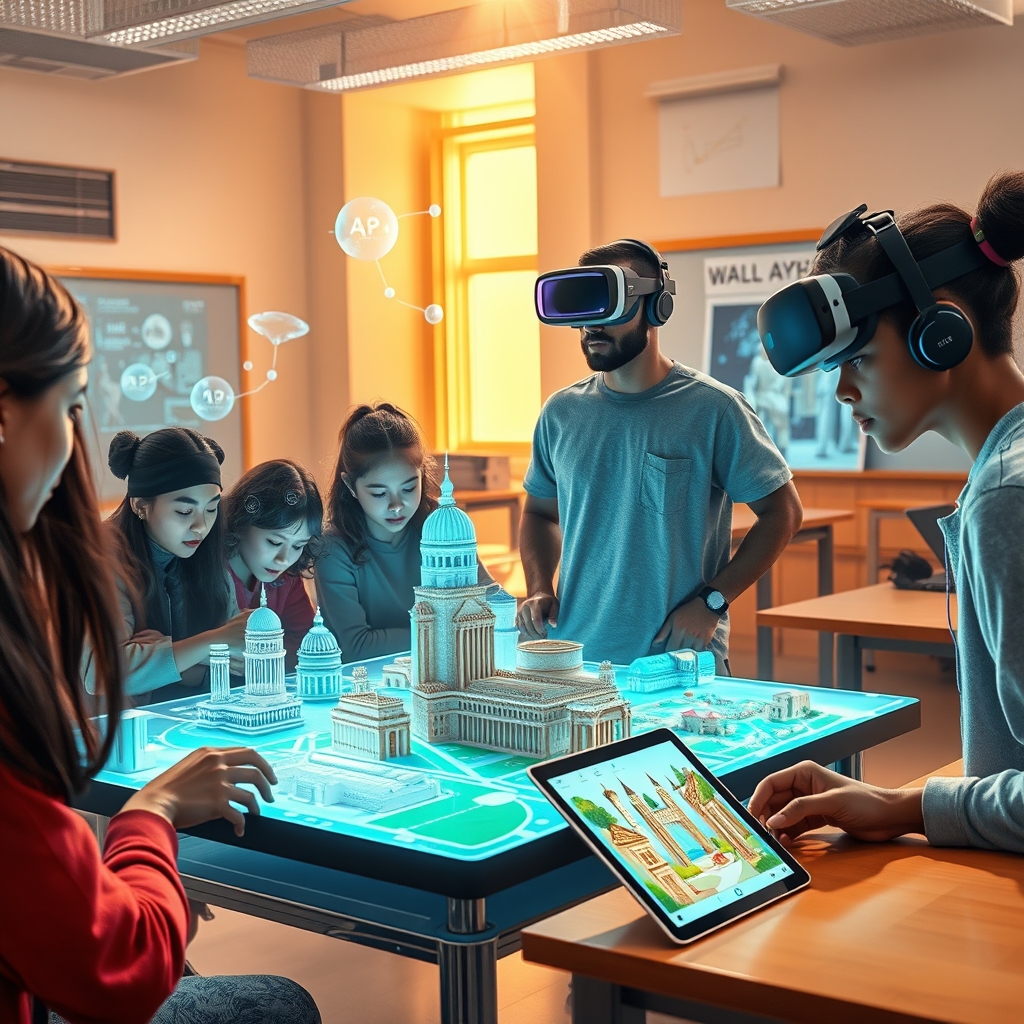
In an era where digital natives navigate virtual spaces as effortlessly as physical ones, education is undergoing a seismic shift. The traditional classroom, once confined by four walls and a chalkboard, is expanding into a boundless landscape where learning is not just consumed but experienced. At the heart of this transformation lies generative artificial intelligence—a tool not merely for automation, but for crafting immersive, adaptive, and deeply personal educational journeys. Unlike static digital resources of the past, generative AI breathes life into learning, turning abstract concepts into tangible, interactive experiences that resonate with students on a profound level.
The Alchemy of Immersion: Turning Theory into Practice
Experiential learning has long been celebrated for its ability to bridge the gap between theory and practice. Yet, scaling such experiences has always been a challenge—until now. Generative AI is dismantling these barriers by creating dynamic simulations, virtual labs, and interactive scenarios that allow students to experiment, fail, and iterate in real time. Imagine a biology student dissecting a virtual frog with AI-generated variations, each specimen adapting to their skill level, or a history class stepping into a photorealistic reconstruction of ancient Rome, where every interaction is shaped by the student’s curiosity. These are not distant futuristic visions; they are the realities taking shape in classrooms today.
What makes generative AI particularly revolutionary is its ability to tailor these experiences to individual learners. Traditional experiential methods often rely on a one-size-fits-all approach, where students progress through predefined activities. AI, however, can generate infinite variations of a scenario, adjusting complexity, context, and even emotional tone based on real-time feedback. A student struggling with a concept might receive a simplified version of a simulation, while an advanced learner could be challenged with a more nuanced or interdisciplinary twist. This adaptability ensures that experiential learning is not just accessible but deeply personal.
The Human Touch in a Digital World
Critics of AI in education often raise concerns about the erosion of human connection. Yet, when wielded thoughtfully, generative AI can amplify the human elements of learning rather than diminish them. Consider a project-based learning (PBL) environment where students collaborate to solve a real-world problem, such as designing a sustainable city. Generative AI can act as a co-pilot, generating data visualizations, drafting proposals, or even simulating the environmental impact of their designs. This frees educators to focus on what they do best: guiding, mentoring, and fostering critical thinking. The AI doesn’t replace the teacher; it enhances their capacity to create meaningful, student-centered experiences.
Moreover, generative AI can democratize access to experiential learning. Students in under-resourced schools, for instance, may lack access to advanced labs or field trips. AI-powered virtual experiences can level the playing field, offering high-quality, interactive learning opportunities regardless of geographic or socioeconomic barriers. In this way, generative AI becomes a catalyst for educational equity, ensuring that every student has the chance to engage with learning in a way that feels authentic and empowering.
From Consumers to Creators: The Shift in Digital Literacy
Digital literacy has evolved far beyond the ability to navigate a search engine or use a word processor. In the age of generative AI, literacy means understanding how to interact with, question, and even create intelligent systems. Students are no longer just consumers of digital content; they are becoming co-creators, shaping AI-generated outputs to suit their learning needs. This shift is redefining what it means to be digitally fluent.
Take, for example, a language arts classroom where students use generative AI to draft stories. The AI might suggest plot twists, generate dialogue, or even create illustrations, but the student remains the author—guiding the narrative, refining the output, and making creative decisions. This collaborative process not only enhances writing skills but also teaches students how to critically evaluate AI-generated content. They learn to ask: Does this suggestion align with my vision? Is the output biased or inaccurate? How can I improve it? These are the questions of a digitally literate learner, and they are essential for navigating a world where AI is ubiquitous.
The Ethics of Experience: Navigating the New Frontier
With great power comes great responsibility, and the rise of generative AI in experiential learning is no exception. As educators integrate these tools into their classrooms, they must grapple with ethical considerations, from data privacy to the potential for AI to reinforce biases. For instance, if an AI-generated simulation perpetuates stereotypes or oversimplifies complex issues, it could do more harm than good. Educators must approach generative AI with a critical eye, ensuring that the experiences it creates are not only engaging but also equitable and accurate.
Transparency is key. Students should understand how AI-generated content is created and why certain outputs are produced. This awareness fosters a culture of accountability, where learners are not passive recipients of AI-driven experiences but active participants in shaping them. By embedding ethical discussions into the curriculum, educators can help students develop the critical thinking skills needed to navigate an AI-augmented world responsibly.
The Future of Learning: A Symphony of Human and Machine
The integration of generative AI into experiential learning is not about replacing human educators or traditional methods. Instead, it’s about creating a symphony where technology and humanity harmonize to create something greater than the sum of their parts. AI can generate the scenarios, adapt the challenges, and provide instant feedback, but it is the human touch—the teacher’s guidance, the student’s curiosity, the collaborative energy of a classroom—that breathes meaning into the experience.
As we stand on the brink of this new era, the possibilities are as vast as they are exhilarating. Generative AI is not just a tool for education; it is a canvas for reimagining what learning can be. It invites students to step beyond the screen and into a world where knowledge is not just acquired but lived, where every lesson is an adventure, and where the boundaries of what is possible are limited only by imagination. The future of education is not about choosing between human or machine—it’s about harnessing the best of both to create experiences that inspire, empower, and endure.



