
Bridging Minds and Machines: How AI and Interdisciplinary Learning Are Cultivating Critical Thinkers for a Complex World
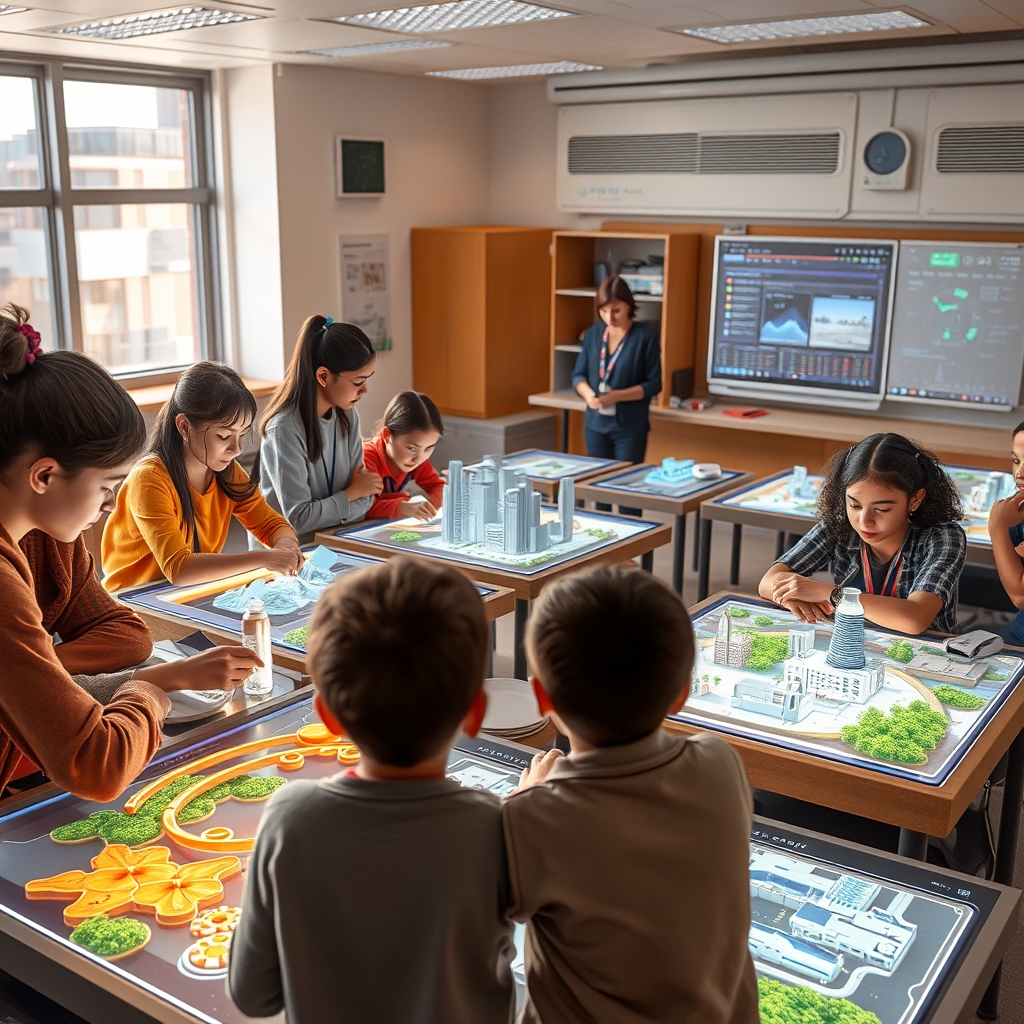
The modern educational landscape is undergoing a seismic shift, one where the boundaries between disciplines are dissolving, and the tools we use to teach are becoming as dynamic as the subjects themselves. At the heart of this transformation lies the intersection of artificial intelligence (AI) and interdisciplinary learning—a synergy that is not only redefining how students engage with knowledge but also equipping them with the critical thinking skills necessary to navigate an increasingly complex world. This evolution is not about replacing human educators with machines but about augmenting the learning experience in ways that were once unimaginable, fostering a generation of learners who can connect ideas across fields and apply them to real-world challenges.
The Power of Interdisciplinary Learning in the AI Era
Interdisciplinary learning has long been celebrated for its ability to break down the silos that traditionally separate subjects like science, technology, engineering, arts, and mathematics (STEAM). By integrating these fields, students are encouraged to draw connections between seemingly disparate ideas, fostering creativity and innovation. However, the true potential of interdisciplinary learning is unlocked when paired with AI. Intelligent systems can analyze vast amounts of data to identify patterns and relationships that might elude even the most astute human observer. For example, AI-driven platforms can curate personalized learning pathways that blend history with data science, or literature with computational thinking, allowing students to explore topics through multiple lenses.
This approach is particularly powerful in addressing the demands of the 21st-century workforce, where problems rarely fit neatly into a single discipline. Consider the challenge of climate change—a issue that requires insights from environmental science, economics, policy, and even ethics. AI can help students tackle such complex problems by providing them with tools to simulate scenarios, analyze data, and collaborate across disciplines in real time. The result is a learning experience that mirrors the interconnected nature of the world, preparing students to think holistically and act decisively.
AI as the Catalyst for Critical Thinking
Critical thinking is often hailed as one of the most essential skills for the future, yet it remains one of the most challenging to cultivate. Traditional education systems, with their emphasis on rote memorization and standardized testing, have struggled to foster this skill effectively. AI, however, is changing the game by shifting the focus from passive consumption of information to active engagement with ideas. Intelligent tutoring systems, for instance, can pose open-ended questions, provide instant feedback, and adapt to a student’s level of understanding, encouraging them to think deeply and reflect on their learning process.
Moreover, AI-powered generative tools are enabling students to engage in higher-order thinking tasks, such as synthesis and evaluation. For example, a student working on a project about renewable energy might use an AI tool to generate multiple perspectives on the topic—from technical feasibility to ethical considerations—then analyze and synthesize these perspectives to form their own argument. This process not only sharpens critical thinking but also empowers students to become creators of knowledge rather than mere consumers.
The Role of Experiential Learning in an AI-Augmented Classroom
Experiential learning, which emphasizes learning through doing, is another area where AI is making a profound impact. By integrating AI into project-based learning (PBL) environments, educators can create immersive experiences that bridge the gap between theory and practice. For instance, AI can simulate real-world scenarios, such as managing a virtual business or designing a sustainable city, allowing students to apply their interdisciplinary knowledge in a risk-free environment. These simulations can be tailored to individual learning styles, ensuring that each student is challenged at their own level and can progress at their own pace.
Furthermore, AI can enhance experiential learning by providing real-time analytics on student performance. For example, an AI system might track how a student approaches a problem, identify areas where they struggle, and suggest targeted interventions. This level of personalization ensures that students are not only engaged but also supported in their learning journey, fostering a sense of agency and ownership over their education.
Addressing Educational Equity Through AI and Interdisciplinary Learning
One of the most promising aspects of AI in education is its potential to democratize access to high-quality learning experiences. In many parts of the world, students face significant barriers to education, whether due to geographic isolation, socioeconomic status, or lack of resources. AI-driven platforms can help level the playing field by providing personalized, adaptive learning experiences that cater to the unique needs of each student. For example, an AI-powered tutoring system can offer one-on-one support to students in underserved communities, helping them overcome gaps in their education and achieve their full potential.
Interdisciplinary learning, when combined with AI, can also promote educational equity by making learning more relevant and engaging for diverse groups of students. By connecting academic content to real-world issues that resonate with students’ lived experiences, educators can foster a sense of belonging and motivation. For instance, a project on urban planning might incorporate elements of social justice, economics, and environmental science, allowing students to see how their learning applies to their own communities. This approach not only makes education more inclusive but also empowers students to become agents of change in their own right.
The Future of Learning: A Symphony of Human and Machine Intelligence
As we look to the future, it is clear that the relationship between AI and education will continue to evolve. The most successful learning environments will be those that strike a balance between the precision of machine intelligence and the creativity, empathy, and intuition of human educators. AI can handle the heavy lifting of data analysis, personalization, and adaptive learning, freeing educators to focus on what they do best: inspiring curiosity, fostering collaboration, and nurturing the unique potential of each student.
The integration of AI and interdisciplinary learning is not just about preparing students for the jobs of the future; it is about equipping them with the skills and mindset to thrive in a world that is increasingly interconnected and complex. By embracing this synergy, we can create learning experiences that are not only more effective but also more meaningful, empowering students to become critical thinkers, creative problem-solvers, and lifelong learners. In this new era of education, the possibilities are as limitless as the human imagination, and the tools we have at our disposal are only as powerful as the vision we bring to them.
The journey toward this future is already underway, and the choices we make today will shape the educational landscape for generations to come. As we continue to explore the potential of AI and interdisciplinary learning, one thing is certain: the classrooms of tomorrow will be places where minds and machines work in harmony, breaking down barriers and building bridges to a brighter, more equitable future.



