
The Symphony of Soil and Sky: How Field-Based Inquiry Harmonizes Learning with the Living World
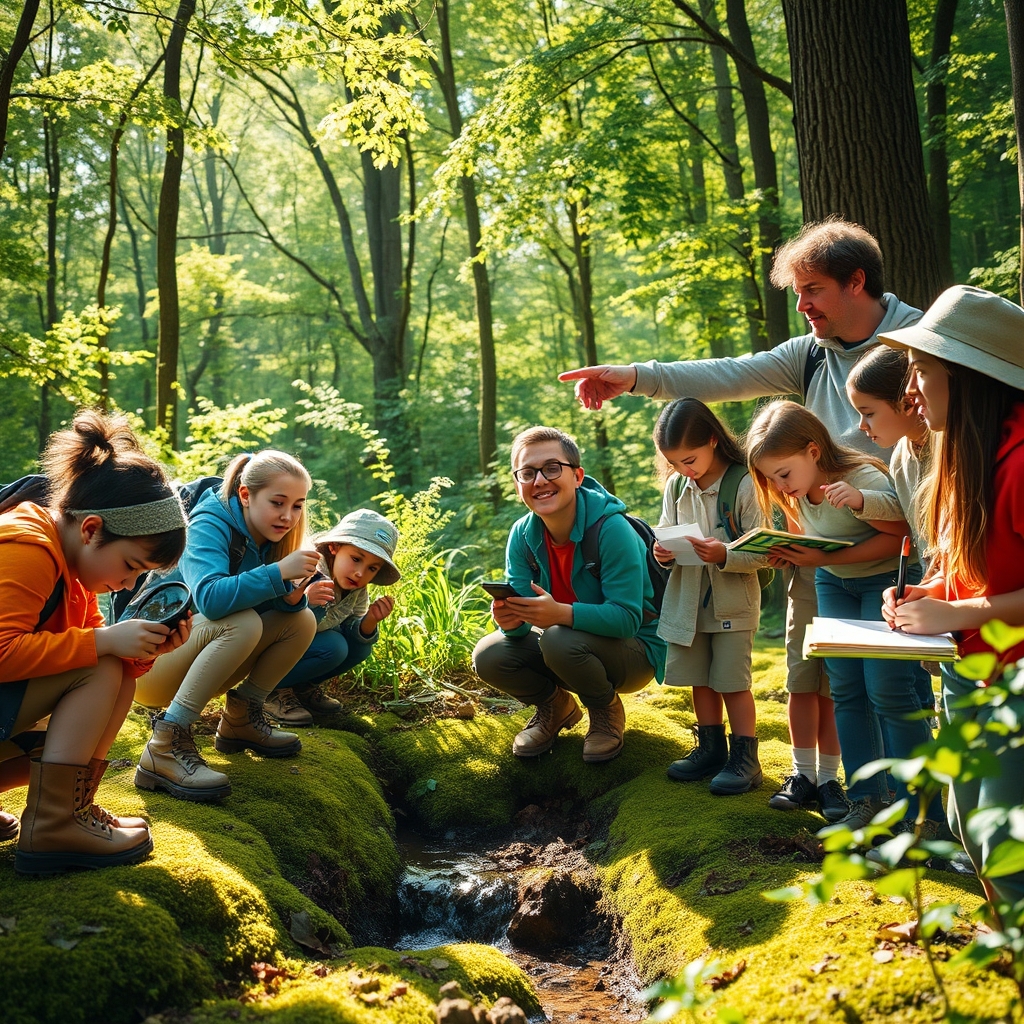
There is a quiet revolution unfolding in education—one that trades fluorescent-lit classrooms for sun-dappled meadows, and standardized tests for the unscripted lessons of wind, water, and wildlife. Field-based inquiry is not merely a teaching method; it is a philosophy that positions the natural world as both textbook and teacher, inviting learners to engage with their environment through curiosity, observation, and hands-on exploration. Unlike traditional education, which often prioritizes memorization and passive absorption, this approach thrives on the unpredictable, the tangible, and the deeply personal.
The Pedagogy of Presence
At its core, field-based inquiry is about presence. It asks students to step away from screens and step into streams—to feel the current against their ankles, to watch minnows dart between submerged rocks, and to wonder why the water runs clear in some places and murky in others. This kind of learning is inherently interdisciplinary. A single afternoon spent mapping the biodiversity of a local wetland can weave together ecology, mathematics (through data collection and analysis), creative writing (through field journals), and even ethics (when considering human impact on fragile ecosystems). The environment becomes a living laboratory, where every question leads to another, and every answer is provisional, open to revision in the face of new evidence.
Research in educational psychology supports the efficacy of this approach. Studies have shown that students who engage in field-based learning demonstrate improved retention, deeper conceptual understanding, and heightened motivation compared to their peers in conventional settings. The reason is simple: when learning is rooted in direct experience, it becomes meaningful. A child who measures the pH of soil after a rainstorm is not just performing a task; they are participating in a story—one where they are both observer and protagonist.
From Observation to Action
Field-based inquiry does not stop at observation. It evolves into action, often blurring the lines between education and activism. When students collect data on air quality in their neighborhood, they are no longer passive recipients of knowledge; they become citizen scientists, contributing to real-world research that can inform policy and inspire change. Projects like these exemplify the power of place-based education, where the local community and environment serve as the primary context for learning. By focusing on issues that are immediately relevant—such as urban heat islands, invasive species, or water conservation—students develop a sense of agency and connection to the places they inhabit.
This shift from theory to practice is where the magic happens. A high school class studying coastal erosion, for example, might partner with a local environmental group to plant dune grasses or install oyster reefs. The project becomes a form of service learning, where academic goals align with community needs. Students don’t just learn about sustainability; they live it. They see firsthand how their efforts can ripple outward, fostering resilience in both ecosystems and human communities. The lessons extend beyond the subject matter, teaching collaboration, problem-solving, and perseverance in the face of challenges.
The Role of Risk and Resilience
One of the most transformative aspects of field-based inquiry is its embrace of risk—not as something to be avoided, but as an essential component of growth. Whether it’s navigating a rocky trail, handling unfamiliar tools, or presenting findings to a public audience, students are encouraged to step outside their comfort zones. This is where adventure education intersects with field-based learning, creating opportunities for personal and collective development. The wilderness, in all its unpredictability, becomes a mirror, reflecting back students’ strengths, fears, and capacity for adaptation.
Educators who facilitate these experiences often speak of the “aha moments” that occur when a student overcomes an obstacle—whether it’s identifying a bird by its call, building a fire in the rain, or leading a group discussion. These moments build confidence, but they also cultivate resilience. In a world where young people are increasingly shielded from failure, field-based inquiry offers a counter-narrative: that struggle is not a sign of weakness, but a necessary part of learning. The scraped knee, the muddy boots, the data set that didn’t turn out as expected—these are not setbacks, but stepping stones.
Designing for Depth
For field-based inquiry to be effective, it must be thoughtfully designed. It is not enough to simply take students outside and hope for the best. Educators must craft experiences that are intentional, scaffolded, and reflective. This begins with clear learning objectives—what do we want students to know, do, and value by the end of the experience? From there, activities can be designed to build skills incrementally, from basic observation to complex analysis. For example, a unit on forest ecology might start with a sensory walk, where students record sights, sounds, and smells, before progressing to more structured tasks like tree identification or soil sampling.
Reflection is another critical component. Without it, experiences risk becoming fleeting moments rather than lasting lessons. Journals, group discussions, and creative projects (such as photography or poetry) can help students process their observations and connect them to broader themes. A student who sketches a spider’s web might later research the role of spiders in pest control, or write a story from the perspective of an insect navigating the threads. These reflective practices ensure that the learning is not just hands-on, but also minds-on and hearts-on.
The Ripple Effect
The impact of field-based inquiry extends far beyond the individual. When students share their findings with peers, families, or community members, they become ambassadors for the environment. A middle school class that monitors water quality in a local creek might present their data to the city council, advocating for policies to reduce pollution. A group of high schoolers studying urban wildlife might create a guidebook for their neighborhood, helping residents coexist with coyotes or foxes. These projects demonstrate how education can be a catalyst for change, turning learners into leaders.
Moreover, field-based inquiry fosters a sense of stewardship. When students spend time in nature, they develop an emotional connection to it. They begin to see themselves as part of a larger web of life, rather than separate from it. This shift in perspective is crucial in an era of climate change and environmental degradation. It is one thing to read about deforestation in a textbook; it is another to stand in a clear-cut forest and feel the absence of birdsong. The latter experience has the power to ignite a lifelong commitment to conservation.
The natural world is not a static backdrop for learning, but a dynamic, breathing classroom. Field-based inquiry reminds us that education is not something that happens to students, but something they actively participate in. It is a dance between curiosity and discovery, between the known and the unknown. And when students step into that dance, they don’t just learn about the world—they learn how to shape it, one observation, one question, one action at a time. The soil beneath their feet and the sky above their heads become not just elements of a landscape, but partners in a lifelong journey of exploration and wonder.



