
The Unseen Compass: How International Student Mobility Navigates the Path to Global Citizenship
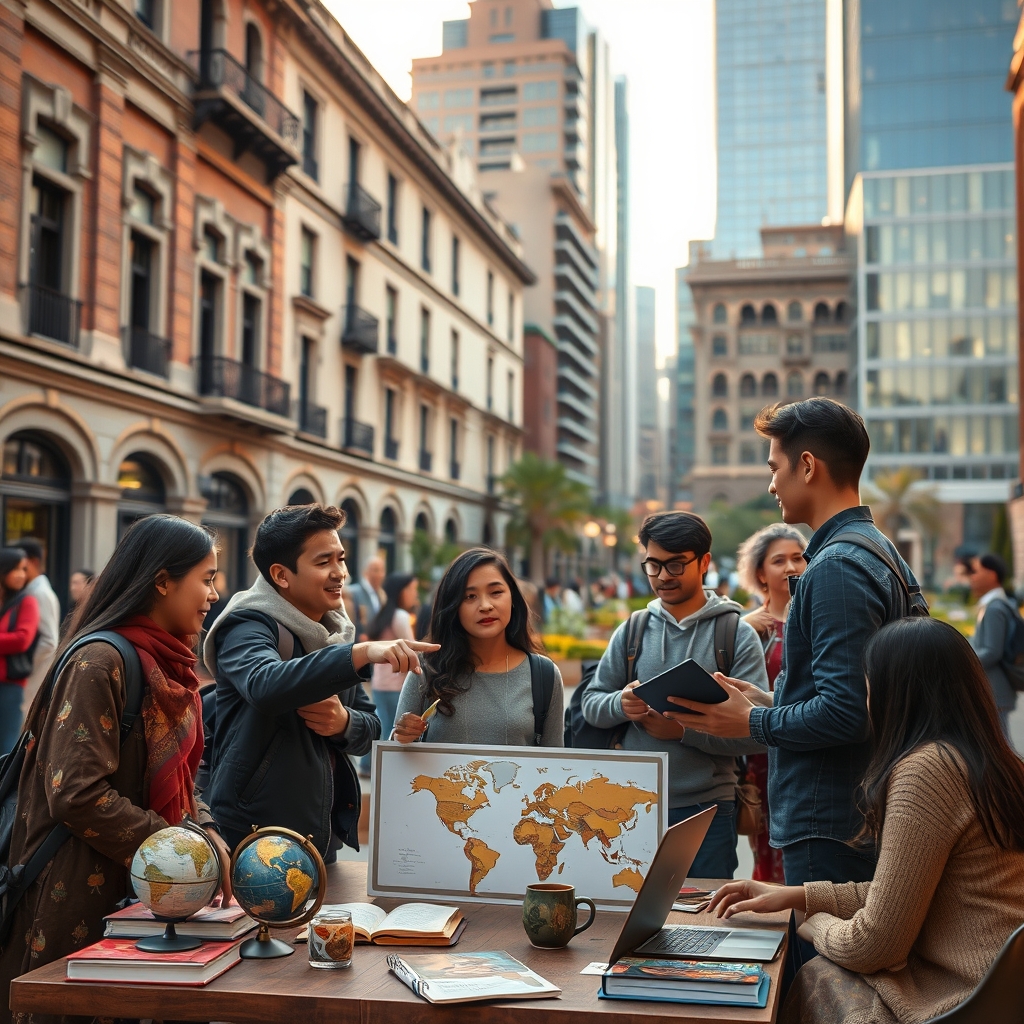
In an era where borders are increasingly porous and digital connectivity blurs geographical lines, the concept of global citizenship has evolved from a lofty ideal into a tangible skill set. At the heart of this transformation lies international student mobility—a phenomenon that transcends mere academic pursuit to cultivate intercultural competence, adaptability, and a deeper understanding of our shared humanity. Yet, the true magic of studying abroad is not just in the destinations visited or the languages learned, but in the invisible compass it instills: the ability to navigate the complexities of an interconnected world with empathy, curiosity, and resilience.
The Foundation: Why Mobility Matters
International student mobility is more than a trend; it is a cornerstone of modern education. Programs like the Erasmus Plus Scholarship and study abroad initiatives have democratized access to global learning experiences, making it possible for students from diverse backgrounds to step outside their comfort zones. The benefits are multifaceted: academic enrichment, career advancement, and personal growth. However, the most profound impact is often the intangible one—the shift in perspective that occurs when a student realizes their place in a global community.
For many, the journey begins with a pre-departure orientation, a critical yet often overlooked phase. These sessions equip students with the tools to navigate cultural nuances, legal requirements like international student visas, and logistical challenges. They serve as a bridge between the familiar and the unknown, ensuring that students are not just physically prepared but mentally ready to embrace the unknown. Without this foundation, the transformative potential of mobility can be lost in the chaos of culture shock.
The Power of Immersion: Beyond the Classroom
While academic credit and tuition waivers are practical incentives, the real education happens outside lecture halls. Cultural immersion is the crucible in which global citizens are forged. Living with a host family, for instance, offers an unparalleled opportunity to experience daily life through a local lens. It’s one thing to read about a culture in a textbook; it’s another to share meals, celebrate traditions, and navigate misunderstandings with people who become a second family. These experiences dismantle stereotypes and build bridges where none seemed possible.
Similarly, language exchange programs and short-term study abroad opportunities provide low-stakes environments for students to experiment with new ways of communicating. Fluency in a foreign language is not just about vocabulary and grammar; it’s about understanding humor, tone, and unspoken social cues. These skills are the bedrock of intercultural competence, enabling students to move seamlessly between worlds and adapt to diverse professional and social settings.
The Digital Dimension: Virtual Exchange in a Post-Pandemic World
The COVID-19 pandemic disrupted traditional mobility, but it also accelerated innovation in global citizenship education. Virtual exchange programs emerged as a lifeline, offering students the chance to engage in cross-cultural dialogue without leaving their homes. Platforms facilitating educational tourism and collaborative projects connected classrooms across continents, proving that physical distance need not be a barrier to meaningful exchange.
These digital experiences, while different from in-person immersion, have their own advantages. They are often more accessible, allowing students who might not have the means or opportunity to travel to still develop cross-cultural adaptability. Moreover, they prepare students for a future where remote collaboration is increasingly the norm, blending the best of global learning with the realities of a digital world.
The Ripple Effect: How Mobility Shapes Societies
The impact of international student mobility extends far beyond the individual. When students return home, they bring with them not just souvenirs and photographs, but new ideas, perspectives, and a heightened sense of global responsibility. They become ambassadors of change, challenging local norms and advocating for policies that reflect a more inclusive worldview. This ripple effect is perhaps the most powerful argument for investing in mobility programs.
Consider the credit transfer system, which allows students to integrate their global learning into their home institutions. This system validates the value of their experiences, ensuring that the skills they’ve acquired—whether in cultural exchange programs or semester abroad initiatives—are recognized and celebrated. It also encourages institutions to adopt more flexible, globally minded curricula, further embedding the principles of global citizenship into the fabric of education.
The Unwritten Future: What Lies Ahead
As the world grapples with challenges like climate change, inequality, and political polarization, the need for global citizens has never been more urgent. International student mobility is not a panacea, but it is a powerful tool for fostering the empathy, collaboration, and critical thinking required to address these issues. The future of mobility lies in its ability to adapt—to become more inclusive, sustainable, and innovative. Whether through hybrid programs that blend physical and virtual exchange or scholarships that prioritize underrepresented regions, the goal remains the same: to equip the next generation with the unseen compass they need to navigate an ever-changing world.
At its core, the journey of an international student is a microcosm of the human experience. It is a reminder that while our backgrounds may differ, our aspirations—to learn, to connect, to grow—are universal. The lessons learned abroad do not end with the return flight; they become part of who we are, shaping how we see ourselves and our place in the world. In this way, mobility is not just about crossing borders; it’s about expanding them, one student at a time.



