
The Symphony of AI and Human Ingenuity: Crafting Dynamic, Equity-Driven Learning Ecosystems Through Interdisciplinary Collaboration
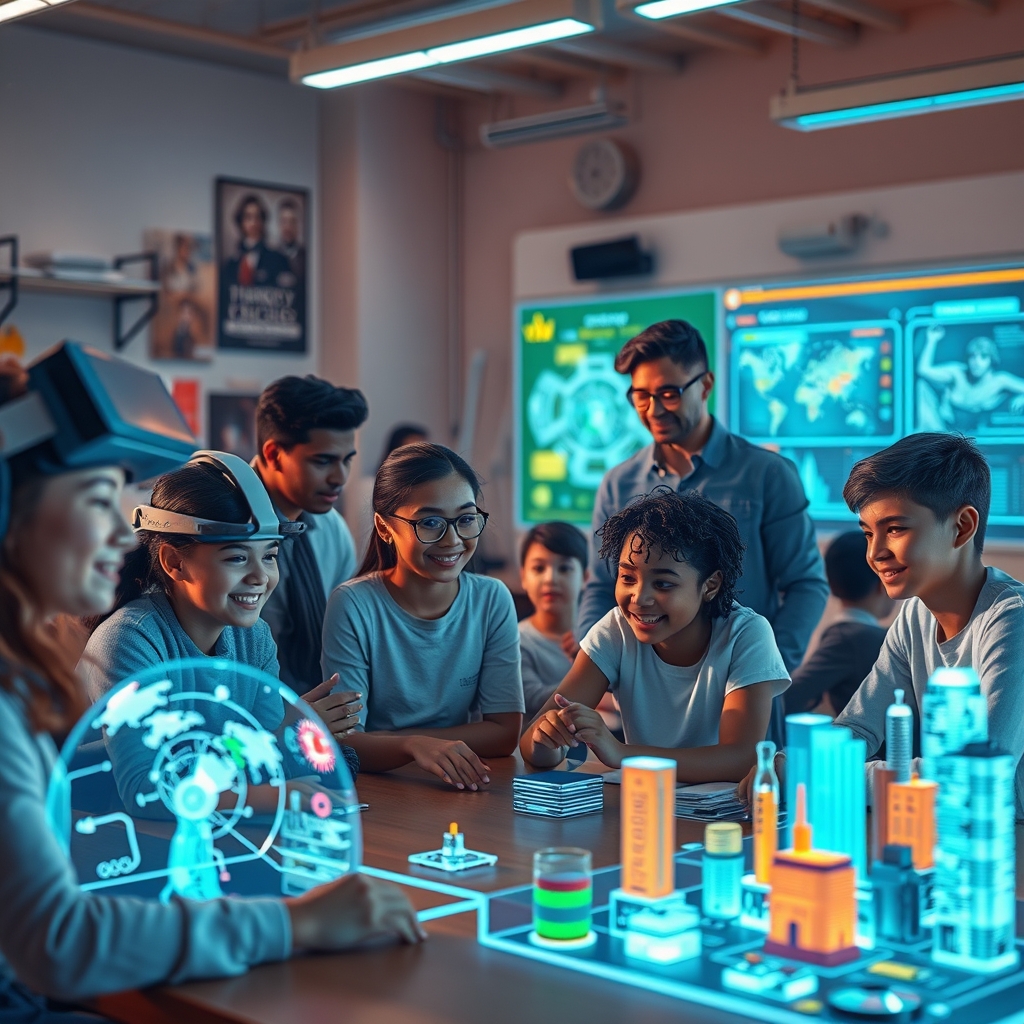
The modern educational landscape is undergoing a seismic shift, one where the rigid boundaries of traditional learning are dissolving under the weight of innovation. At the heart of this transformation lies a powerful alliance between artificial intelligence and human creativity, a partnership that is redefining how knowledge is acquired, applied, and shared. This evolution is not merely about integrating technology into classrooms; it is about crafting dynamic, equity-driven ecosystems where every learner, regardless of background or ability, can thrive in an increasingly complex world.
The Convergence of AI and Interdisciplinary Learning
Interdisciplinary learning has long been celebrated for its ability to break down silos between subjects, fostering a holistic understanding of real-world challenges. Yet, its potential has often been limited by the constraints of time, resources, and one-size-fits-all curricula. Enter AI—a catalyst that is amplifying the reach and impact of interdisciplinary education. By leveraging intelligent systems, educators can now design learning experiences that seamlessly blend science, technology, engineering, arts, and mathematics (STEAM) in ways that were once unimaginable.
For instance, AI-powered platforms can curate personalized learning pathways that adapt in real-time to a student’s progress, interests, and gaps in understanding. A student exploring climate change might delve into data science to analyze environmental trends, use generative tools to create visualizations, and collaborate with peers on a project that proposes sustainable solutions. AI doesn’t replace the educator’s role; instead, it augments it, providing the tools to facilitate deeper connections between disciplines while nurturing critical thinking and problem-solving skills.
The Role of Generative Tools in Fostering Creativity
Generative AI tools are emerging as game-changers in education, particularly in fields that thrive on creativity and innovation. These tools, from text generators to design assistants, are not just automating tasks—they are inspiring new forms of expression and exploration. In a STEM classroom, for example, students can use AI to generate hypotheses, simulate experiments, or even create prototypes, allowing them to focus on the iterative process of refinement rather than getting bogged down by technical limitations.
Moreover, generative tools are democratizing access to creative processes. Students who may struggle with traditional methods of expression—whether due to language barriers, learning differences, or lack of confidence—can now leverage AI to articulate their ideas in ways that resonate with them. This shift is not about replacing human creativity but expanding its possibilities, ensuring that every voice has the opportunity to be heard and valued.
Bridging Gaps Through Inclusive and Experiential Learning
Inclusive education is more than a buzzword; it is a commitment to ensuring that every learner, regardless of their circumstances, has access to high-quality, meaningful educational experiences. AI is playing a pivotal role in this mission by enabling personalized, experiential learning that meets students where they are. Intelligent tutoring systems, for example, can provide real-time feedback and scaffolding, adapting to individual learning styles and paces. This level of personalization is particularly transformative for students with disabilities or those from underrepresented backgrounds, who may have previously been left behind by traditional educational models.
Experiential learning, too, is being elevated by AI. Virtual reality (VR) and augmented reality (AR) platforms powered by AI can simulate real-world scenarios, allowing students to engage in hands-on learning without the constraints of physical space or resources. Imagine a medical student practicing surgical techniques in a VR environment, or a history student walking through ancient civilizations in an immersive AR experience. These technologies are not just enhancing engagement; they are making learning more tangible, memorable, and impactful.
The Power of Learning Analytics in Shaping Equity
Data has always been a cornerstone of educational improvement, but the advent of learning analytics—powered by AI—is taking this to new heights. By analyzing vast amounts of data on student performance, engagement, and behavior, educators can identify patterns and intervene early to support struggling learners. More importantly, learning analytics can uncover systemic inequities, such as disparities in access to resources or opportunities, and inform strategies to address them.
For example, an AI-driven dashboard might reveal that students in a particular demographic are consistently underperforming in a specific subject. Armed with this insight, educators can tailor interventions, such as targeted tutoring or culturally responsive curricula, to bridge the gap. This proactive approach ensures that equity is not an afterthought but a foundational principle of the learning experience.
Crafting the Future of Hybrid and Lifelong Learning
The pandemic accelerated the adoption of hybrid learning, but its true potential lies in its ability to blend the best of in-person and digital education. AI is the linchpin of this evolution, enabling seamless transitions between physical and virtual classrooms. Intelligent systems can facilitate collaborative projects, automate administrative tasks, and even foster social-emotional learning through AI-driven mentorship programs. This flexibility is particularly valuable for lifelong learners, who may juggle education with work, family, or other commitments.
Microlearning, another trend gaining traction, is being supercharged by AI. Bite-sized, on-demand lessons tailored to individual needs are making education more accessible and engaging. Whether it’s a professional upskilling for a new role or a student mastering a complex concept, AI-powered microlearning platforms can deliver content in digestible formats, reinforcing retention and application.
As we stand at the precipice of this educational revolution, it’s clear that the future of learning is not about choosing between technology and humanity. It’s about harnessing the symphony of AI and human ingenuity to create ecosystems where every learner can explore, create, and grow. The tools are here; the question is how we will use them to craft a future where education is not just a privilege for the few, but a right for all.



