The Digital Alchemist: How AI and Generative Tools Are Transforming Personalized Learning into a Canvas of Infinite Possibilities
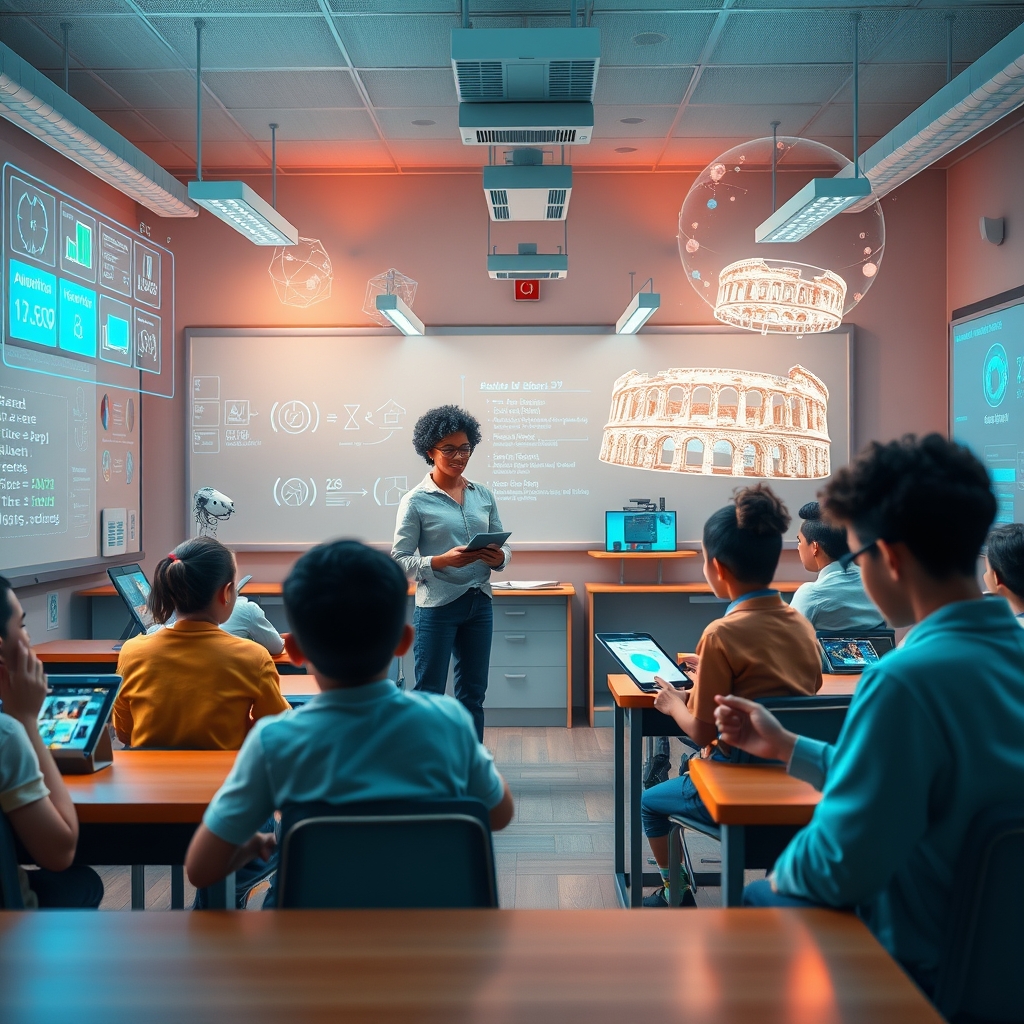
Imagine a classroom where every student’s learning journey is as unique as their fingerprint, where lessons adapt in real-time to their strengths, weaknesses, and curiosities. This is not a distant vision of the future—it is the present reality shaped by the convergence of artificial intelligence and generative tools in education. The traditional one-size-fits-all model of teaching is being dismantled, replaced by a dynamic ecosystem where technology acts as a digital alchemist, transmuting data into personalized, engaging, and equitable learning experiences.
The Rise of the Digital Alchemist
At the heart of this transformation lies the power of generative AI, a technology capable of creating content, simulations, and even entire learning pathways tailored to individual needs. Unlike static educational materials, generative tools can produce adaptive quizzes, interactive scenarios, and real-time feedback loops that evolve alongside the learner. For instance, platforms like Duolingo and Khan Academy leverage AI to generate practice exercises that adjust difficulty based on a student’s performance, ensuring they are neither bored by simplicity nor overwhelmed by complexity.
This shift is not merely about efficiency; it is about redefining the very essence of education. Generative AI enables educators to move beyond the constraints of standardized curricula, fostering a culture of curiosity and exploration. Students are no longer passive recipients of information but active participants in their learning, co-creating knowledge with intelligent systems that respond to their unique pace and style.
Personalized Learning: Beyond the Buzzword
Personalized learning has long been a buzzword in education, but AI is turning it into a tangible reality. By analyzing vast amounts of data—from test scores to engagement patterns—AI systems can identify gaps in understanding and suggest targeted interventions. For example, an AI-powered tutoring system might detect that a student struggles with algebraic concepts and generate a series of interactive problems designed to build confidence and competence. This level of customization was once the domain of elite private tutors; now, it is accessible to learners across the socioeconomic spectrum.
Moreover, personalized learning extends beyond academic content. AI can adapt to a student’s emotional and motivational state, offering encouragement or adjusting the difficulty of tasks to maintain engagement. Tools like Woebot, an AI chatbot designed to support mental health, demonstrate how technology can provide empathetic, responsive interactions that foster a positive learning environment. In education, similar systems could help students navigate challenges like test anxiety or procrastination, creating a holistic approach to learning that addresses both cognitive and emotional needs.
The Blend of Human and Machine Intelligence
While AI’s capabilities are impressive, the most effective educational experiences emerge from the synergy between human and machine intelligence. Teachers remain irreplaceable—they provide the empathy, creativity, and moral guidance that algorithms cannot replicate. However, AI can augment their efforts by handling repetitive tasks, such as grading or administrative work, freeing educators to focus on what they do best: inspiring and mentoring students.
This blend of human and machine intelligence is particularly evident in blended learning environments, where digital tools complement traditional instruction. For example, a history teacher might use AI-generated simulations to transport students to ancient civilizations, allowing them to explore historical events firsthand. Meanwhile, the teacher facilitates discussions, encourages critical thinking, and helps students connect these experiences to broader themes. The result is a richer, more immersive learning experience that leverages the strengths of both technology and human interaction.
Democratizing Education Through Technology
One of the most profound impacts of AI in education is its potential to democratize access to high-quality learning experiences. Generative tools can create educational content in multiple languages, making knowledge accessible to non-native speakers and underserved communities. Additionally, AI-powered platforms can provide real-time translation and transcription services, breaking down language barriers that have long hindered inclusive education.
For students with disabilities, AI offers transformative possibilities. Text-to-speech and speech-to-text technologies enable learners with visual or auditory impairments to engage with content in ways that were previously impossible. Similarly, AI-driven assistive tools can help students with cognitive disabilities by simplifying complex concepts or providing step-by-step guidance. These innovations are not just about accessibility—they are about equity, ensuring that every student has the opportunity to thrive.
The Ethical Imperative: Navigating the Challenges
As with any technological revolution, the integration of AI in education raises important ethical questions. Data privacy is a paramount concern, as AI systems rely on vast amounts of student data to function effectively. Schools and edtech companies must prioritize transparency and security, ensuring that sensitive information is protected and used responsibly. Additionally, there is the risk of algorithmic bias, where AI systems inadvertently perpetuate existing inequalities. Developers must work diligently to create inclusive, unbiased algorithms that serve all learners equitably.
Another challenge is the digital divide—the gap between those who have access to technology and those who do not. While AI has the potential to level the playing field, it could also exacerbate inequalities if not deployed thoughtfully. Policymakers, educators, and technologists must collaborate to ensure that AI-powered tools are accessible to all students, regardless of their socioeconomic background. This requires investment in infrastructure, digital literacy programs, and equitable funding models for schools.
The Future of Learning: A Canvas of Infinite Possibilities
The fusion of AI and generative tools is not just changing how we teach and learn—it is reimagining the very purpose of education. In a world where information is abundant but attention is scarce, AI can help students develop the skills they need to navigate complexity, think critically, and adapt to an ever-changing landscape. By personalizing learning, fostering inclusivity, and augmenting human potential, AI is transforming education into a dynamic, student-centered experience that prepares learners for the challenges and opportunities of the 21st century.
Yet, the true magic of this transformation lies not in the technology itself, but in the possibilities it unlocks. AI is not a replacement for human connection or creativity; it is a tool that amplifies our capacity to inspire, innovate, and empower. As we stand on the brink of this new era, the question is not whether AI will reshape education, but how we will harness its potential to create a future where every learner has the opportunity to thrive. The canvas is blank, and the brush is in our hands—what masterpiece will we create?