
The AI-Powered Playground: How Gamified and Experiential Learning Are Cultivating Digital Fluency and Critical Thinking in Modern Education
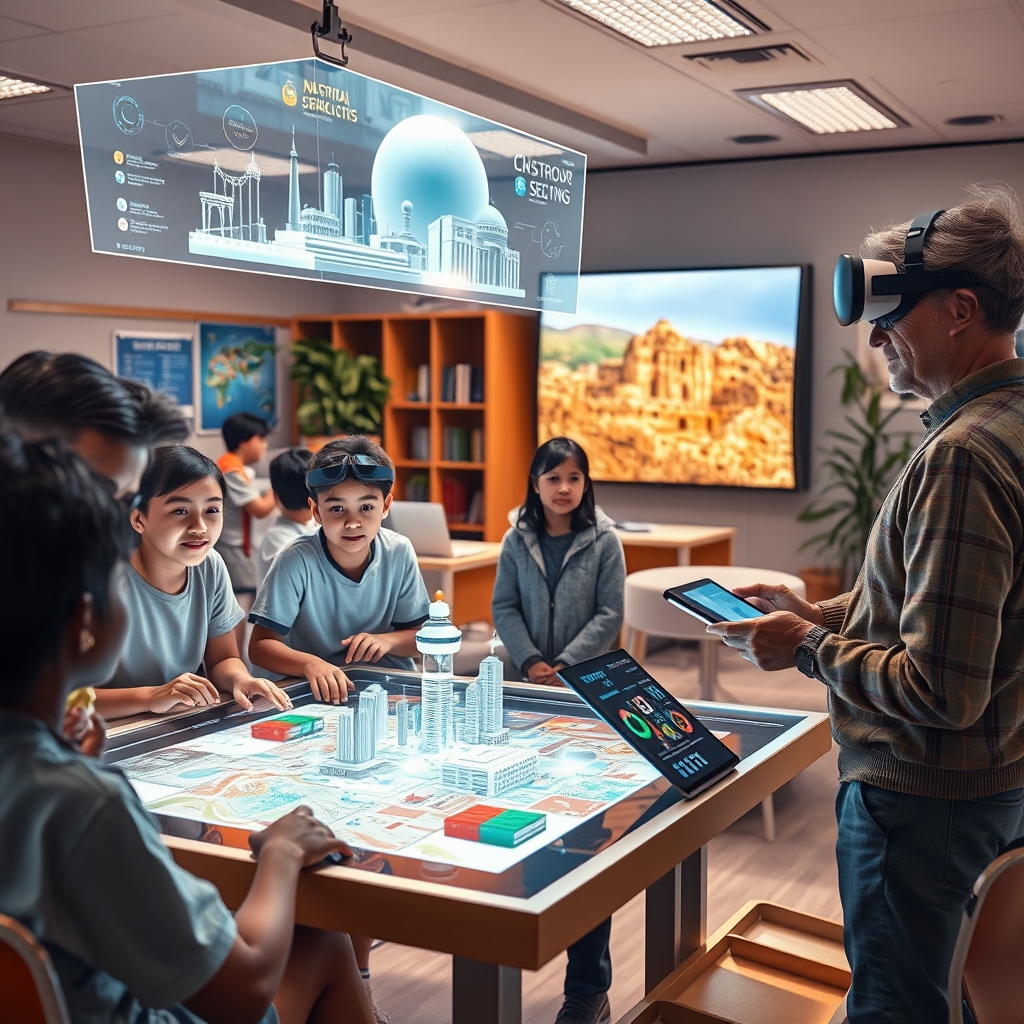
Imagine a classroom where students don’t just memorize facts but actively engage with them—where history isn’t a series of dates but a dynamic role-playing game, and science isn’t confined to textbooks but unfolds through interactive simulations. This isn’t a distant vision of the future; it’s the reality taking shape in today’s AI-powered educational landscapes. By blending gamified learning with experiential techniques, educators are not only making lessons more engaging but also fostering digital fluency and critical thinking in ways that traditional methods never could.
The Gamification Revolution: Turning Learning into Play
Gamification—the integration of game-like elements into non-game contexts—has emerged as a powerful tool in education. Points, leaderboards, badges, and narrative-driven challenges transform passive learners into active participants. But gamification is more than just a gimmick; it taps into the brain’s reward system, releasing dopamine that enhances motivation and retention. When students earn a badge for mastering a math concept or climb a leaderboard by solving real-world problems, they’re not just playing—they’re learning how to learn.
AI takes gamification a step further by personalizing the experience. Adaptive algorithms analyze a student’s performance in real-time, adjusting the difficulty of challenges to match their skill level. Struggling with fractions? The system might introduce a pirate-themed treasure hunt where each correct answer unlocks a piece of a map. Excelling in biology? A virtual lab simulation could present increasingly complex experiments to keep the student engaged. This dynamic approach ensures that no learner is left behind or unchallenged, creating a truly inclusive environment.
Experiential Learning: Bridging Theory and Practice
While gamification makes learning fun, experiential learning grounds it in reality. Rooted in the philosophy that knowledge is constructed through experience, this approach encourages students to apply concepts in real-world scenarios. Think of a literature class where students don’t just read To Kill a Mockingbird but step into the shoes of its characters through a virtual reality courtroom simulation, or a physics lesson where they design and test their own roller coasters using AI-driven modeling tools.
AI enhances experiential learning by providing instant feedback and scaffolding. For example, an AI-powered chemistry lab might simulate an experiment where students mix compounds to create a reaction. If they make a mistake, the system doesn’t just mark it wrong—it explains the error, suggests corrections, and even demonstrates the correct procedure. This immediate, iterative feedback loop accelerates understanding and builds confidence, turning abstract theories into tangible skills.
The Role of Digital Fluency in an AI-Driven World
As AI becomes more embedded in education, digital fluency—the ability to use technology effectively and ethically—is no longer optional. It’s a fundamental skill, as essential as reading or arithmetic. Gamified and experiential learning environments naturally cultivate this fluency by immersing students in technology-rich settings. Whether navigating a virtual world, collaborating on a digital project, or analyzing data from an AI-generated simulation, students learn to interact with technology as creators, not just consumers.
Moreover, these environments teach critical thinking by design. In a gamified history lesson, students might evaluate primary sources to solve a mystery, weighing evidence and constructing arguments. In an AI-driven science simulation, they might test hypotheses, analyze results, and refine their approach based on data. These experiences train students to think logically, question assumptions, and adapt to new information—skills that are invaluable in an era of misinformation and rapid technological change.
Equity Through Accessibility: AI as the Great Equalizer
One of the most transformative aspects of AI-powered gamified and experiential learning is its potential to democratize education. Traditional classrooms often struggle to accommodate diverse learning needs, but AI-driven platforms can adapt to individual strengths, weaknesses, and preferences. A student with dyslexia might engage with a text-to-speech feature in a gamified reading app, while a visual learner could explore a 3D model of a cell in a biology simulation. By meeting students where they are, these tools break down barriers and create opportunities for all learners to thrive.
Furthermore, AI can help bridge the gap between formal and informal learning. Microlearning modules—bite-sized, gamified lessons—allow students to explore topics at their own pace, outside the confines of the classroom. A student curious about astronomy might complete a series of interactive challenges on constellations, earning badges along the way. Another might dive into a project-based learning experience, using AI tools to design a sustainable city. These self-directed experiences foster lifelong learning, encouraging students to see education as a continuous journey rather than a destination.
The Human Element: Balancing Technology and Connection
Despite the transformative potential of AI, it’s essential to remember that technology is a tool, not a replacement for human connection. The most effective educational experiences blend AI-driven personalization with the empathy, creativity, and mentorship that only teachers can provide. A gamified lesson might capture a student’s attention, but it’s the teacher who helps them connect the dots, ask deeper questions, and see the relevance of their learning to the world around them.
Educators play a crucial role in designing these experiences, ensuring that AI is used ethically and effectively. They guide students in navigating digital spaces responsibly, fostering a culture of curiosity, collaboration, and critical inquiry. In this way, AI doesn’t diminish the role of the teacher—it amplifies it, freeing educators from administrative tasks and allowing them to focus on what they do best: inspiring and nurturing young minds.
As we stand on the brink of this educational revolution, it’s clear that the classrooms of tomorrow will look very different from those of the past. They will be dynamic, inclusive, and deeply engaging, powered by AI but driven by human ingenuity. The question is no longer whether technology belongs in education, but how we can harness it to create learning experiences that are as enriching as they are empowering. The goal isn’t just to prepare students for the future—it’s to equip them with the skills, confidence, and curiosity to shape it.



