
The Invisible Architect: How AI is Redesigning Personalized Learning Pathways for Educational Equity and Lifelong Success
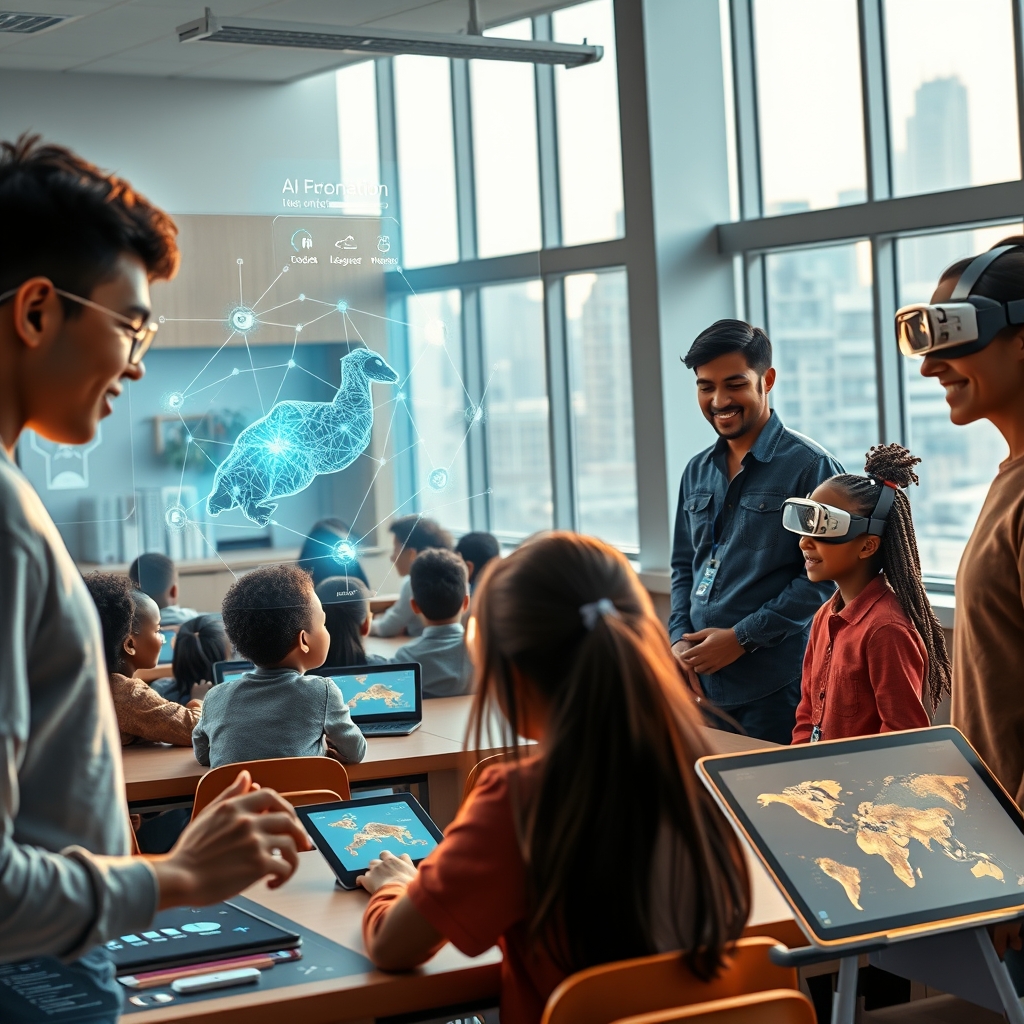
Imagine a classroom where every student receives a learning experience tailored precisely to their strengths, weaknesses, and aspirations—where no one is left behind, and no one is held back. This is no longer a distant dream but a rapidly unfolding reality, thanks to the transformative power of artificial intelligence in education. As AI continues to evolve, it is acting as an invisible architect, meticulously designing personalized learning pathways that bridge gaps in educational equity while fostering lifelong success. The implications are profound, reshaping not just how we teach, but how we think about learning itself.
The Power of Personalization: AI as the Ultimate Learning Companion
At the heart of AI’s impact on education lies its ability to personalize learning at an unprecedented scale. Traditional education systems often operate on a one-size-fits-all model, where students are expected to adapt to a standardized curriculum. However, AI flips this paradigm by adapting the curriculum to the student. Through intelligent tutoring systems and learning analytics, AI can assess a student’s progress in real-time, identifying knowledge gaps and adjusting the pace, content, and difficulty of lessons accordingly. This dynamic approach ensures that each learner receives the support they need, precisely when they need it.
For example, platforms like Carnegie Learning and ScribeSense use AI-driven algorithms to provide instant feedback on assignments, offering hints and explanations tailored to the student’s specific mistakes. This level of personalization not only accelerates learning but also builds confidence, as students no longer feel overwhelmed by material that is too advanced or bored by content that is too basic. The result is a more engaging, effective, and equitable learning experience.
Breaking Barriers: AI as a Catalyst for Educational Equity
Educational equity has long been a pressing challenge, with disparities in access to quality education perpetuating cycles of inequality. AI is emerging as a powerful tool to dismantle these barriers, democratizing access to high-quality learning resources. For students in underserved communities or those with learning disabilities, AI-powered tools can provide the additional support they need to thrive. Speech-to-text applications, for instance, help students with dyslexia or motor impairments participate fully in classroom activities, while AI-driven translation tools break down language barriers for non-native speakers.
Moreover, AI is enabling the creation of inclusive learning environments where diverse needs are not just accommodated but celebrated. Adaptive learning platforms like DreamBox and Knewton use AI to adjust content based on a student’s learning style, whether visual, auditory, or kinesthetic. This ensures that every student, regardless of their background or abilities, has the opportunity to succeed. By leveling the playing field, AI is not just transforming education—it is redefining what it means to learn.
The Role of Learning Analytics: Turning Data into Insight
One of AI’s most significant contributions to education is its ability to harness the power of learning analytics. By collecting and analyzing vast amounts of data on student performance, AI can uncover patterns and insights that were previously invisible. Educators can use this data to identify at-risk students early, intervene with targeted support, and track the effectiveness of teaching strategies. For example, AI can detect when a student is struggling with a particular concept and suggest additional resources or alternative explanations to reinforce understanding.
Learning analytics also empower students to take ownership of their learning. Dashboards that visualize progress, strengths, and areas for improvement provide students with a clear roadmap for success. This transparency fosters a growth mindset, encouraging learners to see challenges as opportunities for development rather than obstacles. When students understand their own learning processes, they become more engaged, motivated, and resilient.
Lifelong Learning in the Digital Age: AI as the Gateway to Continuous Growth
The concept of education as a finite phase of life is becoming obsolete. In today’s fast-paced, ever-changing world, lifelong learning is not just a luxury—it is a necessity. AI is playing a pivotal role in this shift, making continuous education more accessible, flexible, and engaging. Microlearning platforms, powered by AI, deliver bite-sized lessons that fit seamlessly into busy schedules, allowing professionals to upskill or reskill without disrupting their careers. Gamified learning experiences, such as those offered by Duolingo or Khan Academy, make learning feel like play, increasing motivation and retention.
AI is also transforming the way we approach interdisciplinary learning, breaking down the silos that have traditionally separated subjects. By integrating AI-driven tools into project-based learning, students can explore complex, real-world problems that require knowledge from multiple disciplines. For example, an AI-powered simulation might task students with designing a sustainable city, combining elements of science, engineering, economics, and social studies. This holistic approach not only deepens understanding but also prepares students for the interconnected challenges of the future.
The Human Touch: Balancing AI with Empathy and Creativity
While AI’s capabilities are undeniably impressive, it is essential to remember that technology is a tool, not a replacement for human connection. The most effective learning experiences strike a balance between AI-driven personalization and the empathy, creativity, and critical thinking that only human educators can provide. Teachers remain the heart of the classroom, guiding students with wisdom, encouragement, and inspiration. AI simply enhances their ability to do so, freeing them from administrative tasks and allowing them to focus on what truly matters: nurturing the potential of every learner.
As we stand on the brink of a new era in education, the possibilities are as limitless as our imagination. AI is not just reshaping the tools we use to teach—it is redefining the very essence of learning. By embracing these innovations, we can create a future where education is not just a privilege for the few, but a right for all, where every student is empowered to reach their full potential, and where lifelong learning is not just a goal, but a way of life. The invisible architect is already at work, and the blueprint for a brighter, more equitable future is taking shape before our eyes.



