
The AI-Powered Evolution: How Generative Tools and Learning Analytics Are Redefining Experiential and Inclusive STEM Education
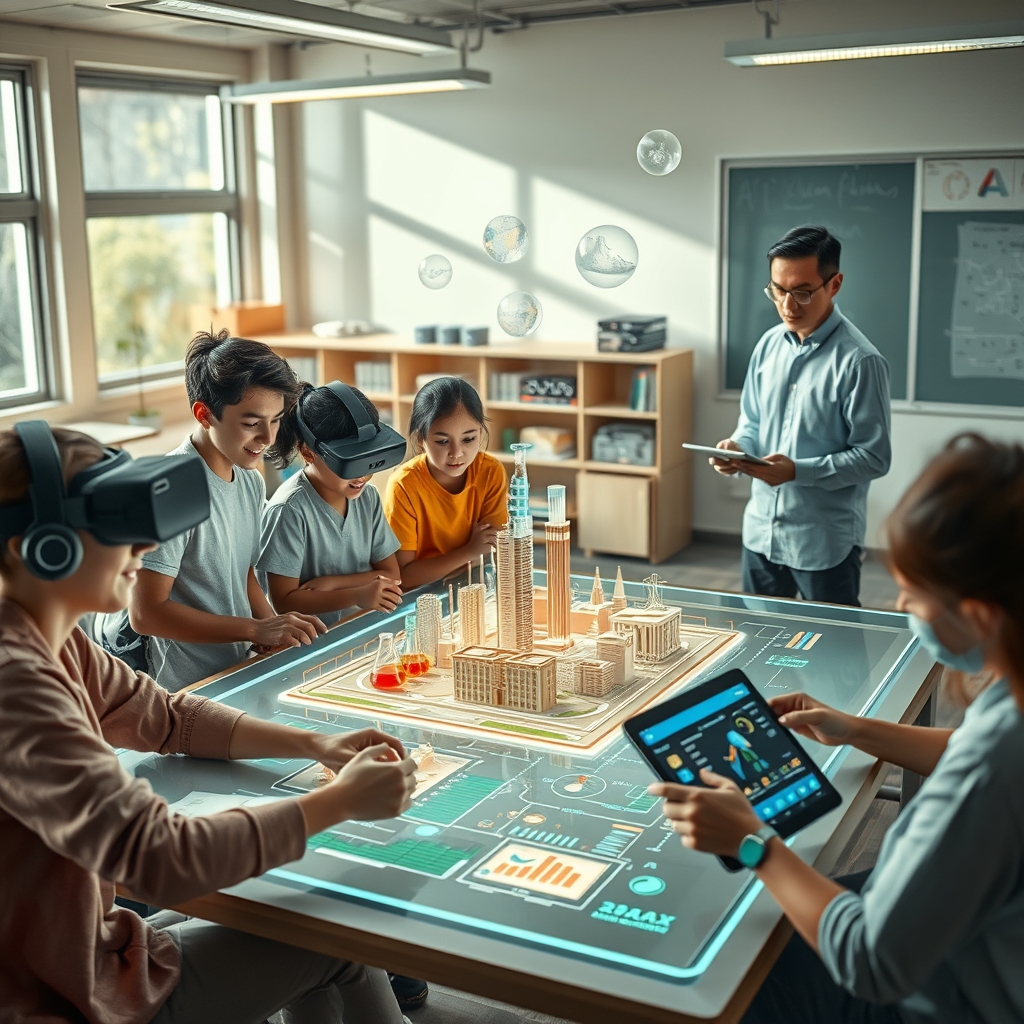
The landscape of education is undergoing a seismic shift, driven by the rapid advancement of artificial intelligence. No longer confined to the realms of science fiction, AI is now a tangible force reshaping how students engage with learning, particularly in the fields of Science, Technology, Engineering, and Mathematics (STEM). At the heart of this transformation lies the fusion of generative tools and learning analytics, which together are crafting a new paradigm of experiential and inclusive education. This evolution is not merely about integrating technology into classrooms; it is about reimagining the very fabric of how knowledge is acquired, applied, and shared.
The Rise of Generative Tools in STEM Education
Generative AI tools, such as large language models and AI-driven simulation platforms, are revolutionizing STEM education by providing students with dynamic, interactive, and highly personalized learning experiences. These tools can generate real-time problem sets, adapt to individual learning paces, and even simulate complex scientific phenomena that would be difficult or impossible to replicate in a traditional classroom. For instance, AI-powered virtual labs allow students to conduct experiments in physics or chemistry without the constraints of physical resources, enabling them to explore concepts like quantum mechanics or molecular interactions in a risk-free, immersive environment.
Beyond simulations, generative AI is also enhancing creativity and innovation in STEM. Tools like AI-driven design software enable students to prototype engineering solutions or architectural models with unprecedented speed and precision. These platforms can suggest optimizations, identify potential flaws, and even generate alternative designs based on predefined parameters. By automating repetitive tasks, generative AI frees students to focus on higher-order thinking, such as critical analysis, problem-solving, and interdisciplinary collaboration.
Learning Analytics: The Backbone of Personalized and Inclusive Learning
While generative tools provide the interactive front end of AI-driven education, learning analytics serve as the invisible backbone, ensuring that these experiences are tailored to the unique needs of each learner. Learning analytics leverage data from student interactions—such as time spent on tasks, patterns of mistakes, and engagement levels—to create detailed profiles of individual learning behaviors. This data is then used to adapt content, provide targeted feedback, and identify students who may need additional support or enrichment.
In the context of STEM education, learning analytics can be particularly transformative for promoting inclusivity. Traditional STEM classrooms often struggle to accommodate diverse learning styles, backgrounds, and abilities. AI-driven analytics can help bridge these gaps by identifying students who may be falling behind due to unaddressed learning disabilities, language barriers, or socio-economic challenges. For example, an AI system might detect that a student is excelling in conceptual understanding but struggling with mathematical computations, prompting the system to provide additional scaffolding in that specific area. Similarly, analytics can highlight biases in instructional materials, ensuring that content is culturally responsive and accessible to all students.
The Intersection of Experiential Learning and AI
Experiential learning—learning by doing—has long been recognized as one of the most effective ways to engage students in STEM. AI is amplifying the power of experiential learning by making it more accessible, scalable, and personalized. For example, AI-driven project-based learning platforms can guide students through complex, real-world challenges, such as designing sustainable cities or developing algorithms to solve global health crises. These platforms can provide real-time feedback, suggest resources, and even facilitate collaboration among students across different geographical locations.
Moreover, AI is enabling experiential learning to extend beyond the classroom. Virtual reality (VR) and augmented reality (AR) platforms, powered by AI, allow students to explore STEM concepts in entirely new ways. Imagine a biology student dissecting a virtual frog with AI-guided instructions, or an engineering student walking through a 3D model of a bridge they designed, with the AI highlighting structural weaknesses in real time. These immersive experiences not only deepen understanding but also foster a sense of curiosity and wonder that is often lost in traditional, textbook-based learning.
Challenges and Ethical Considerations
Despite its immense potential, the integration of AI into STEM education is not without challenges. One of the most pressing concerns is the digital divide, which threatens to exacerbate existing inequalities in education. Students from under-resourced schools or marginalized communities may lack access to the technology and connectivity required to benefit from AI-driven learning tools. Addressing this issue requires a concerted effort from policymakers, educators, and technology providers to ensure equitable access to AI-powered educational resources.
Ethical considerations also loom large in the AI-driven classroom. Issues such as data privacy, algorithmic bias, and the potential for AI to replace human educators must be carefully navigated. For instance, learning analytics rely on vast amounts of student data, raising questions about who owns this data and how it is used. Similarly, AI systems must be designed to avoid perpetuating biases that could disadvantage certain groups of students. Transparency, accountability, and ongoing dialogue with stakeholders are essential to ensuring that AI is used responsibly and ethically in education.
The Future of STEM Education: A Collaborative Ecosystem
The future of STEM education lies in creating a collaborative ecosystem where AI, educators, and students work together to foster a culture of lifelong learning. AI is not a replacement for human teachers but a powerful tool that can augment their capabilities. Educators can leverage AI to gain deeper insights into student learning, personalize instruction, and create more engaging and inclusive classrooms. Meanwhile, students can use AI to explore their interests, develop critical thinking skills, and prepare for the challenges of an increasingly complex world.
As AI continues to evolve, so too will its role in education. The next frontier may involve the integration of AI with emerging technologies like blockchain for secure credentialing, or the use of AI-driven mentorship programs to provide students with personalized guidance throughout their academic and professional journeys. Whatever the future holds, one thing is clear: AI is not just changing how we teach and learn STEM—it is redefining what it means to be educated in the 21st century. The key to unlocking its full potential lies in our ability to harness its power responsibly, inclusively, and with a steadfast commitment to equity.
The journey toward an AI-powered educational future is already underway, and its success will depend on our collective willingness to embrace innovation while remaining grounded in the core values of education: curiosity, critical thinking, and a relentless pursuit of knowledge. As we stand on the brink of this new era, the possibilities are as limitless as the human imagination, and the impact on future generations could be nothing short of transformative.



