
The Living Laboratory: How Wilderness Education Transforms Fear into Curiosity
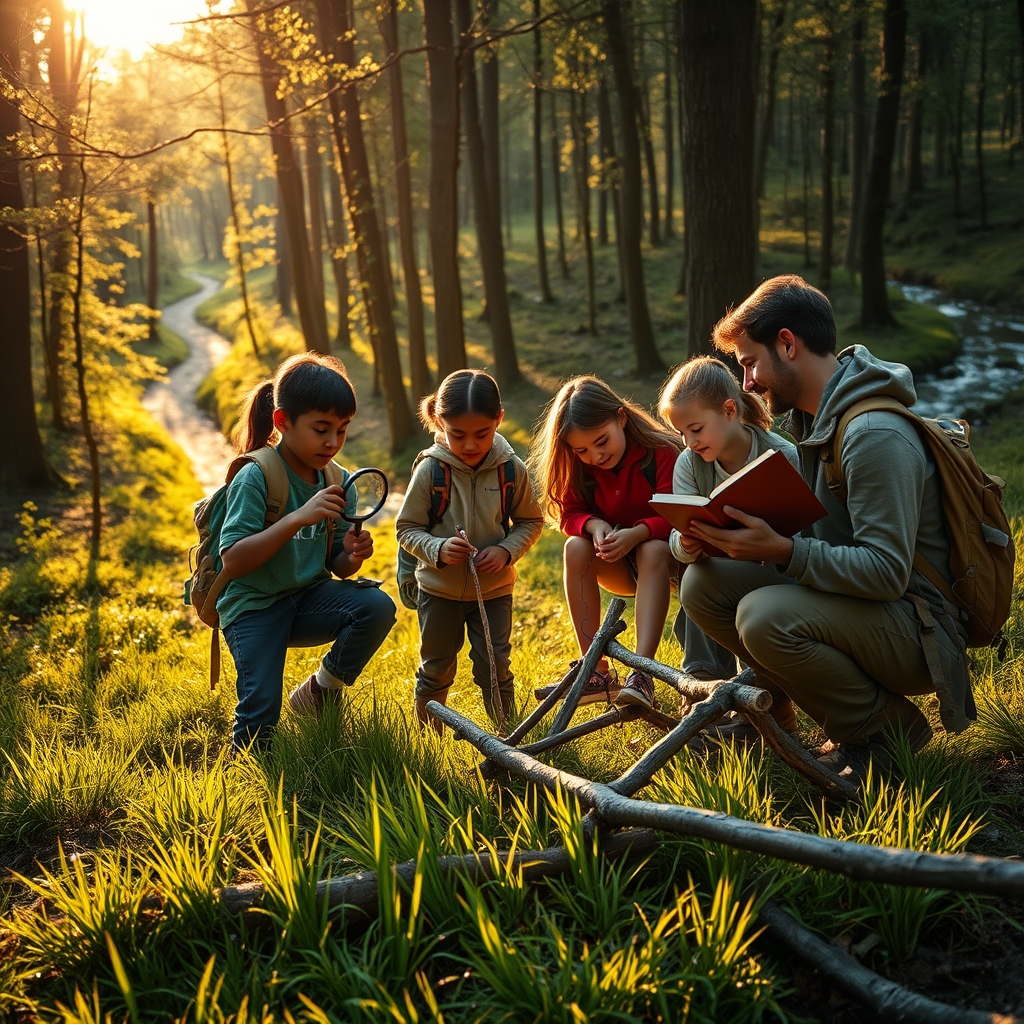
There is a quiet revolution happening where the rustling leaves and the babbling brooks become the most compelling teachers. Wilderness education is not merely about survival skills or outdoor recreation; it is a profound pedagogical approach that reshapes how learners engage with the world. By immersing students in the raw, unpredictable beauty of nature, this method transforms fear into curiosity, uncertainty into discovery, and passive observation into active participation.
The Philosophy Behind Wilderness Education
At its core, wilderness education is rooted in the belief that the natural world is the ultimate classroom. Unlike traditional learning environments, where knowledge is often siloed into subjects and delivered through textbooks, wilderness education thrives on interconnectedness. Here, mathematics is found in the symmetry of a spider’s web, history is etched into the rings of an ancient tree, and literature comes alive in the stories whispered by the wind. This approach aligns with the principles of experiential learning, where students learn by doing, reflecting, and applying their knowledge in real-time.
The philosophy also draws from place-based education, which emphasizes the importance of local environments in shaping educational experiences. By grounding learning in the specific ecosystems, cultures, and histories of a place, students develop a deeper connection to their surroundings. This connection fosters a sense of responsibility and stewardship, as learners begin to see themselves as part of a larger, living system rather than mere observers.
The Transformative Power of Fear
Fear is a natural response to the unknown, and the wilderness is full of it. Whether it’s the fear of getting lost, encountering wildlife, or simply being uncomfortable, these emotions are often seen as barriers to learning. However, wilderness education reframes fear as a catalyst for growth. When students are gently guided through challenging experiences—such as navigating a dense forest, setting up camp in the rain, or identifying edible plants—they learn to manage their fears and build resilience.
This process is deeply personal. A student who once trembled at the thought of sleeping under the stars might, after a few nights in the wilderness, find solace in the quiet hum of the night. Another who feared insects might discover the intricate beauty of a butterfly’s wings or the industriousness of an ant colony. These moments of transformation are not just about overcoming fear; they are about redefining one’s relationship with the unknown and emerging with a newfound sense of confidence.
From Uncertainty to Discovery
The wilderness is unpredictable, and that unpredictability is its greatest gift. Unlike a controlled classroom setting, where outcomes are often predetermined, the natural world offers endless opportunities for spontaneous learning. A sudden rainstorm becomes a lesson in meteorology and adaptability. A chance encounter with a deer sparks questions about animal behavior and ecosystems. A fallen tree invites exploration of decomposition and nutrient cycles.
This kind of field-based inquiry encourages students to ask questions, make observations, and draw connections between what they see and what they already know. It shifts the focus from memorization to investigation, from answers to exploration. In this way, wilderness education cultivates not just knowledge, but a mindset of curiosity and wonder that extends far beyond the boundaries of the classroom.
The Role of the Educator
In wilderness education, the role of the educator is not to impart knowledge but to facilitate discovery. Teachers become guides, mentors, and co-learners, modeling curiosity and resilience while creating a safe space for students to take risks. This shift in dynamics is empowering for both students and educators. Students learn to trust their instincts and take ownership of their learning, while educators witness the profound impact of hands-on, real-world exploration.
One of the most powerful tools in a wilderness educator’s arsenal is self-directed study. By allowing students to pursue their own interests within the framework of the natural world, educators tap into intrinsic motivation. A student fascinated by birds might spend hours observing their behaviors, sketching them, or researching their migratory patterns. Another drawn to geology might collect rocks, classify them, and create a map of the area’s geological history. These self-directed projects not only deepen learning but also foster a sense of autonomy and agency.
Building Community Through Shared Experience
Wilderness education is inherently communal. Whether it’s setting up camp, cooking meals over a fire, or navigating a trail, students rely on one another to succeed. This interdependence fosters cooperative learning, where collaboration and communication become essential skills. The shared challenges and triumphs of wilderness experiences create bonds that are difficult to replicate in a traditional classroom. Students learn to listen, compromise, and support one another, building a sense of community that extends beyond the trip itself.
These experiences also highlight the importance of community-based learning. By engaging with local experts, such as park rangers, indigenous knowledge keepers, or environmental scientists, students gain a broader perspective on the issues facing their environment. They learn that their actions have consequences and that they have the power to make a difference, whether through conservation efforts, citizen science projects, or advocacy.
The Ripple Effects of Wilderness Education
The benefits of wilderness education extend far beyond the individual. As students develop a deeper connection to nature, they become more likely to advocate for its protection. They carry the lessons learned in the wilderness—resilience, curiosity, collaboration—into their daily lives, applying them to challenges in school, work, and relationships. Moreover, the skills and mindsets cultivated through wilderness education are increasingly valuable in a world that demands adaptability, creativity, and problem-solving.
Perhaps most importantly, wilderness education reminds us that learning is not confined to four walls. It is a lifelong journey that happens everywhere, from the tallest mountains to the smallest backyard gardens. By stepping outside and embracing the unknown, we open ourselves up to a world of possibilities, where every leaf, every rock, and every gust of wind has something to teach us. The wilderness does not just transform fear into curiosity; it transforms learners into explorers, ready to discover the magic hidden in plain sight.



