
The AI-Powered Shift: How Intelligent Systems Are Redefining Experiential and Project-Based Learning for the Digital Age
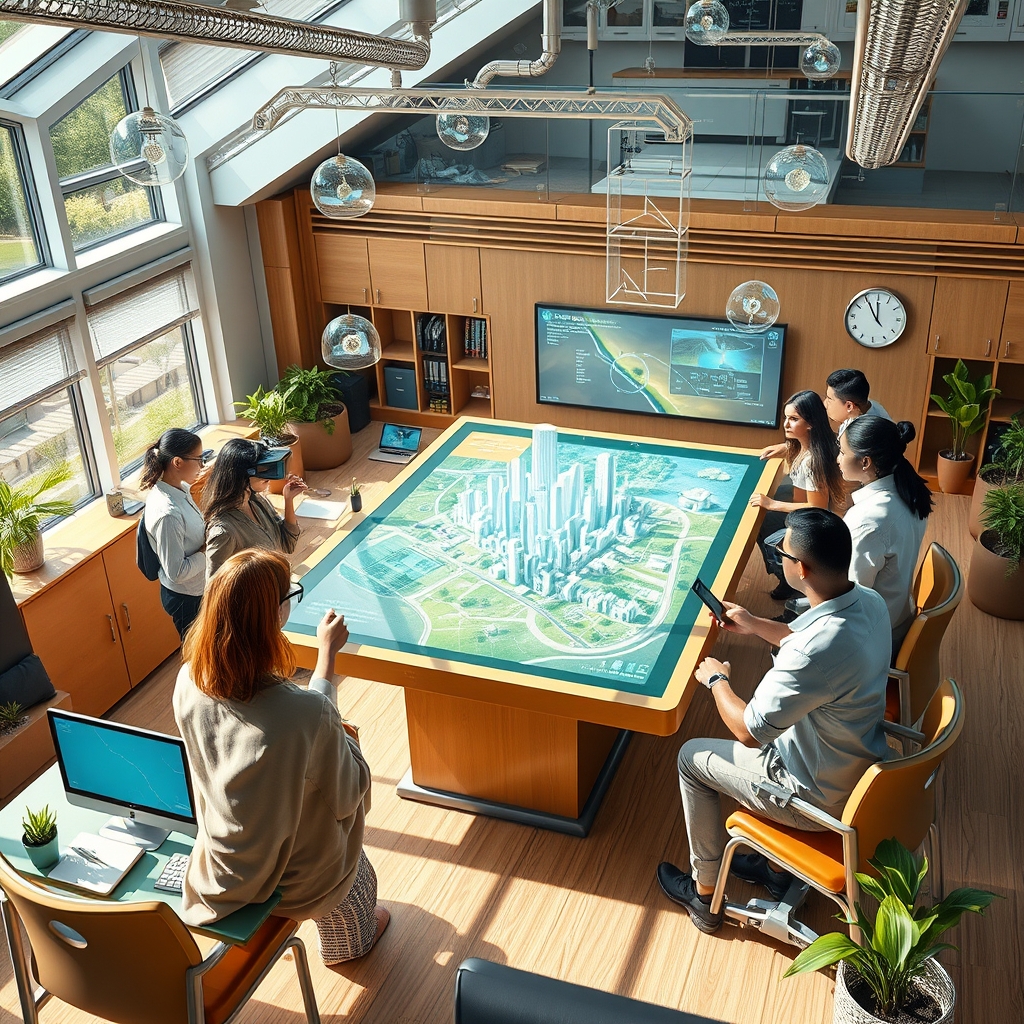
The digital transformation of education is no longer a distant vision—it is an unfolding reality, reshaping how students engage with knowledge, collaborate on challenges, and develop the skills needed for an increasingly complex world. At the heart of this transformation lies the integration of artificial intelligence, which is not merely augmenting traditional teaching methods but fundamentally reimagining the learning experience. Among the most profound shifts is the way AI is enhancing experiential and project-based learning, turning classrooms into dynamic laboratories where curiosity is nurtured, and real-world problems are tackled with unprecedented precision and creativity.
The Evolution of Experiential Learning in the AI Era
Experiential learning has long been celebrated for its ability to bridge the gap between theory and practice, allowing students to apply knowledge in tangible, often collaborative, settings. However, traditional experiential learning models have faced limitations—scalability, personalization, and the ability to provide immediate, actionable feedback have often been constrained by the human capacity of educators. AI is changing this paradigm by introducing intelligent systems that can simulate real-world scenarios, adapt to individual learning paces, and offer instant insights that deepen understanding.
For instance, AI-driven virtual labs in STEM education enable students to conduct experiments in physics, chemistry, or biology without the constraints of physical resources or safety concerns. These platforms use machine learning to adjust the complexity of experiments based on a student’s proficiency, ensuring that learners are neither overwhelmed nor underchallenged. Similarly, in fields like environmental science or urban planning, AI-powered simulations allow students to explore the consequences of their decisions in real time, from modeling climate change impacts to designing sustainable cities. The result is a learning experience that is not only immersive but also deeply personalized, catering to the unique strengths and areas of growth for each student.
Project-Based Learning: From Collaboration to Innovation
Project-based learning (PBL) has gained traction as a pedagogical approach that fosters critical thinking, problem-solving, and interdisciplinary collaboration. Yet, the success of PBL often hinges on the ability of educators to guide students through complex, open-ended challenges while providing timely feedback. AI is stepping into this role as a co-facilitator, offering tools that streamline collaboration, enhance creativity, and measure progress in ways that were previously unimaginable.
One of the most exciting applications of AI in PBL is the use of generative tools to spark innovation. For example, AI-powered design platforms can help students brainstorm solutions to engineering or architectural challenges by generating multiple prototypes based on their input. In the humanities, AI can assist students in crafting narratives, analyzing historical data, or even composing music, providing a creative partner that expands their imaginative horizons. Moreover, AI-driven project management tools can track team dynamics, identify potential bottlenecks, and suggest strategies to improve collaboration, ensuring that projects remain on track and that every student’s voice is heard.
Beyond creativity, AI is also enhancing the assessment of project-based learning. Traditional grading methods often struggle to capture the nuanced skills developed through PBL, such as adaptability, resilience, and interdisciplinary thinking. AI-powered learning analytics, however, can evaluate these competencies by analyzing patterns in student interactions, problem-solving approaches, and iterative improvements. This data-driven feedback not only provides students with a clearer understanding of their progress but also empowers educators to refine their instructional strategies in real time.
The Role of AI in Fostering Inclusive and Equitable Learning
While the benefits of AI-enhanced experiential and project-based learning are vast, their true potential lies in their ability to democratize education. AI systems can adapt to diverse learning needs, ensuring that students with disabilities, language barriers, or varying levels of prior knowledge are not left behind. For example, AI-powered transcription and translation tools can make project-based learning more accessible to non-native speakers or students with hearing impairments. Similarly, intelligent tutoring systems can provide personalized scaffolding for students with learning differences, ensuring that they can fully participate in collaborative projects.
Moreover, AI can help address systemic inequities in education by providing under-resourced schools with access to high-quality experiential learning opportunities. Virtual labs, AI-driven simulations, and generative tools can level the playing field, offering students in remote or economically disadvantaged areas the same caliber of learning experiences as their peers in well-funded institutions. This shift is not just about access—it’s about equity, ensuring that every student, regardless of background, has the opportunity to develop the skills and confidence needed to thrive in the 21st century.
Preparing Students for a World of Uncertainty
The future of work is increasingly defined by complexity, ambiguity, and rapid change. The skills that will be most valuable in this landscape—critical thinking, creativity, collaboration, and adaptability—are precisely those cultivated through experiential and project-based learning. AI is not replacing these human-centric skills but amplifying them, providing students with the tools to navigate uncertainty with confidence and ingenuity.
Consider the role of AI in interdisciplinary learning, where students are encouraged to draw connections between disparate fields. AI-powered platforms can curate resources, suggest cross-disciplinary projects, and even facilitate collaborations between students in different geographic locations. For example, a project on sustainable agriculture might bring together students studying biology, economics, and computer science, with AI serving as the connective tissue that helps them synthesize their knowledge into innovative solutions. This interdisciplinary approach mirrors the real-world challenges students will face, where problems rarely fit neatly into a single academic discipline.
The Human Element in an AI-Augmented World
As AI continues to reshape education, it is essential to remember that technology is a tool, not a replacement for human connection. The most effective learning experiences are those that combine the precision and adaptability of AI with the empathy, inspiration, and mentorship of educators. Teachers remain the architects of learning environments, guiding students through complex projects, fostering a growth mindset, and helping them make sense of the world. AI simply provides them with the means to do so more effectively, freeing them from administrative burdens and allowing them to focus on what they do best: inspiring the next generation of thinkers, creators, and problem-solvers.
The integration of AI into experiential and project-based learning is not just about preparing students for the future—it’s about redefining what education can and should be. It’s about moving beyond rote memorization and standardized tests to a model where learning is dynamic, inclusive, and deeply personal. In this new era, classrooms are no longer confined by four walls or limited by the constraints of traditional pedagogy. Instead, they are boundless spaces where curiosity is the compass, and AI is the catalyst that turns imagination into reality. The question is no longer whether AI will transform education, but how we will harness its potential to create learning experiences that are as limitless as the human mind itself.



