
Unlocking Potential: The Transformative Power of Experiential Learning in the Great Outdoors
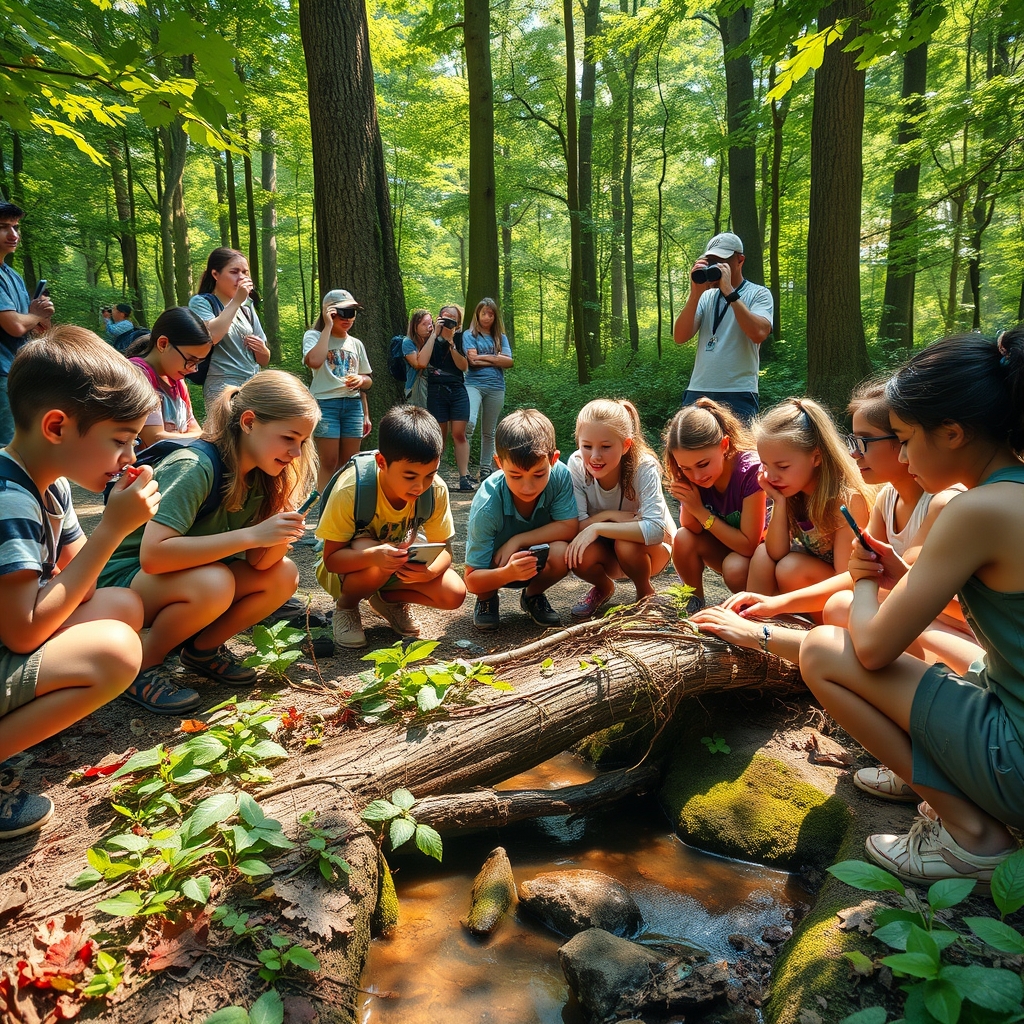
In a world increasingly dominated by screens and structured classrooms, the call of the wild and the promise of hands-on discovery offer a refreshing alternative. Experiential learning, a pedagogical approach that emphasizes direct experience and reflection, is gaining traction as educators and learners alike seek more engaging, meaningful ways to connect with knowledge. Whether through outdoor education, project-based learning, or community-based initiatives, this approach fosters curiosity, resilience, and a deeper understanding of the world. But what makes experiential learning so powerful, and how can it be harnessed to its fullest potential?
The Foundations of Experiential Learning
At its core, experiential learning is about doing. It moves beyond theoretical knowledge to immerse learners in real-world scenarios where they can apply concepts, test hypotheses, and reflect on outcomes. This methodology is rooted in the work of educational theorists like John Dewey, who argued that education should be a dynamic, interactive process rather than a passive absorption of facts. Dewey’s philosophy aligns closely with modern interpretations of experiential learning, which prioritize active engagement, problem-solving, and critical thinking.
One of the most compelling forms of experiential learning is outdoor education, which leverages natural environments to teach everything from science to social skills. Imagine a group of students trekking through a forest, identifying plant species, and discussing ecosystems firsthand. This kind of place-based education not only deepens their understanding of biology but also instills a sense of stewardship for the environment. Similarly, forest schools and wilderness education programs take learning outside the traditional classroom, using nature as both teacher and textbook.
Project-Based and Place-Based Learning: Bridging Theory and Practice
Project-based learning (PBL) and place-based education are two pillars of experiential learning that emphasize context and application. In PBL, students tackle complex, real-world problems over extended periods, collaborating with peers and often engaging with community members. For example, a class might design a sustainable garden for their school, researching soil health, plant biology, and water conservation along the way. This approach not only reinforces academic concepts but also develops teamwork, creativity, and perseverance.
Place-based education, on the other hand, anchors learning in the local community and environment. Students might study the history of their town, analyze local water quality, or participate in citizen science projects that contribute to global research. By connecting learning to their immediate surroundings, students gain a sense of belonging and relevance, making education feel less abstract and more tangible. This method also fosters community-based learning, where local experts, elders, and organizations become valuable resources and partners in the educational process.
The Role of Informal Learning Environments
Not all learning happens within the four walls of a classroom. Informal learning environments—such as museums, parks, and community centers—play a crucial role in experiential education. These spaces offer opportunities for self-directed study and hands-on learning, where individuals can explore topics at their own pace and according to their interests. For instance, a visit to a science museum might spark a lifelong passion for astronomy, or a weekend spent micro camping could ignite an interest in environmental conservation.
Informal learning environments also provide a low-pressure setting for experimentation and failure, which are essential components of the learning process. In these spaces, mistakes are not penalized but seen as stepping stones to deeper understanding. This aligns with the principles of adventure education, where challenges and risks are embraced as opportunities for growth. Whether navigating a ropes course or conducting field-based inquiry in a local stream, learners develop confidence and adaptability in ways that traditional classrooms often cannot replicate.
Service Learning and Community Impact
Experiential learning extends beyond personal growth to encompass community impact through service learning. This approach combines academic instruction with meaningful community service, allowing students to apply their skills while addressing real-world needs. For example, a high school class might partner with a local nonprofit to organize a food drive, learning about logistics, marketing, and social justice in the process. Service learning not only benefits the community but also fosters empathy, civic responsibility, and a sense of agency in students.
Similarly, environmental education often incorporates service learning by engaging students in conservation efforts. Planting trees, cleaning up local parks, or monitoring wildlife populations are just a few ways learners can contribute to environmental sustainability while deepening their understanding of ecological principles. These experiences highlight the interconnectedness of knowledge and action, reinforcing the idea that education should serve a greater purpose.
Cooperative Learning and Action Research
Collaboration is a cornerstone of experiential learning, and cooperative learning strategies ensure that students work together to achieve shared goals. Whether through group projects, peer teaching, or team-based challenges, cooperative learning fosters communication, leadership, and interpersonal skills. It also mirrors the collaborative nature of many real-world professions, preparing students for future careers.
Action research takes collaboration a step further by involving students in the process of inquiry and problem-solving. In this model, learners identify a problem, design a study, collect data, and propose solutions. For example, a class might investigate the impact of plastic waste in their community and develop a campaign to reduce single-use plastics. Action research empowers students to see themselves as agents of change, capable of making a difference in their world.
The Future of Experiential Learning
As education continues to evolve, the demand for experiential learning opportunities is likely to grow. Schools and organizations are increasingly recognizing the value of hands-on, real-world exploration in fostering critical thinking, creativity, and emotional intelligence. From forest schools in Scandinavia to citizen science projects in urban centers, experiential learning is reshaping how we think about education. It challenges the notion that learning must be confined to a classroom or dictated by a rigid curriculum, instead embracing the idea that the world itself is a classroom.
The benefits of experiential learning are far-reaching, extending beyond academic achievement to include personal growth, social responsibility, and environmental stewardship. By stepping outside the traditional boundaries of education, learners of all ages can discover new passions, develop essential skills, and forge connections with their communities and the natural world. In doing so, they not only gain knowledge but also the confidence and curiosity to continue learning throughout their lives. The great outdoors, the local community, and the challenges of the real world become not just backdrops for education but its most powerful teachers.



