
Unlocking the Potential of Generative AI: Transforming STEM Education Through Experiential and Interdisciplinary Learning
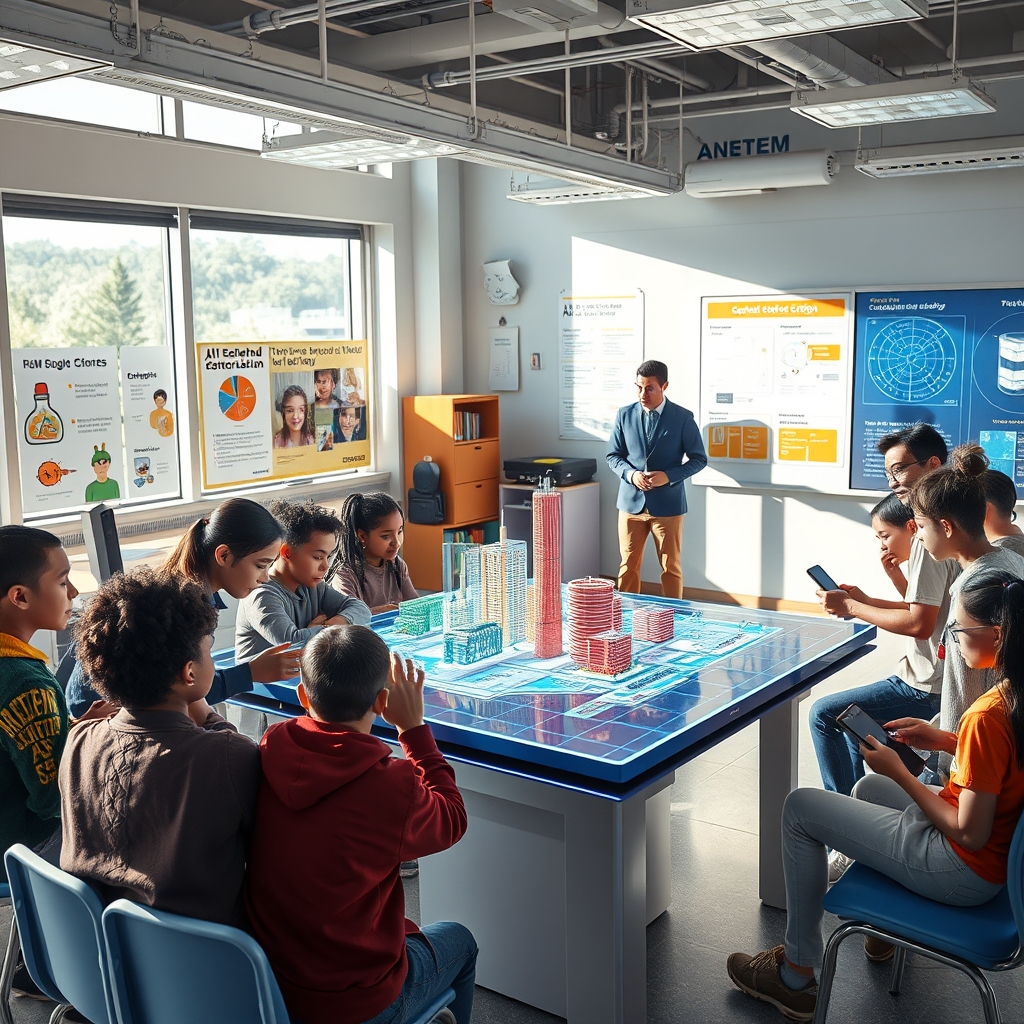
In the rapidly evolving landscape of education, generative artificial intelligence (AI) is emerging as a powerful catalyst for change, particularly in Science, Technology, Engineering, and Mathematics (STEM) fields. By integrating AI-driven tools with experiential and interdisciplinary learning, educators are not only enhancing the way students engage with complex concepts but also fostering critical thinking, creativity, and problem-solving skills that are essential for the future workforce. The fusion of these approaches is reshaping traditional classrooms into dynamic, student-centered environments where learning is both personalized and deeply immersive.
The Rise of Generative AI in STEM Education
Generative AI, with its ability to create content, simulate scenarios, and provide real-time feedback, is revolutionizing how STEM subjects are taught and learned. Unlike conventional educational tools, generative AI can adapt to individual learning paces, generate customized problems, and even create interactive simulations that bring abstract theories to life. For instance, AI-powered platforms can design virtual labs where students conduct experiments in physics or chemistry without the constraints of physical resources. These tools not only make learning more accessible but also allow students to explore concepts in ways that were previously unimaginable.
Moreover, generative AI is breaking down the silos between disciplines. In an interdisciplinary STEM curriculum, students often struggle to see the connections between subjects like mathematics and biology or engineering and computer science. AI can bridge these gaps by generating cross-disciplinary projects that require students to apply knowledge from multiple fields. For example, an AI tool might present a challenge that combines principles of environmental science, data analytics, and engineering, encouraging students to think holistically and develop solutions that are both innovative and practical.
Experiential Learning: From Theory to Practice
Experiential learning, which emphasizes learning through doing, is a natural fit for STEM education. When combined with generative AI, this approach becomes even more powerful. AI can simulate real-world scenarios, such as designing a sustainable city or programming a robot to navigate an obstacle course, allowing students to apply theoretical knowledge in a hands-on environment. These simulations are not just engaging; they also provide immediate feedback, enabling students to iterate and improve their solutions in real time.
Project-based learning (PBL) is another key component of experiential learning that benefits from AI integration. In PBL, students work on long-term projects that require research, collaboration, and critical thinking. Generative AI can assist by providing resources, generating project ideas, or even acting as a virtual mentor that guides students through the problem-solving process. For example, an AI tool could help students brainstorm solutions to a global challenge like climate change, offering data-driven insights and suggesting innovative approaches that students might not have considered on their own.
The Role of Intelligent Tutoring Systems
Intelligent Tutoring Systems (ITS) are a subset of generative AI that provide personalized instruction and support to students. These systems use machine learning algorithms to adapt to a student’s learning style, identify areas of difficulty, and deliver targeted interventions. In STEM education, ITS can be particularly valuable for subjects like mathematics or coding, where students often progress at different paces. By offering one-on-one guidance, ITS can help struggling students catch up while challenging advanced learners with more complex material.
One of the most significant advantages of ITS is their ability to provide instant feedback. In traditional classrooms, students might wait days or even weeks to receive feedback on their work, which can hinder their progress. With ITS, students receive immediate responses to their questions or mistakes, allowing them to correct errors and deepen their understanding on the spot. This real-time interaction not only accelerates learning but also builds confidence, as students can see their progress in real time.
Fostering Critical Thinking and Digital Literacy
While generative AI offers tremendous benefits, it also presents challenges, particularly in the realm of critical thinking and digital literacy. As students increasingly rely on AI tools, it is essential to teach them how to use these technologies responsibly and effectively. Educators must emphasize the importance of questioning AI-generated content, verifying information, and understanding the limitations of these tools. By doing so, students can develop the critical thinking skills needed to navigate an AI-driven world.
Digital literacy is another critical skill that must be integrated into STEM education. Students need to understand not only how to use AI tools but also how these tools work. This includes learning about data privacy, ethical considerations, and the potential biases in AI algorithms. By fostering digital literacy, educators can empower students to become informed and responsible users of technology, ensuring that they can leverage AI to its fullest potential while mitigating its risks.
Gamified Learning: Making STEM Fun and Engaging
Gamification is a powerful strategy for increasing student engagement, particularly in STEM subjects that some students may find intimidating. Generative AI can enhance gamified learning by creating dynamic, adaptive games that respond to a student’s performance. For example, an AI-powered math game might adjust its difficulty level based on the student’s answers, ensuring that they are always challenged but not overwhelmed. These games can also incorporate storytelling elements, turning abstract concepts into exciting narratives that capture students’ imaginations.
Beyond engagement, gamified learning can also foster a growth mindset. When students see their progress through badges, leaderboards, or other rewards, they are more likely to persist in the face of challenges. This resilience is particularly important in STEM fields, where failure is often a necessary part of the learning process. By normalizing failure as a stepping stone to success, gamified learning can help students develop the perseverance needed to tackle complex problems.
Ensuring Educational Equity Through AI
One of the most promising aspects of generative AI in education is its potential to promote educational equity. AI-driven tools can provide personalized learning experiences that cater to diverse learning needs, ensuring that all students, regardless of their background or abilities, have access to high-quality education. For example, AI can generate alternative explanations for complex concepts, offer translations for non-native speakers, or provide audio descriptions for visually impaired students. These adaptations make STEM education more inclusive and accessible to a broader range of learners.
However, it is crucial to address the digital divide that may prevent some students from accessing AI tools. Schools and policymakers must work together to ensure that all students have the necessary technology and internet access to benefit from AI-driven education. Additionally, educators must be trained to use these tools effectively, so they can support students in maximizing their potential. By prioritizing equity, we can ensure that generative AI serves as a tool for leveling the playing field rather than exacerbating existing disparities.
As generative AI continues to evolve, its impact on STEM education will only grow more profound. By integrating AI with experiential and interdisciplinary learning, educators can create dynamic, engaging, and inclusive learning environments that prepare students for the challenges of the future. The key lies in striking a balance between leveraging the power of AI and fostering the critical thinking, creativity, and digital literacy skills that students need to thrive in an increasingly complex world. The future of education is not just about adopting new technologies but about reimagining how we teach and learn, ensuring that every student has the opportunity to unlock their full potential.



