
The Future of Learning: How AI-Powered Microlearning and Gamification Are Redefining Education
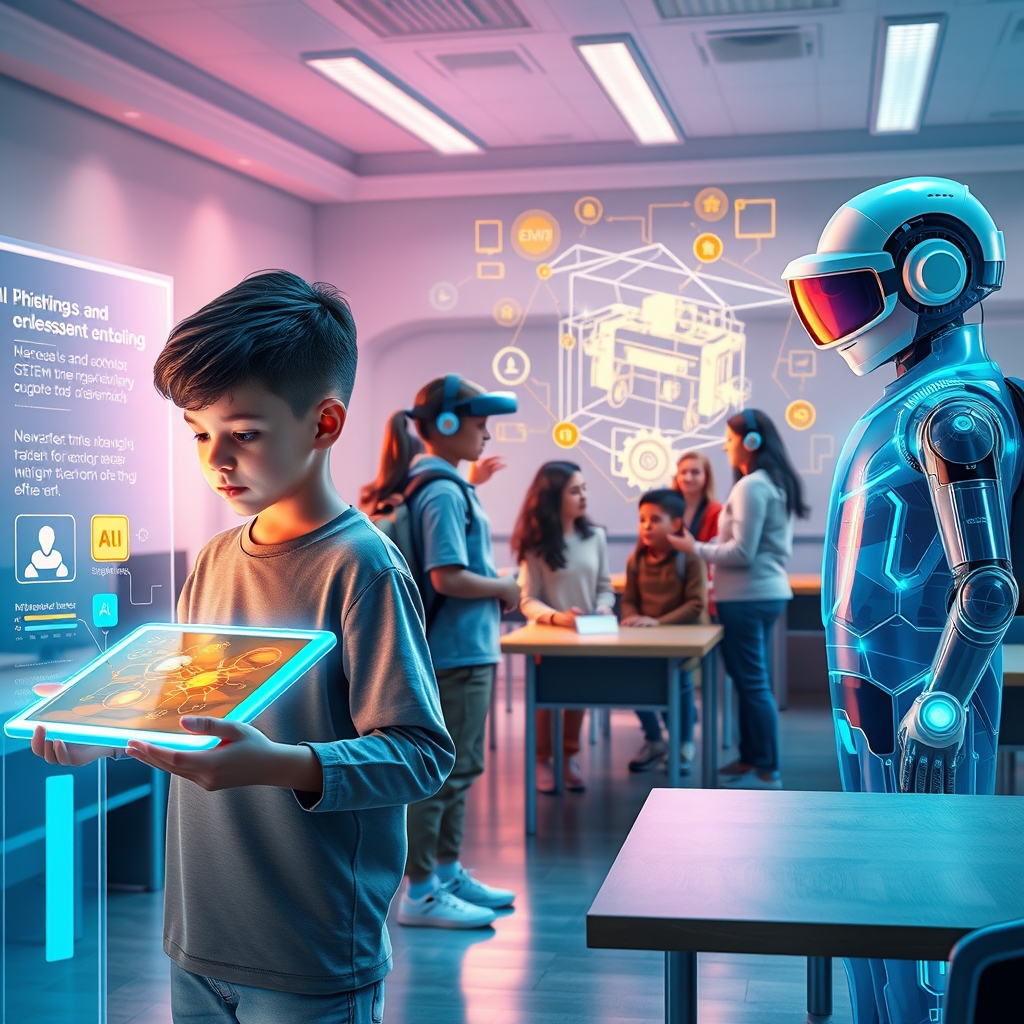
Education is undergoing a seismic shift, driven by rapid advancements in technology and a growing demand for flexible, engaging, and effective learning experiences. At the heart of this transformation lies the fusion of artificial intelligence (AI), microlearning, and gamified learning—three powerful forces reshaping how knowledge is acquired, retained, and applied. Together, they are not only making education more accessible but also more personalized, interactive, and aligned with the needs of a digital-first generation.
The Rise of Microlearning: Bite-Sized Knowledge for a Fast-Paced World
In an era where attention spans are shrinking and time is a precious commodity, traditional hour-long lectures and dense textbooks are increasingly ineffective. Enter microlearning—a pedagogical approach that delivers content in small, focused bursts, typically lasting between 2 to 10 minutes. These bite-sized lessons are designed to be consumed quickly, often on mobile devices, and are tailored to specific learning objectives.
Research has shown that microlearning improves retention rates by up to 80% compared to traditional methods. This is because the brain processes and stores information more efficiently when it is presented in concise, digestible chunks. AI enhances this approach by dynamically adjusting the difficulty, pacing, and content based on the learner’s performance. For example, if a student struggles with a particular concept in a STEM module, the system can automatically provide additional micro-lessons or alternative explanations until mastery is achieved.
Why Microlearning Works in Modern Education
Microlearning aligns perfectly with the principles of lifelong learning and just-in-time education. Professionals seeking to upskill, students preparing for exams, or even curious individuals exploring new topics can access relevant content exactly when they need it. Platforms like Duolingo, Khan Academy, and Coursera have already embraced this model, offering modular courses that fit seamlessly into busy schedules. Moreover, microlearning supports interdisciplinary learning by allowing learners to explore connections between subjects without the constraints of a rigid curriculum.
Gamification: Turning Learning into an Engaging Adventure
If microlearning addresses the “what” and “when” of education, gamified learning tackles the “how”—transforming the learning experience from a passive activity into an interactive, motivating journey. Gamification incorporates elements of game design, such as points, badges, leaderboards, and challenges, into educational contexts to boost engagement and motivation. When combined with AI, these systems become even more powerful, adapting in real-time to keep learners in a state of “flow”—where challenges are neither too easy nor too difficult.
For instance, platforms like Kahoot! and Quizlet use gamification to make revision and assessment fun, while more advanced systems like Classcraft turn entire classrooms into role-playing games where students collaborate, solve problems, and earn rewards. The psychological principles behind gamification—such as instant feedback, progress tracking, and social competition—tap into intrinsic motivators, making learners more likely to persist and succeed.
The Role of AI in Personalizing Gamified Learning
AI takes gamification to the next level by creating personalized learning pathways. Instead of a one-size-fits-all approach, AI analyzes a learner’s behavior, preferences, and performance to tailor the gaming experience. For example, an AI-driven language learning app might adjust the difficulty of vocabulary challenges based on the user’s proficiency or introduce narrative elements that align with their interests. This level of personalization ensures that learners remain engaged and challenged, reducing dropout rates and improving outcomes.
Furthermore, AI can generate dynamic content, such as adaptive quizzes or scenario-based challenges, that evolves alongside the learner. In project-based learning (PBL) environments, AI can simulate real-world problems, providing students with immersive experiences that develop critical thinking and problem-solving skills. For example, an AI-powered virtual lab could allow students to conduct experiments in science, technology, engineering, and mathematics (STEM) fields without the limitations of physical resources.
Bridging Gaps: AI, Microlearning, and Gamification for Educational Equity
One of the most promising aspects of AI-powered microlearning and gamification is their potential to address educational equity. Traditional education systems often struggle to accommodate diverse learning needs, leaving many students behind. However, these technologies can democratize access to high-quality education by providing scalable, affordable, and inclusive solutions.
For example, intelligent tutoring systems (ITS) can offer one-on-one support to students in underserved communities, adapting to their unique learning styles and paces. Microlearning modules can be designed to be accessible on low-bandwidth devices, ensuring that learners in remote or low-income areas are not left behind. Meanwhile, gamification can make learning more engaging for students who may struggle with traditional methods, such as those with learning disabilities or language barriers.
The Future of Hybrid and Online Learning
The COVID-19 pandemic accelerated the adoption of hybrid learning and online degree programs, but these models are here to stay. AI-powered microlearning and gamification are key enablers of this shift, making online education more interactive and effective. Universities and corporations alike are leveraging these tools to create blended learning environments that combine the best of in-person and digital instruction.
For instance, a university might use AI to analyze student performance in an online course and recommend targeted micro-lessons to address knowledge gaps. Meanwhile, gamified elements could be integrated into the curriculum to maintain engagement, such as virtual escape rooms for history classes or coding challenges for computer science students. These innovations are not just enhancing learning outcomes—they are redefining what education can and should be in the 21st century.
As we look ahead, the integration of AI, microlearning, and gamification will continue to break down barriers, making education more personalized, engaging, and accessible than ever before. The question is no longer whether these technologies will transform learning, but how quickly we can harness their potential to create a future where everyone has the opportunity to thrive. The tools are here; the next step is to ensure they are used wisely, ethically, and inclusively to shape a world where education knows no limits.



