
The AI Learning Revolution: How Intelligent Systems Are Crafting Dynamic, Equity-Driven Pathways for Digital Natives
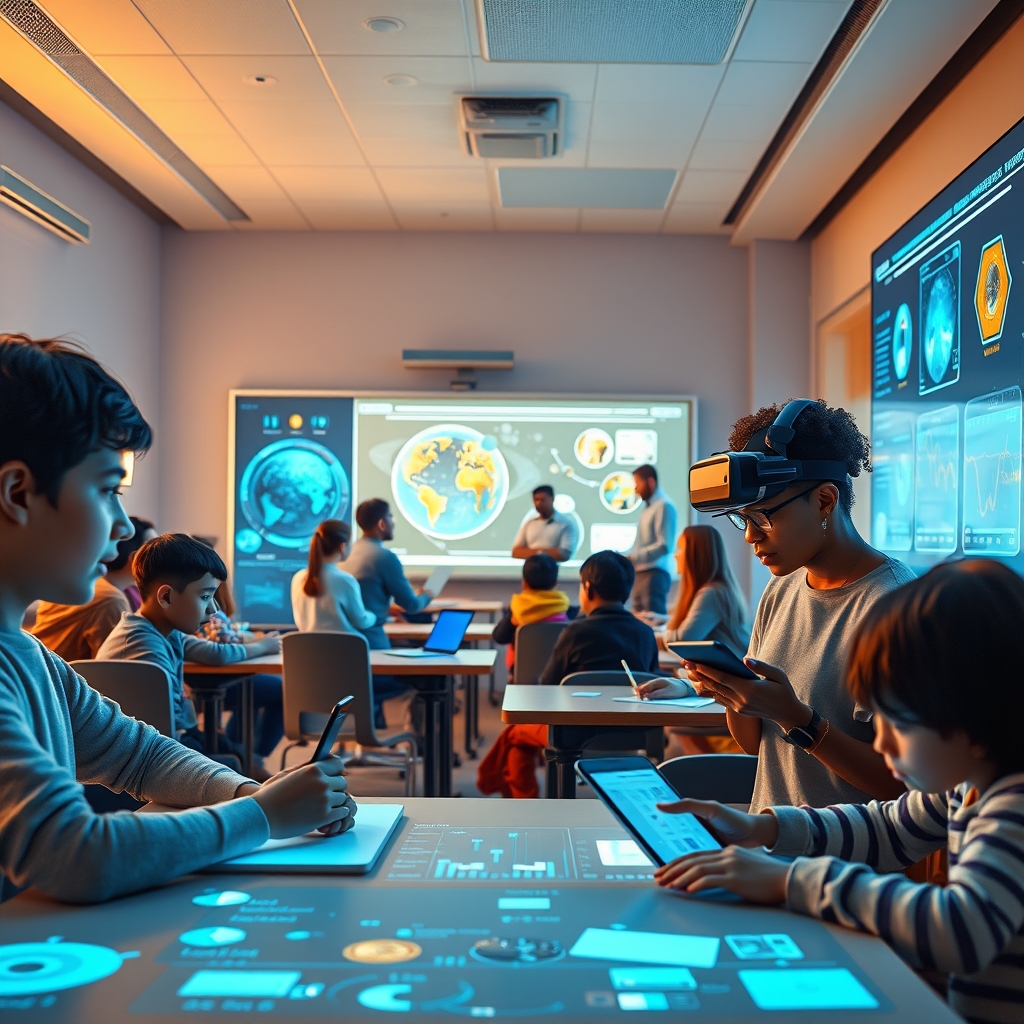
The modern classroom is no longer confined to four walls or a static curriculum. As digital natives navigate an increasingly complex world, education must evolve to meet their needs—dynamic, adaptive, and deeply personalized. At the heart of this transformation lies artificial intelligence, a silent yet powerful force reshaping how students learn, engage, and grow. From intelligent tutoring systems to generative tools, AI is not just augmenting education; it is redefining it, ensuring that every learner, regardless of background, has access to equitable and immersive learning experiences.
The Power of Personalized Learning
One of the most profound impacts of AI in education is its ability to tailor learning experiences to individual students. Traditional one-size-fits-all education often leaves gaps, with some students struggling to keep up while others remain unchallenged. AI-driven platforms, however, analyze vast amounts of data—learning styles, progress rates, and even emotional responses—to create customized pathways. These systems adapt in real time, offering targeted support where it’s needed most. For example, an intelligent tutoring system might detect a student’s difficulty with algebraic concepts and provide additional exercises, interactive simulations, or even gamified challenges to reinforce understanding. This level of personalization ensures that no student is left behind, fostering a sense of confidence and mastery.
Breaking Barriers with Inclusive Education
Educational equity has long been a challenge, with disparities in access, resources, and support persisting across communities. AI is emerging as a powerful equalizer, bridging gaps and creating opportunities for learners who might otherwise be marginalized. Tools like speech-to-text software, AI-powered translators, and adaptive learning platforms are making education more accessible for students with disabilities, language barriers, or socioeconomic constraints. For instance, generative AI can create multilingual content, ensuring that non-native speakers can engage with material in their preferred language. Similarly, AI-driven learning analytics can identify at-risk students early, allowing educators to intervene with targeted support before challenges become insurmountable. By democratizing access to high-quality education, AI is helping to level the playing field and create a more inclusive learning environment.
The Rise of Experiential and Project-Based Learning
Education is no longer just about memorizing facts; it’s about applying knowledge to real-world problems. AI is accelerating this shift by enabling experiential and project-based learning at scale. Virtual labs, simulations, and AI-generated scenarios allow students to explore complex concepts in a hands-on manner, fostering critical thinking and problem-solving skills. For example, a biology student might use an AI-powered simulation to conduct virtual dissections, while a history class could engage in an interactive reenactment of historical events. These immersive experiences make learning more engaging and relevant, preparing students for the challenges of the future. Moreover, AI can facilitate collaboration, connecting students across the globe to work on interdisciplinary projects, breaking down geographical and cultural barriers.
Gamification and Microlearning: Engaging the Digital Native
The attention spans of digital natives are shaped by the fast-paced, interactive nature of technology. To capture their interest, educators are turning to gamified learning and microlearning—two approaches that AI enhances significantly. Gamification incorporates game-like elements, such as points, badges, and leaderboards, into educational content, making learning feel like play. AI takes this a step further by dynamically adjusting difficulty levels, providing instant feedback, and creating personalized challenges. Microlearning, on the other hand, breaks down complex topics into bite-sized, easily digestible modules. AI curates these modules based on a student’s progress, ensuring that learning is efficient and engaging. Together, these approaches cater to the preferences of modern learners, making education more accessible and enjoyable.
The Role of Learning Analytics in Shaping the Future
Data is the backbone of AI’s transformative power in education. Learning analytics, powered by AI, provide educators with deep insights into student performance, engagement, and learning behaviors. These analytics go beyond traditional metrics like test scores, offering a holistic view of a student’s journey. For example, AI can track how long a student spends on a particular topic, their interaction with digital resources, and even their emotional responses through facial recognition or biometric data. Educators can use this information to refine teaching strategies, identify gaps in the curriculum, and provide targeted interventions. Furthermore, learning analytics can help institutions measure the effectiveness of their programs, ensuring that resources are allocated where they are needed most. This data-driven approach is not just about improving outcomes; it’s about creating a more responsive and adaptive education system.
Hybrid Learning: The Best of Both Worlds
The COVID-19 pandemic accelerated the adoption of hybrid learning, a model that blends traditional classroom instruction with online education. AI is playing a crucial role in making hybrid learning more effective and engaging. Intelligent systems can automate administrative tasks, such as grading and attendance tracking, freeing up educators to focus on instruction. AI-powered chatbots can provide 24/7 support to students, answering questions and offering guidance outside of classroom hours. Additionally, AI can facilitate synchronous and asynchronous learning, ensuring that students can engage with material at their own pace while still benefiting from real-time collaboration. This flexibility is particularly valuable for adult learners, working professionals, and those in remote or underserved communities, making education more accessible than ever before.
As we stand on the brink of a new era in education, one thing is clear: AI is not just a tool but a catalyst for change. It is dismantling the barriers of traditional education, creating pathways that are as unique as the learners themselves. From personalized learning to inclusive education, experiential learning to hybrid models, AI is crafting a future where every student has the opportunity to thrive. The question is no longer whether AI will transform education, but how we can harness its potential to create a more equitable, engaging, and dynamic learning landscape for all. The revolution is here, and it is redefining what it means to learn, grow, and succeed in the 21st century.



