
The AI Learning Ecosystem: How Intelligent Systems Are Cultivating Critical Thinkers Through Blended and Gamified Experiences
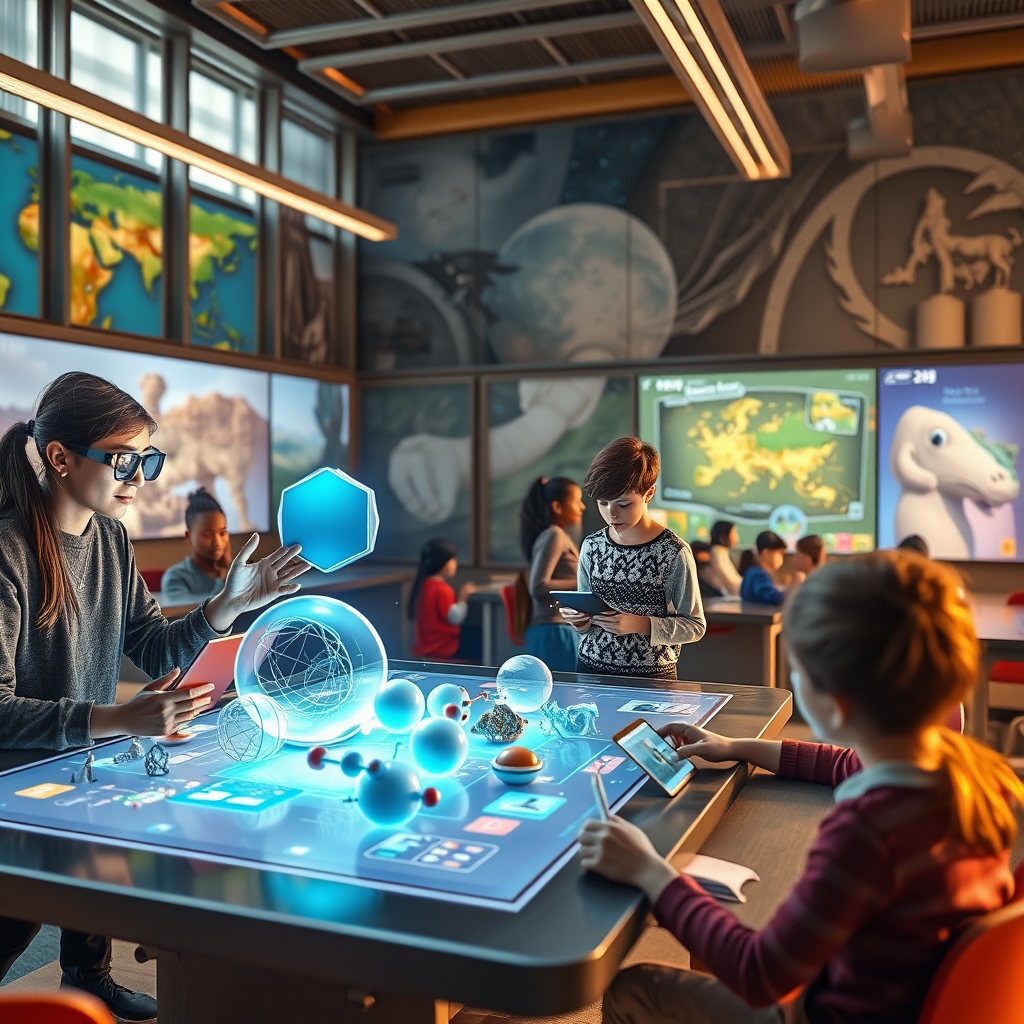
Imagine a classroom where every student’s unique strengths are not just acknowledged but actively nurtured, where lessons adapt in real-time to individual learning paces, and where engagement is not a fleeting moment but a sustained experience. This is not a distant vision of the future—it is the present reality shaped by the convergence of artificial intelligence and innovative educational strategies. The fusion of AI with blended and gamified learning is not merely enhancing education; it is redefining what it means to learn, think critically, and thrive in an increasingly complex world.
The Power of Personalization in a Digital Age
At the heart of this transformation lies the ability of AI to deliver personalized learning experiences at scale. Traditional education models, built on one-size-fits-all curricula, often struggle to address the diverse needs of students. AI, however, thrives in this space. By analyzing vast amounts of data—from student performance to engagement patterns—intelligent systems can tailor content, pacing, and even teaching methods to suit individual learners. For instance, platforms like Khan Academy and Duolingo leverage AI to adjust difficulty levels in real-time, ensuring that students are neither bored by material that is too easy nor overwhelmed by content that is too challenging.
This level of personalization extends beyond academic performance. AI-driven tools can identify learning styles, preferences, and even emotional states, allowing educators to intervene proactively when a student shows signs of frustration or disengagement. The result is a learning environment that feels less like a rigid institution and more like a dynamic partnership between student and system, where curiosity is encouraged and challenges are met with support rather than frustration.
Blended Learning: The Best of Both Worlds
While AI excels at personalization, its true potential is unlocked when combined with blended learning—a hybrid approach that integrates traditional classroom instruction with digital tools. Blended learning creates a flexible framework where students can benefit from the structure and social interaction of in-person education while leveraging the adaptability and resources of online platforms. AI enhances this model by acting as a bridge between the two, ensuring that the digital and physical learning experiences complement rather than compete with each other.
Consider a high school science class where students engage in hands-on experiments in the lab while using an AI-powered platform to explore simulations, receive instant feedback, and collaborate on virtual projects. The AI system can track progress across both environments, providing teachers with insights into how students apply knowledge in different contexts. This seamless integration not only deepens understanding but also prepares students for a world where digital and physical realities increasingly intersect.
Gamification: Turning Learning into an Adventure
One of the most exciting applications of AI in education is gamification—the use of game-like elements to make learning more engaging and motivating. Gamified learning leverages principles such as competition, rewards, and storytelling to transform education into an interactive experience. AI takes this a step further by dynamically adjusting game mechanics based on student performance, ensuring that challenges remain appropriately difficult and rewarding.
Platforms like Classcraft and Kahoot! demonstrate the power of gamification in the classroom. Students earn points, unlock achievements, and progress through levels as they master new concepts. AI enhances these experiences by personalizing quests and challenges, ensuring that each student is both challenged and supported. For example, a student struggling with algebra might receive additional hints or simpler problems, while a more advanced learner is presented with complex, real-world applications of the same concepts. This approach not only makes learning fun but also fosters resilience, problem-solving skills, and a growth mindset.
Cultivating Critical Thinkers for the Future
The ultimate goal of education is not merely to transmit information but to cultivate critical thinkers who can navigate an uncertain and rapidly changing world. AI, when integrated thoughtfully with blended and gamified learning, becomes a powerful ally in this mission. By personalizing learning experiences, AI helps students develop a deeper understanding of subjects, moving beyond rote memorization to true mastery. Blended learning ensures that this mastery is applied in diverse contexts, from collaborative projects to independent research. Meanwhile, gamification instills a sense of curiosity and perseverance, teaching students that challenges are opportunities for growth rather than obstacles to avoid.
Moreover, AI-driven analytics provide educators with unprecedented insights into student thinking processes. By analyzing patterns in how students approach problems, AI can identify misconceptions, suggest alternative strategies, and even predict future learning needs. This data-driven approach enables teachers to shift from a reactive to a proactive role, intervening before students fall behind and tailoring instruction to address gaps in understanding. The result is a classroom where every student is seen, supported, and empowered to reach their full potential.
The Role of Educators in an AI-Augmented World
While AI is a powerful tool, it is not a replacement for educators. Instead, it serves as a force multiplier, allowing teachers to focus on what they do best: inspiring, mentoring, and connecting with students. In an AI-augmented classroom, educators are freed from administrative burdens like grading and lesson planning, giving them more time to foster creativity, critical thinking, and emotional intelligence. They become facilitators of learning, guiding students through personalized journeys while ensuring that the human elements of education—empathy, collaboration, and ethical reasoning—remain at the forefront.
For example, an AI system might handle the mechanics of delivering a math lesson, but it is the teacher who helps students see the relevance of those concepts in their lives, whether through real-world applications or discussions about the ethical implications of data science. Similarly, while AI can gamify learning, it is the educator who fosters a classroom culture where failure is seen as a stepping stone to success and where students feel safe to take risks and explore new ideas.
Equity and Access: AI as a Catalyst for Inclusion
One of the most profound impacts of AI in education is its potential to democratize learning. Traditional education systems often perpetuate inequities, with students from marginalized backgrounds facing barriers such as limited access to resources, underfunded schools, and a lack of personalized support. AI, however, has the power to level the playing field by providing high-quality, adaptive learning experiences to students regardless of their geographic location or socioeconomic status.
For instance, AI-powered tutoring systems like ScribeSense and Century Tech offer personalized instruction to students in underserved communities, helping them catch up to their peers and build confidence in their abilities. Similarly, platforms like Quizlet and Photomath use AI to provide instant feedback and explanations, making learning more accessible to students who may not have access to one-on-one tutoring. By breaking down barriers to education, AI is not just enhancing learning—it is helping to create a more equitable and just society.
Yet, the promise of AI in education is not without its challenges. Issues such as data privacy, algorithmic bias, and the digital divide must be addressed to ensure that these technologies are used responsibly and inclusively. Educators, policymakers, and technologists must work together to create frameworks that prioritize ethical AI use, ensuring that these tools serve all students, not just a privileged few. When implemented thoughtfully, AI has the power to transform education from a system that sorts students into categories of success and failure into one that unlocks the potential of every learner.
As we stand on the brink of this educational revolution, it is clear that the future of learning is not about choosing between technology and tradition, but about harnessing the best of both. AI, blended learning, and gamification are not just tools—they are catalysts for a new era of education, one where every student is empowered to think critically, learn deeply, and thrive in a world that demands both adaptability and resilience. The classrooms of tomorrow are being built today, and they are more dynamic, inclusive, and inspiring than ever before.



