The AI Learning Odyssey: Navigating Personalized Pathways Through Intelligent Tutoring and Experiential Discovery
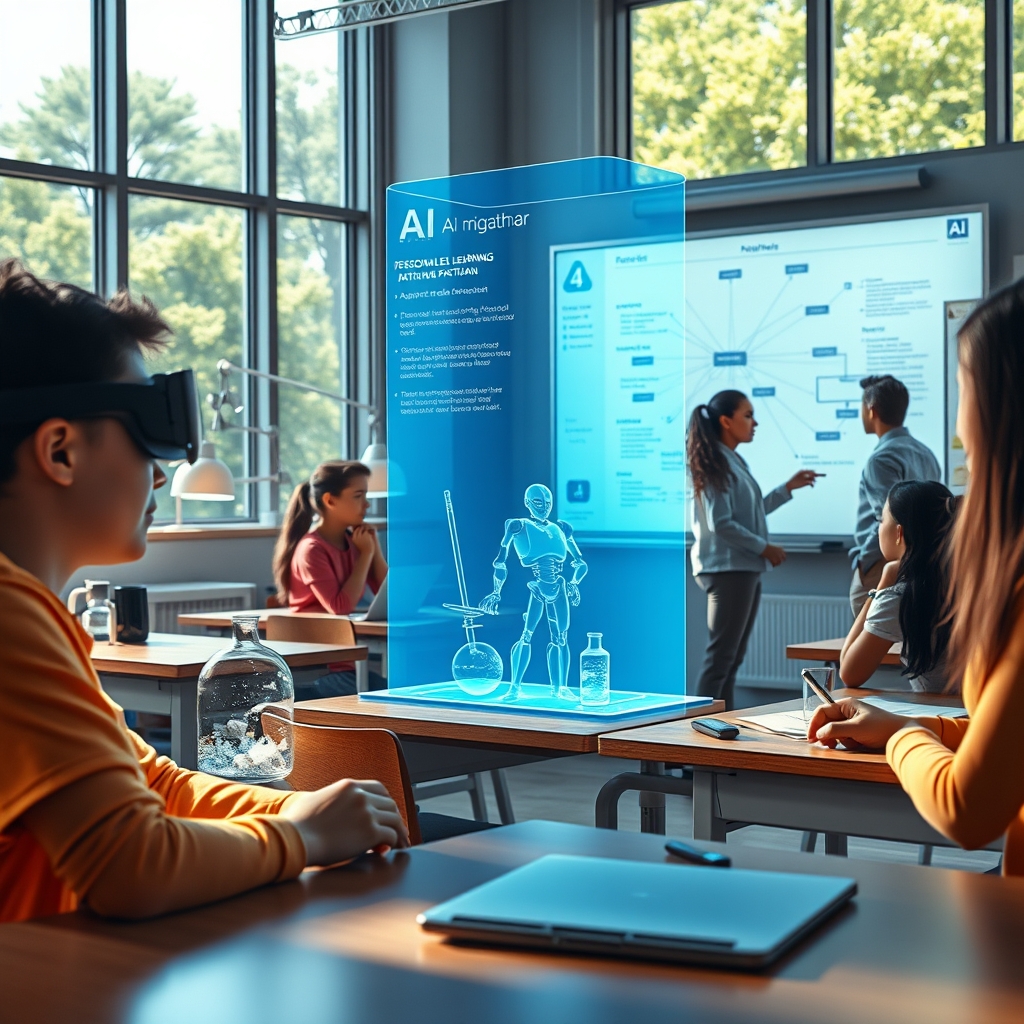
Education is no longer confined to the rigid structures of traditional classrooms. The integration of artificial intelligence is transforming learning into a dynamic, adaptive journey where every student’s path is uniquely tailored to their strengths, weaknesses, and curiosities. At the heart of this evolution lies the fusion of intelligent tutoring systems and experiential learning, creating an ecosystem where knowledge is not just consumed but actively constructed through exploration and discovery.
The Rise of the Intelligent Tutor
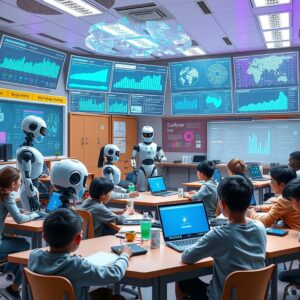
Imagine a learning environment where a digital mentor adapts in real-time to a student’s progress, offering hints when they struggle, accelerating content when they excel, and even anticipating misconceptions before they arise. This is the promise of intelligent tutoring systems (ITS), AI-driven platforms that simulate one-on-one human tutoring with unprecedented precision. Unlike static textbooks or generic video lectures, these systems leverage learning analytics to track engagement, identify patterns, and deliver interventions that feel almost intuitive.
For example, platforms like Carnegie Learning’s MATHia or Duolingo’s AI-powered language lessons use natural language processing and machine learning to adjust difficulty, provide contextual feedback, and even mimic conversational interactions. The result? Students no longer passively absorb information but engage in a dialogue with their learning tools, fostering deeper comprehension and retention. This shift is particularly impactful for inclusive education, as ITS can accommodate diverse learning styles, from visual and auditory learners to those who thrive on kinesthetic or social interaction.
Experiential Learning in the Digital Age
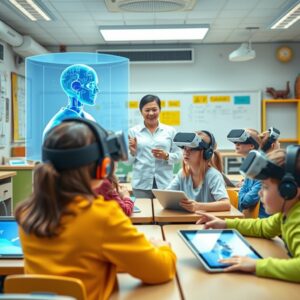
While intelligent tutoring systems excel at personalized instruction, experiential learning brings education to life by grounding abstract concepts in real-world applications. AI is amplifying this approach by creating immersive, interactive experiences that blur the line between classroom and reality. Virtual labs, augmented reality (AR) field trips, and AI-generated simulations allow students to conduct chemistry experiments, explore ancient civilizations, or even dissect virtual organisms—all without leaving their desks.
Consider the potential of project-based learning (PBL) enhanced by AI. Tools like IBM’s Watson or Google’s Teachable Machine enable students to design AI models, analyze datasets, or solve community challenges, turning theoretical knowledge into tangible outcomes. These experiences cultivate critical thinking and interdisciplinary learning, as students must synthesize skills from science, technology, engineering, and mathematics (STEM) to address complex problems. Moreover, AI-driven simulations can adapt to a student’s decisions, creating branching narratives where failure becomes a stepping stone to mastery rather than a dead end.
Bridging the Equity Gap
One of the most profound impacts of AI in education is its potential to democratize access to high-quality learning experiences. Educational equity has long been hindered by disparities in resources, teacher expertise, and socioeconomic barriers. AI-powered tools are beginning to level the playing field by providing underserved communities with personalized support, language translation, and adaptive content that meets learners where they are.
For instance, initiatives like Khan Academy’s AI tutor, Khanmigo, offer free, tailored instruction to students worldwide, while platforms like Century Tech use AI to create individualized learning pathways for students in low-income schools. These tools don’t replace teachers but empower them to focus on mentorship and creativity, rather than administrative tasks. The result is a more equitable educational landscape where every student, regardless of background, has the opportunity to thrive.
The Human-AI Collaboration
Despite the transformative potential of AI, its role in education is not about replacing human educators but augmenting their capabilities. The most effective learning environments are those where AI handles data-driven tasks—like grading, progress tracking, and content delivery—while teachers focus on fostering emotional intelligence, creativity, and social skills. This hybrid learning model ensures that technology enhances rather than diminishes the human element of education.
Take, for example, the use of AI in gamified learning. Platforms like Classcraft or Kahoot! use game mechanics to boost engagement, but it’s the teacher who designs the narrative, facilitates collaboration, and provides the emotional support that motivates students. Similarly, AI can generate personalized micro-lessons, but it’s the educator who contextualizes the content, sparks curiosity, and encourages students to connect their learning to the world around them.
The Future of Lifelong Learning
The traditional model of education—front-loaded in childhood and adolescence—is giving way to a culture of lifelong learning. In an era of rapid technological change, the ability to continuously upskill and reskill is no longer optional but essential. AI is making this possible by breaking down learning into digestible, microlearning modules that fit into busy schedules. Whether through mobile apps, chatbot tutors, or AI-curated content, professionals can now acquire new skills on demand, without the time or financial commitment of traditional degree programs.
Moreover, AI-driven learning analytics enable institutions and employers to identify skill gaps and recommend targeted training, ensuring that education remains relevant to the evolving demands of the workforce. This shift is particularly valuable for non-traditional learners, such as working adults or career changers, who need flexible, accessible pathways to advancement.
As we stand on the precipice of this educational revolution, it’s clear that AI is not just a tool but a catalyst for reimagining how we learn. By blending the precision of intelligent tutoring with the richness of experiential discovery, we can create a future where education is not a one-size-fits-all endeavor but a deeply personal, lifelong odyssey. The classrooms of tomorrow will be boundless, adaptive, and inclusive, where every learner is empowered to chart their own path and every teacher is equipped to guide them with insight and empathy. The journey has only just begun, and the possibilities are as limitless as the human imagination.