The Global Tapestry: Weaving Intercultural Competence Through Study Abroad and Cultural Exchange

In an era where borders are increasingly porous and digital connectivity bridges continents in an instant, the value of international student mobility has never been more pronounced. Beyond the academic transcripts and credit transfer systems, the true essence of studying abroad lies in the transformative power of cultural immersion—a journey that reshapes perspectives, challenges preconceptions, and fosters intercultural competence in ways that no classroom ever could. For students embarking on this adventure, the world becomes both a textbook and a teacher, offering lessons that extend far beyond the confines of traditional education.
The Heart of Cultural Exchange: More Than Just a Semester Abroad
At the core of every study abroad program is the promise of global citizenship education—a concept that transcends mere travel or academic pursuit. It is about stepping into the unknown, armed with curiosity and a willingness to engage with the unfamiliar. Whether through an Erasmus Plus scholarship, a short-term study abroad initiative, or a year-long host family placement, students are not just observers but active participants in a global dialogue. They learn to navigate the nuances of daily life in a new culture, from the rituals of mealtime to the unspoken rules of social interaction, all of which contribute to a deeper understanding of what it means to be a global citizen.
Take, for example, the experience of a student from Spain spending a semester in Japan. Beyond the language barriers and academic challenges, they encounter a society where harmony and indirect communication are prized. Through everyday interactions—whether in a language exchange program or while living with a host family—they begin to appreciate the subtleties of Japanese culture, from the art of bowing to the significance of silence in conversation. These moments of cultural exchange are not just anecdotes to share with friends back home; they are the building blocks of cross-cultural adaptability, a skill that is increasingly vital in our interconnected world.
The Role of Host Families in Shaping Global Perspectives
One of the most profound aspects of studying abroad is the opportunity to live with a host family. Far from being a mere accommodation arrangement, this experience offers a gateway into the soul of a culture. Host families become mentors, friends, and sometimes even a second family, providing a safe space for students to ask questions, make mistakes, and grow. The bonds formed during a host family placement often last a lifetime, serving as a reminder of the shared humanity that unites us all, regardless of geography.
Consider the story of an American student placed with a family in Morocco. Through shared meals, weekend excursions, and late-night conversations, they learn about the importance of community, the role of religion in daily life, and the value of hospitality. These experiences challenge stereotypes and foster empathy, allowing the student to see the world through a new lens. Such interactions are the essence of global learning experiences, where education is not confined to textbooks but is lived and breathed in the real world.
The Digital Shift: Virtual Exchange Programs in a Post-Pandemic World
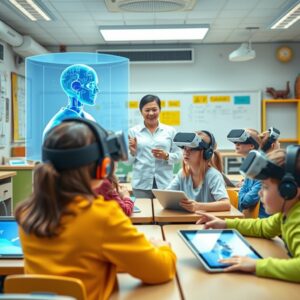
While traditional study abroad programs have long been the gold standard for cultural exchange, the rise of virtual exchange programs has democratized access to global education. These initiatives, often facilitated through online platforms, allow students to engage in cross-cultural dialogue without the need for an international student visa or the financial burden of travel. Through collaborative projects, discussion forums, and real-time interactions, students from different corners of the globe can share ideas, debate perspectives, and build friendships that transcend physical borders.
For instance, a virtual exchange program might pair students from Brazil and Germany to work on a project about sustainable development. Despite never meeting in person, they exchange ideas about environmental policies, cultural attitudes toward conservation, and personal experiences with climate change. These interactions not only enhance foreign language fluency but also cultivate a sense of global solidarity. In a world where digital communication is often criticized for fostering division, virtual exchange programs prove that technology can also be a tool for unity and understanding.
Pre-Departure Orientation: The Unsung Hero of Study Abroad
Embarking on a study abroad journey is exhilarating, but it can also be overwhelming. This is where pre-departure orientation plays a crucial role. These sessions, often overlooked in the excitement of planning, equip students with the tools they need to navigate the challenges of living in a new culture. From practical advice on securing an international student visa to insights on cultural norms and expectations, pre-departure orientation helps students hit the ground running.
More importantly, these orientations address the emotional and psychological aspects of cultural immersion. They prepare students for the inevitable culture shock—the disorientation and frustration that can arise when confronted with unfamiliar customs. By normalizing these feelings and providing strategies for coping, pre-departure orientation ensures that students are not just academically prepared but emotionally resilient. It is the difference between merely surviving a study abroad experience and truly thriving in it.
The Lasting Impact: How Study Abroad Shapes Future Leaders
The benefits of study abroad extend far beyond the duration of the program itself. Students who participate in these initiatives often return home with a heightened sense of intercultural competence, a skill that is invaluable in an increasingly globalized workforce. They learn to communicate across cultural divides, adapt to new environments, and approach problems with a global mindset. These are the qualities that define the next generation of leaders, innovators, and changemakers.
Moreover, the friendships and networks formed during study abroad often lead to lifelong connections. A student who spends a semester in Italy might later collaborate with peers from their program on a business venture, or a participant in a language exchange program might find themselves working alongside former classmates on a humanitarian project. These relationships are the threads that weave the global tapestry, creating a world that is more interconnected, empathetic, and understanding.
As the world continues to evolve, the importance of global citizenship education cannot be overstated. Study abroad programs, whether physical or virtual, offer a unique opportunity to step outside one’s comfort zone and engage with the world in a meaningful way. They remind us that while our differences may define us, it is our shared humanity that unites us. In the end, the greatest lesson of studying abroad is not found in any syllabus or exam but in the quiet moments of connection, the unexpected friendships, and the realization that, no matter where we come from, we are all part of the same global community.