
The Bridge to Belonging: How Host Family Placements and Cultural Exchange Forge Lasting Global Connections
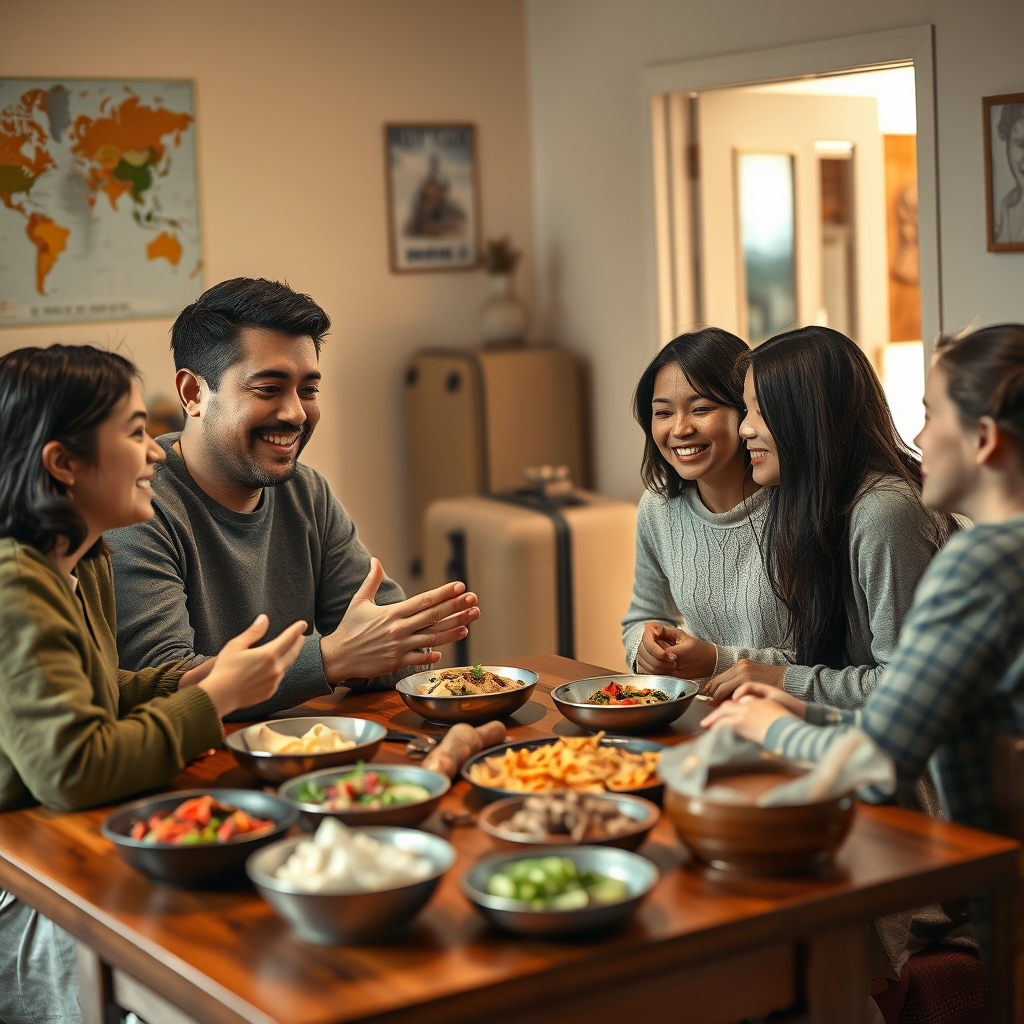
Stepping off the plane in a foreign country, suitcase in hand and heart pounding with equal parts excitement and trepidation, is a moment that countless students describe as life-altering. For many, this is the beginning of a journey that extends far beyond academic enrichment—it is the first chapter of a story about belonging, connection, and the quiet magic of shared humanity. At the heart of this transformation lies one of the most powerful yet understated elements of international student mobility: the host family placement. More than just a place to stay, it is a gateway to cultural immersion, a laboratory for intercultural competence, and often, the foundation of lifelong bonds that transcend borders.
The Alchemy of Shared Spaces
When students participate in study abroad programs, they are often drawn to the promise of new landscapes, historic landmarks, and the thrill of independence. Yet, it is the unscripted moments—the morning coffee rituals, the laughter over a poorly translated phrase, the shared meals where recipes become stories—that weave the richest tapestry of cultural exchange. Host families serve as living guides to the nuances of a culture, offering insights that no textbook or lecture could ever capture. A simple gesture, like the way a family greets guests or observes a holiday, becomes a lesson in values, history, and identity. These experiences foster cross-cultural adaptability, not through formal instruction, but through the organic rhythm of daily life.
Research in global citizenship education underscores the unique role of host families in developing empathy and perspective-taking. Unlike structured classroom settings, where interactions are often mediated by curriculum or institutional goals, the home environment provides a safe space for students to ask questions, make mistakes, and grow without the pressure of performance. It is here, in the quiet corners of a living room or around a dinner table, that students begin to see the world through someone else’s eyes—and, in turn, discover new facets of themselves.
Beyond Hospitality: The Reciprocal Nature of Exchange
The relationship between a host family and an international student is rarely one-sided. While students gain language fluency, cultural understanding, and a sense of belonging, host families experience their own transformation. For many, opening their homes to a student from another country is an act of curiosity and generosity, but it often evolves into something deeper: a mutual exchange of ideas, traditions, and even challenges that enrich both parties. Parents may find themselves learning about educational systems halfway across the world, while siblings gain a new perspective on their own culture through the eyes of their temporary “brother” or “sister.”
Programs like the Erasmus Plus Scholarship have long recognized the value of these reciprocal relationships, embedding host family placements as a cornerstone of their initiatives. By facilitating these connections, they create a ripple effect that extends beyond the individual student. Communities become more globally aware, schools develop stronger international ties, and families who may have never considered themselves part of the “global citizenship” movement find themselves contributing to it in meaningful ways. The impact is not just personal but collective, fostering a sense of interconnectedness that is the bedrock of global learning experiences.
The Challenges: Navigating the Unfamiliar
Of course, the path to cultural immersion is not without its hurdles. Students may grapple with homesickness, language barriers, or the discomfort of unfamiliar customs. Host families, too, face their own set of challenges, from adjusting to new communication styles to navigating the emotional complexities of temporary goodbyes. These moments of friction, however, are often where the most profound growth occurs. Intercultural competence is not about avoiding conflict but learning to navigate it with curiosity and respect. A student who struggles to adapt to a host family’s mealtime customs, for example, may emerge with a deeper appreciation for the role of food in cultural identity. Similarly, a host family that confronts their own unconscious biases through candid conversations with their guest may find their worldview forever expanded.
Pre-departure orientation programs play a critical role in preparing students for these challenges. By addressing topics like cross-cultural adaptability, emotional resilience, and conflict resolution, they equip students with the tools to turn potential stumbling blocks into opportunities for learning. Virtual exchange programs, which have gained traction in recent years, also offer a low-stakes environment for students to practice these skills before embarking on their physical journey. These preparatory steps ensure that when students arrive in their host country, they are not just visitors but active participants in the exchange.
The Ripple Effect: From Personal Growth to Global Impact
The benefits of host family placements extend far beyond the duration of a semester abroad. For students, the experience often becomes a touchstone for their personal and professional lives. Many return home with a heightened sense of global awareness, a network of international contacts, and a renewed commitment to issues like social justice, sustainability, or education. Some even find their career paths shaped by their time abroad, pursuing fields like international relations, education, or nonprofit work with a firsthand understanding of the challenges and opportunities of a globalized world.
For host families, the impact can be equally transformative. Children who grow up with international students in their homes often develop a natural curiosity about the world, while parents may find themselves advocating for global education initiatives in their communities. The relationships forged through these placements frequently outlast the program itself, with many families and students staying in touch for years, visiting each other’s countries, and even collaborating on projects that bridge their cultures. In this way, host family placements become more than a temporary arrangement—they become the seeds of a more interconnected and empathetic world.
Redefining the Study Abroad Narrative
As study abroad programs continue to evolve, the narrative around international student mobility is shifting. No longer is it solely about academic credit transfer or foreign language fluency, though these remain valuable outcomes. Instead, the focus is increasingly on the intangible yet profound transformations that occur when students are immersed in the daily lives of their host communities. Host family placements, in particular, challenge the notion of study abroad as a transactional experience—one where students “consume” a culture for a few months before returning home. Instead, they offer a model of exchange that is reciprocal, human-centered, and deeply personal.
This shift is reflected in the growing popularity of short-term study abroad programs, which prioritize depth over duration. Even brief immersive experiences, when paired with thoughtful host family placements, can yield significant gains in intercultural competence and global awareness. Similarly, virtual exchange programs are expanding access to these benefits, allowing students who may not have the means or opportunity to travel abroad to engage in meaningful cross-cultural dialogue. While nothing can fully replicate the experience of living in another country, these innovations ensure that the spirit of cultural exchange remains inclusive and adaptable.
In an era where global challenges demand collaborative solutions, the ability to connect across cultures is more than a personal asset—it is a necessity. Host family placements and cultural exchange programs do more than prepare students for a globalized world; they remind us that our differences are not barriers but bridges. The stories of students who return home with a broader perspective, of families who discover new facets of their own culture through the eyes of their guests, and of communities that grow more interconnected with each exchange, are testaments to the quiet power of shared humanity. These experiences do not just change lives; they weave the fabric of a world where belonging knows no borders, and where every person, regardless of their origin, has a place at the table.



