
The Digital Tapestry: Weaving AI, Gamified Learning, and Inclusive Education into the Fabric of Modern Classrooms
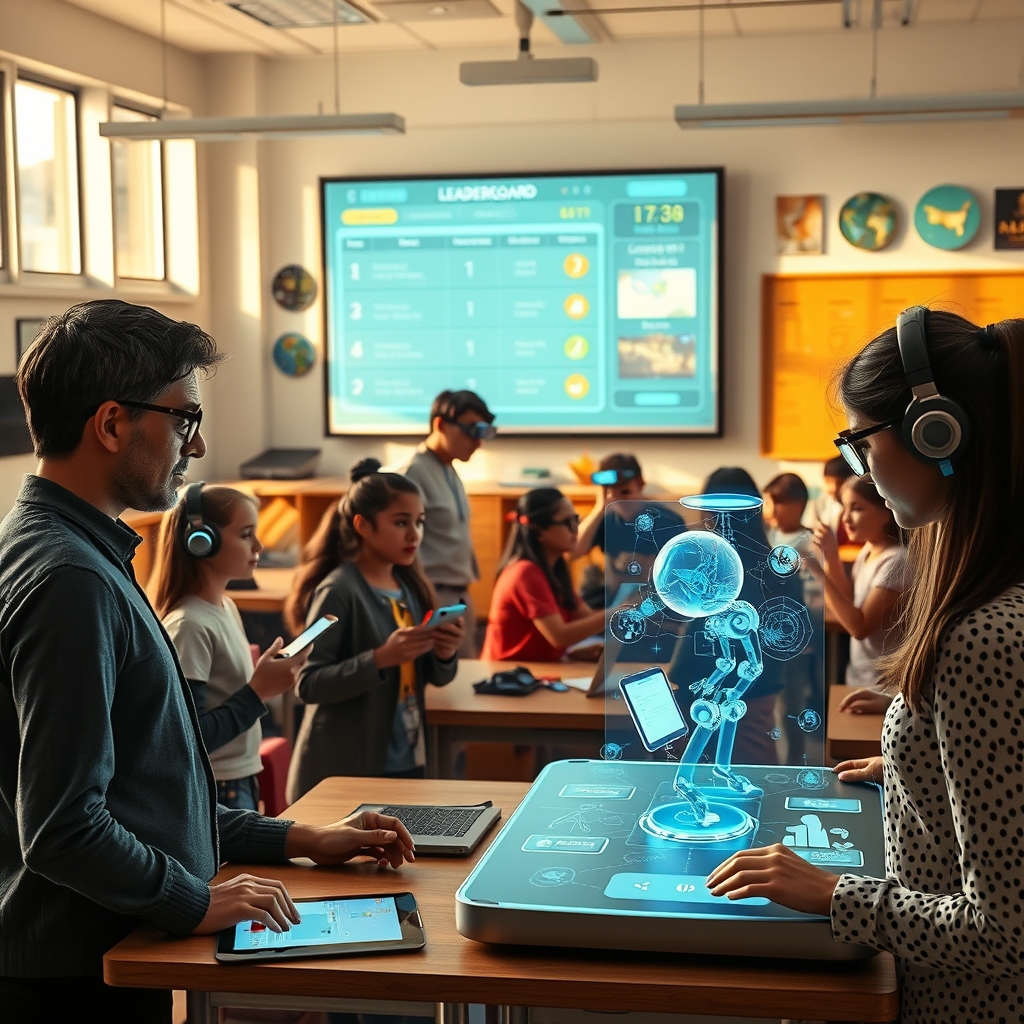
Imagine a classroom where every student’s unique strengths, weaknesses, and curiosities are not just acknowledged but actively nurtured—where the learning experience adapts in real-time, like a river carving its path through diverse landscapes. This is no longer the stuff of science fiction. It is the emerging reality of education, where artificial intelligence (AI) is not replacing teachers but empowering them to create dynamic, inclusive, and deeply engaging learning environments. The fusion of AI with gamified learning, inclusive education, and digital literacy is transforming classrooms into vibrant ecosystems where every learner, regardless of background or ability, can thrive.
The Gamification Revolution: Making Learning Irresistible
Gamified learning is not merely about turning education into a game; it is about harnessing the psychological principles that make games so compelling—challenge, reward, progression, and collaboration—and applying them to learning. AI amplifies this approach by personalizing the gamification experience. For instance, intelligent algorithms can adjust the difficulty of tasks in real-time, ensuring that students are neither bored by simplicity nor overwhelmed by complexity. Platforms like Duolingo and Khan Academy have already demonstrated how gamification, when paired with AI, can make learning addictive in the best possible way.
But the true magic happens when gamification meets inclusivity. AI-driven gamified platforms can adapt to diverse learning needs, offering multiple pathways to mastery. A student with dyslexia might engage with audio-based challenges, while a visually impaired learner could navigate through tactile or voice-activated interfaces. The result? A classroom where every student, regardless of their learning profile, feels seen, challenged, and motivated to succeed.
The Role of AI in Crafting Inclusive Learning Experiences
Inclusive education has long been a cornerstone of equitable learning, but traditional classrooms often struggle to accommodate the full spectrum of student needs. AI is changing that by providing tools that break down barriers. For example, real-time transcription services powered by AI can provide live captions for deaf or hard-of-hearing students, while natural language processing (NLP) tools can help non-native speakers grasp complex concepts by simplifying language or offering translations. These technologies are not just add-ons; they are integral components of a learning environment where diversity is not just accommodated but celebrated.
Moreover, AI can help educators identify and address unconscious biases in teaching materials. By analyzing textbooks, lesson plans, and even classroom interactions, AI tools can flag language or content that might exclude or marginalize certain groups. This proactive approach ensures that education is not just inclusive in theory but in practice, fostering a sense of belonging for every student.
Digital Literacy: The New Currency of Education
In a world where information is abundant but discernment is scarce, digital literacy has become the new currency of education. It is no longer enough for students to know how to use technology; they must also understand how to navigate it critically, ethically, and creatively. AI plays a pivotal role in developing these skills by providing students with opportunities to engage with technology in meaningful ways. For example, AI-powered simulations can teach students about digital citizenship by allowing them to explore the consequences of online actions in a safe, controlled environment.
Generative AI tools, such as those that create text, images, or even music, are also reshaping how students interact with digital content. These tools can serve as co-creators, helping students brainstorm ideas, refine their work, or explore new perspectives. However, they also raise important questions about authenticity, originality, and the ethical use of AI. By integrating these tools into the curriculum, educators can help students develop the critical thinking skills needed to navigate an AI-driven world responsibly.
Blended Learning: The Best of Both Worlds
Blended learning, which combines traditional face-to-face instruction with online learning, has gained traction in recent years, but AI is taking it to the next level. Intelligent tutoring systems can provide personalized support to students outside the classroom, offering instant feedback on assignments or guiding them through complex concepts at their own pace. Meanwhile, teachers can use AI-driven analytics to identify trends in student performance, allowing them to tailor their in-person instruction to address common challenges or misconceptions.
This hybrid approach also fosters greater flexibility, making education more accessible to students who might otherwise struggle to attend traditional classes. For example, working professionals pursuing online degree programs can benefit from AI-powered microlearning modules that deliver bite-sized lessons tailored to their schedules. Similarly, students in remote or underserved communities can access high-quality educational resources that were once out of reach.
The Future of Learning: A Symphony of Human and Machine
The integration of AI into education is not about replacing human teachers with machines. It is about creating a symphony where human ingenuity and technological innovation work in harmony to unlock the full potential of every learner. AI can handle the heavy lifting of data analysis, personalization, and administrative tasks, freeing educators to focus on what they do best: inspiring, mentoring, and connecting with students on a human level.
As we stand on the brink of this educational revolution, it is clear that the future of learning will be defined by adaptability, inclusivity, and a relentless focus on the learner. The classrooms of tomorrow will not be confined by four walls or rigid curricula. Instead, they will be dynamic, ever-evolving spaces where AI, gamification, and digital literacy converge to create experiences that are as unique as the students themselves. The question is no longer whether AI will transform education, but how we will harness its power to create a future where every learner has the opportunity to shine.
The journey has only just begun, and the possibilities are as limitless as the human imagination. What remains constant is the enduring power of education to shape minds, transform lives, and build a better world—one learner at a time.



