
The AI-Infused Classroom: How Generative Tools and Critical Thinking Are Shaping the Future of STEM Education
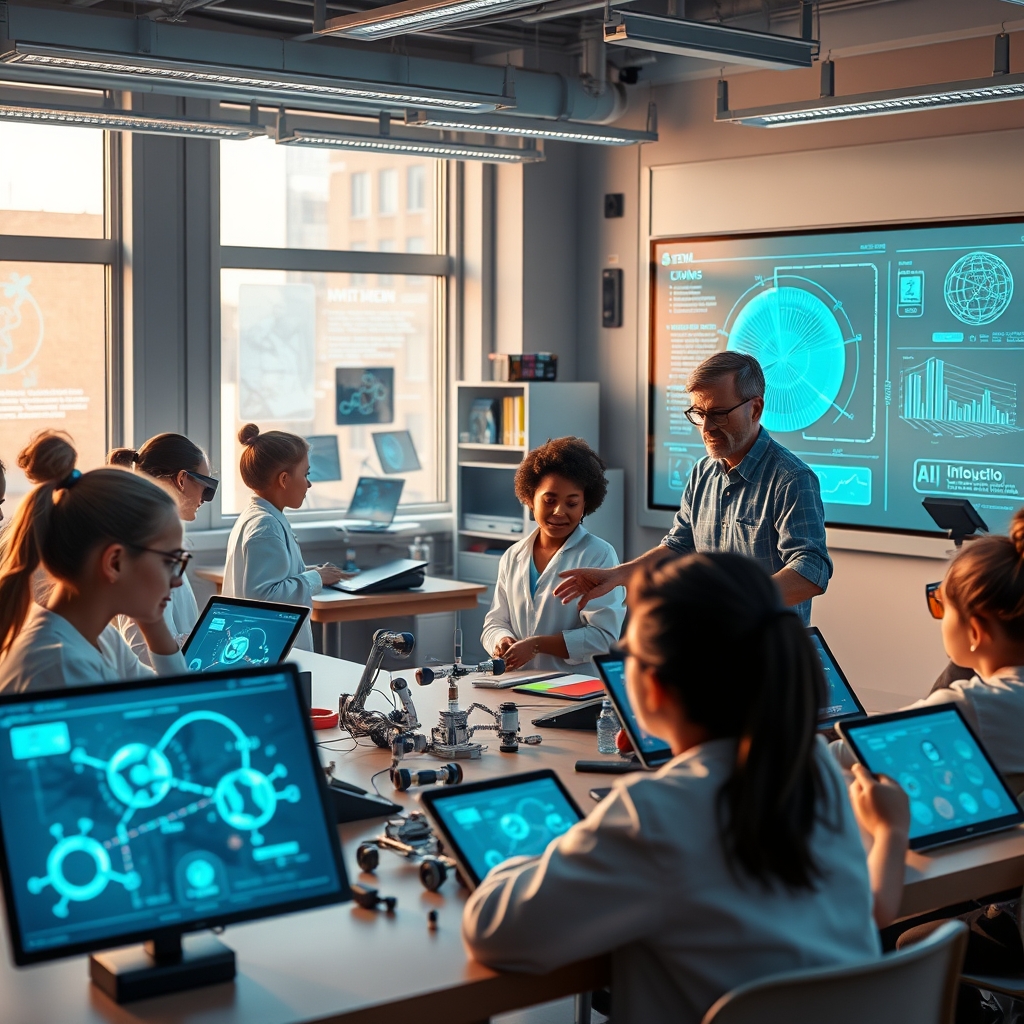
The traditional classroom, with its rows of desks and one-size-fits-all lectures, is undergoing a profound transformation. At the heart of this change is the integration of artificial intelligence, particularly generative tools, which are redefining how students engage with science, technology, engineering, and mathematics (STEM). These tools are not merely supplemental; they are becoming central to fostering critical thinking, creativity, and problem-solving skills in ways that were previously unimaginable. The question is no longer whether AI belongs in education, but how we can harness its potential to create more dynamic, inclusive, and effective learning environments.
The Rise of Generative AI in STEM
Generative AI, with its ability to create content, simulate scenarios, and adapt to individual learning needs, is revolutionizing STEM education. Unlike traditional educational software that relies on static content, generative tools can produce real-time, interactive experiences tailored to each student’s pace and understanding. For instance, AI-powered platforms can generate personalized math problems that adjust in difficulty based on a student’s performance, ensuring they are neither bored nor overwhelmed. In science classrooms, generative AI can simulate complex experiments, allowing students to explore hypotheses and observe outcomes without the constraints of physical labs or expensive equipment.
This shift is particularly impactful in STEM fields, where abstract concepts and hands-on experimentation are critical. Generative AI bridges the gap between theory and practice by providing students with immersive, experiential learning opportunities. For example, an AI-driven virtual lab can simulate chemical reactions, enabling students to manipulate variables and observe results in real time. Such tools not only enhance understanding but also cultivate curiosity and a deeper appreciation for the scientific method.
Fostering Critical Thinking Through AI-Driven Challenges
One of the most significant contributions of AI to STEM education is its ability to nurture critical thinking. Generative tools can present students with open-ended problems that require analysis, synthesis, and evaluation—skills that are essential for success in STEM careers. For instance, AI-powered coding platforms can generate unique programming challenges that push students to think algorithmically and develop solutions from scratch. These platforms often provide instant feedback, helping students identify errors and refine their approaches, which is a far cry from the passive learning of traditional textbooks.
Moreover, AI can facilitate interdisciplinary learning by connecting STEM concepts to real-world issues. For example, an AI-driven project might task students with designing a sustainable city, integrating principles of engineering, environmental science, and data analysis. Such projects not only reinforce STEM skills but also encourage students to think holistically about complex problems. By engaging with these challenges, students develop the ability to apply their knowledge in novel contexts, a hallmark of critical thinking.
The Role of Personalized Learning in STEM Mastery
Personalized learning, powered by AI, is another game-changer in STEM education. Traditional classrooms often struggle to accommodate the diverse learning needs of students, leading to gaps in understanding and disengagement. AI addresses this challenge by adapting content and pacing to each student’s strengths and weaknesses. For example, an AI tutoring system can identify a student’s misconceptions in algebra and provide targeted exercises to address them, all while tracking progress over time. This level of personalization ensures that students receive the support they need to master foundational concepts before moving on to more advanced topics.
Personalized learning also extends to the way students interact with STEM content. AI can generate customized learning pathways that align with a student’s interests and career aspirations. A student interested in robotics, for instance, might receive a curated set of projects and resources that build toward that goal, while another student focused on data science could explore AI-generated datasets and analytical challenges. This approach not only keeps students engaged but also helps them see the relevance of STEM to their future careers.
Addressing Educational Equity Through AI
While AI holds tremendous promise for STEM education, its potential to address educational equity is perhaps its most transformative aspect. Historically, access to high-quality STEM education has been uneven, with students in under-resourced schools often lacking the tools and opportunities available to their peers in more affluent districts. AI can help level the playing field by providing all students with access to personalized, interactive, and engaging learning experiences, regardless of their geographic location or socioeconomic status.
For example, AI-powered platforms can offer virtual mentorship and tutoring to students in rural or underserved areas, connecting them with experts and resources they might not otherwise have. Additionally, generative AI can create multilingual learning materials, ensuring that language barriers do not hinder a student’s ability to engage with STEM content. By democratizing access to high-quality education, AI has the potential to close achievement gaps and inspire a new generation of diverse STEM professionals.
The Human Element: Balancing AI and Educator Expertise
Despite the transformative potential of AI, it is essential to recognize that technology alone cannot replace the human element in education. Teachers play a critical role in guiding students, fostering collaboration, and nurturing a love of learning. AI should be viewed as a tool that enhances, rather than replaces, the educator’s role. For instance, AI can handle administrative tasks like grading and progress tracking, freeing up teachers to focus on mentoring students and designing creative, hands-on learning experiences.
Moreover, the integration of AI in STEM education must be accompanied by a focus on digital literacy. Students need to understand how AI works, its limitations, and its ethical implications to become informed and responsible users of technology. Educators can facilitate this by incorporating discussions about AI ethics, bias, and data privacy into the curriculum, ensuring that students are not only skilled in STEM but also equipped to navigate the complexities of a technology-driven world.
As we stand on the brink of a new era in education, the fusion of AI and STEM is creating opportunities that were once the stuff of science fiction. Generative tools are not just changing how students learn; they are redefining what it means to be educated in the 21st century. By fostering critical thinking, personalizing learning, and promoting educational equity, AI is helping to build a future where every student has the chance to explore, innovate, and succeed. The classroom of tomorrow is not a distant dream—it is being shaped today, one algorithm, one student, and one breakthrough at a time.



