
The Alchemy of AI and Experiential Learning: Crafting Immersive, Student-Centric Educational Journeys
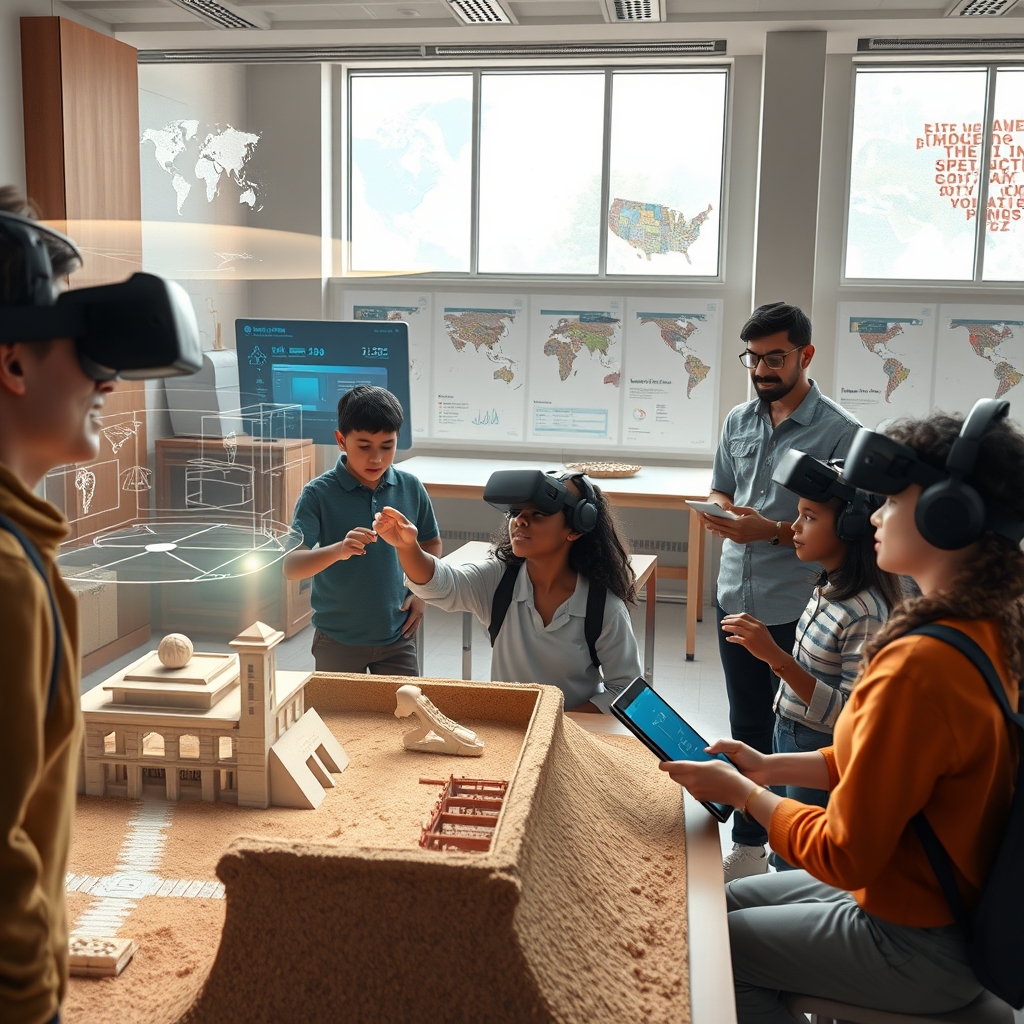
Education is no longer confined to the static pages of textbooks or the rigid structures of traditional classrooms. The fusion of artificial intelligence (AI) and experiential learning is forging a new paradigm—one where education is dynamic, immersive, and deeply personalized. This transformation is not merely about integrating technology into learning; it’s about reimagining the very essence of how knowledge is acquired, applied, and mastered. By leveraging AI’s adaptive capabilities and experiential learning’s hands-on approach, educators are creating environments where students don’t just learn—they experience, engage, and evolve.
The Evolution of Experiential Learning
Experiential learning has long been celebrated for its ability to bridge the gap between theory and practice. Rooted in the philosophy of learning by doing, this approach emphasizes reflection, experimentation, and real-world application. From science labs to internships, experiential learning has traditionally relied on physical spaces and human mentorship to guide students through their educational journeys. However, the digital transformation of education is expanding these boundaries, making experiential learning more accessible, scalable, and adaptable than ever before.
AI is the catalyst accelerating this evolution. By analyzing vast amounts of data in real time, AI systems can identify patterns in student behavior, preferences, and performance. This insight allows educators to design experiential learning experiences that are not only engaging but also tailored to the unique needs of each learner. For instance, AI-driven simulations can adapt their complexity based on a student’s proficiency, ensuring that challenges are neither too easy nor overwhelming. This level of personalization transforms passive learning into an active, iterative process where students are constantly pushed to grow.
AI as the Architect of Immersive Environments
The true power of AI in experiential learning lies in its ability to create immersive environments that mimic real-world scenarios. Virtual reality (VR) and augmented reality (AR) platforms, powered by AI, are enabling students to step into historical events, explore distant planets, or even dissect virtual organisms—all from the safety of their classrooms. These technologies don’t just replicate experiences; they enhance them by providing instant feedback, contextual information, and adaptive challenges.
Consider a medical student practicing surgical techniques in a VR simulation. AI can track their movements, identify areas of improvement, and adjust the difficulty of the procedure in real time. Similarly, an engineering student designing a bridge in a digital sandbox can receive instant analysis of structural integrity, allowing them to iterate and refine their designs. These AI-driven environments foster a culture of experimentation, where failure is not a setback but a stepping stone to mastery.
The Role of Generative Tools in Crafting Dynamic Content
Generative AI tools are further enriching experiential learning by enabling the creation of dynamic, on-demand content. These tools can generate customized case studies, interactive scenarios, or even entire lesson plans based on a student’s interests and learning objectives. For example, a history teacher could use generative AI to create a branching narrative where students make decisions that shape the outcome of a historical event, fostering critical thinking and empathy.
In STEM education, generative AI can produce complex problem sets that adapt to a student’s skill level, ensuring that they are constantly challenged without feeling overwhelmed. This not only keeps students engaged but also cultivates a growth mindset, where effort and persistence are rewarded. By integrating generative tools into experiential learning, educators can move beyond one-size-fits-all curricula and create truly student-centric experiences.
Bridging Equity Gaps Through AI-Enhanced Experiential Learning
One of the most promising aspects of AI and experiential learning is their potential to democratize education. Traditional experiential learning opportunities, such as internships or lab-based research, are often limited by geography, resources, or socioeconomic barriers. AI-powered platforms can break down these barriers by providing equitable access to high-quality, immersive learning experiences. A student in a rural community, for example, can engage in a virtual internship with a global company, gaining real-world skills without the need for physical relocation.
Moreover, AI can help identify and address learning gaps that may disproportionately affect underrepresented students. By analyzing performance data, AI systems can pinpoint areas where students struggle and provide targeted interventions, such as additional practice exercises or one-on-one tutoring. This ensures that all students, regardless of their background, have the opportunity to thrive in an experiential learning environment.
The Human Element: Balancing Technology and Empathy
While AI is a powerful tool, it is not a replacement for human connection. The most effective experiential learning experiences strike a balance between technology and empathy, leveraging AI to enhance—not replace—the role of educators. Teachers remain the guiding force, providing mentorship, encouragement, and the emotional intelligence that machines cannot replicate. AI simply augments their capabilities, freeing them from administrative tasks and allowing them to focus on what they do best: inspiring and nurturing their students.
For instance, AI can handle the logistical aspects of project-based learning, such as tracking progress or generating reports, while teachers facilitate discussions, provide feedback, and foster collaboration. This synergy between human and machine creates a learning ecosystem where technology serves as an enabler, not a substitute, for meaningful educational experiences.
As we stand on the precipice of this educational revolution, it’s clear that the fusion of AI and experiential learning is more than a trend—it’s a fundamental shift in how we approach education. By embracing these technologies, we are not just preparing students for the future; we are empowering them to shape it. The classrooms of tomorrow will be dynamic, inclusive, and deeply personal, where every student has the tools and opportunities to explore, experiment, and excel. The journey has just begun, and the possibilities are as limitless as the imagination of the learners who will lead the way.



