
The AI Renaissance in Education: How Intelligent Systems Are Crafting Equitable, Adaptive, and Interdisciplinary Learning Experiences
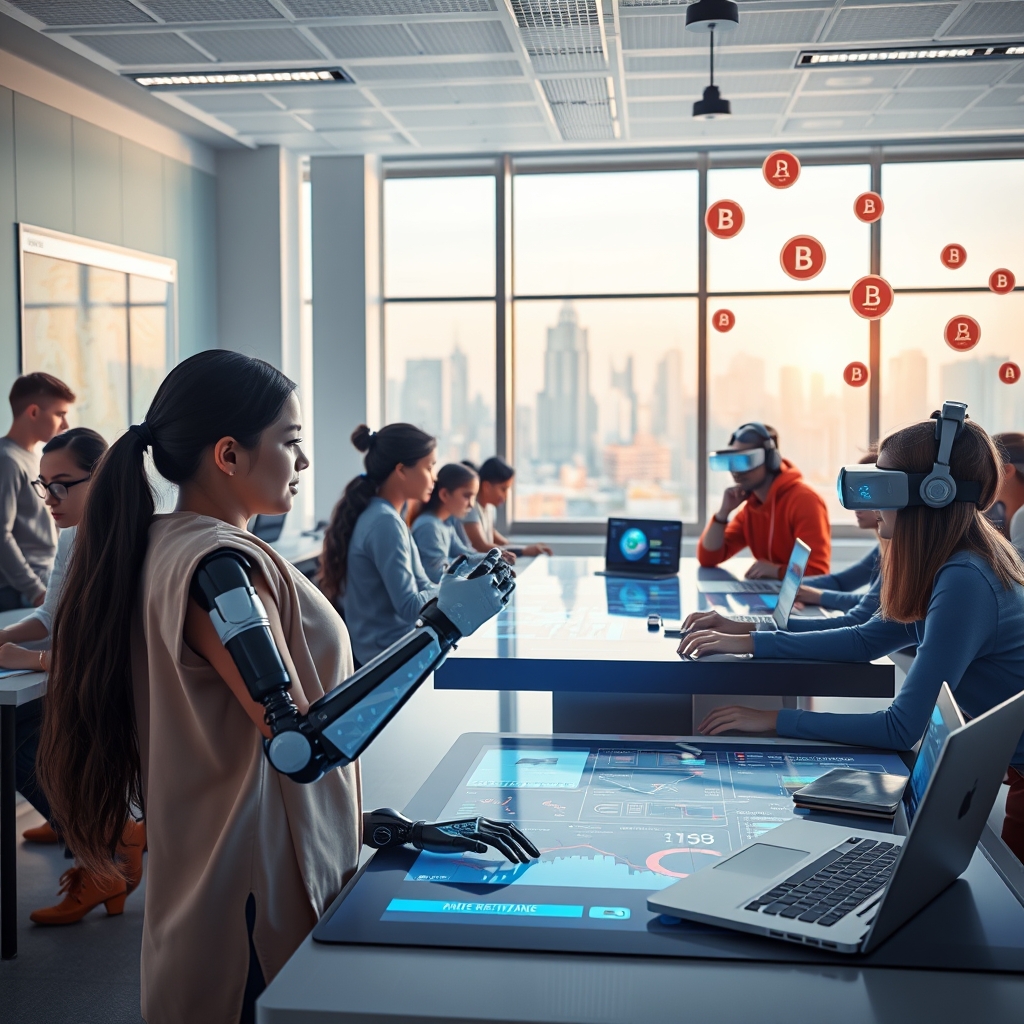
The educational landscape is undergoing a profound transformation, driven by the rapid integration of artificial intelligence (AI) into classrooms, digital platforms, and learning ecosystems. This shift is not merely about automating tasks or enhancing efficiency; it is about reimagining how knowledge is acquired, applied, and shared. At the heart of this evolution lies a commitment to creating equitable, adaptive, and interdisciplinary learning experiences that prepare students for the complexities of the 21st century. By leveraging AI, educators are breaking down traditional barriers, personalizing learning journeys, and fostering environments where every student can thrive.
The Power of Personalization: AI as a Catalyst for Inclusive Education
One of the most significant contributions of AI to education is its ability to personalize learning at scale. Traditional classrooms often struggle to address the diverse needs of students, where a one-size-fits-all approach can leave many behind. AI-powered tools, such as intelligent tutoring systems and adaptive learning platforms, are changing this dynamic by tailoring content, pacing, and feedback to individual learners. These systems analyze student performance in real-time, identifying strengths, weaknesses, and learning preferences to deliver customized resources and interventions.
For example, platforms like Carnegie Learning and DreamBox use AI algorithms to adjust the difficulty of math problems based on a student’s responses, ensuring they are neither overwhelmed nor underchallenged. This level of personalization is particularly impactful for students with learning disabilities or those who require additional support, as it allows them to progress at their own pace without stigma. Moreover, AI-driven personalization extends beyond academic content. It can adapt to cultural, linguistic, and cognitive differences, making education more inclusive and accessible to a global audience.
Blended Learning and the Hybrid Classroom: Balancing Technology and Human Connection
The rise of hybrid and blended learning models has been accelerated by AI, creating flexible educational environments that combine the best of in-person and digital instruction. AI enhances these models by providing data-driven insights that help educators optimize their teaching strategies. For instance, learning analytics tools can track student engagement in both physical and virtual classrooms, identifying patterns that may indicate disengagement or confusion. This information allows teachers to intervene proactively, offering targeted support before students fall behind.
AI also plays a crucial role in facilitating seamless transitions between online and offline learning. Virtual assistants and chatbots, powered by natural language processing (NLP), can answer student queries, provide reminders, and even offer emotional support. These tools ensure that students remain connected to their learning communities, regardless of their physical location. Furthermore, AI-driven content curation platforms can recommend supplementary materials, such as videos, articles, or interactive simulations, to reinforce concepts taught in the classroom. This blend of human instruction and AI augmentation creates a dynamic learning ecosystem that adapts to the needs of both students and educators.
Generative AI: Unlocking Creativity and Critical Thinking
Generative AI tools, such as large language models and AI-powered design platforms, are revolutionizing how students engage with content and express their ideas. These tools enable learners to generate essays, artwork, music, and even code, fostering creativity and innovation. However, their impact extends beyond mere content creation. Generative AI encourages critical thinking by prompting students to evaluate, refine, and build upon AI-generated outputs. For example, a student might use an AI tool to draft an essay and then critically analyze its arguments, identify biases, and improve its structure. This process not only enhances writing skills but also cultivates a deeper understanding of the subject matter.
In STEM education, generative AI is being used to create interactive simulations and virtual labs, allowing students to experiment with complex concepts in a risk-free environment. For instance, AI-powered platforms like Labster enable students to conduct virtual chemistry experiments or explore biological processes, bridging the gap between theory and practice. These tools make STEM subjects more engaging and accessible, particularly for students who may not have access to traditional laboratory equipment. By integrating generative AI into the curriculum, educators can nurture a generation of learners who are not only consumers of technology but also creators and innovators.
Interdisciplinary Learning: Breaking Down Silos with AI
The challenges of the modern world—climate change, global health, and technological disruption—require solutions that transcend traditional academic disciplines. AI is playing a pivotal role in fostering interdisciplinary learning by connecting concepts across subjects and encouraging collaborative problem-solving. Intelligent systems can curate cross-disciplinary content, recommend projects that integrate multiple fields, and even facilitate virtual collaborations among students from different backgrounds.
For example, an AI-powered platform might suggest a project that combines environmental science, economics, and data analysis to address a local sustainability issue. Students could use AI tools to analyze data, generate visualizations, and develop policy recommendations, all while working in teams. This approach not only deepens their understanding of individual subjects but also teaches them how to apply knowledge in real-world contexts. Furthermore, AI-driven interdisciplinary learning prepares students for the workforce, where the ability to synthesize information from diverse fields is increasingly valuable.
Learning Analytics: Data-Driven Insights for Educational Equity
Learning analytics, powered by AI, is transforming how educators measure and support student success. By collecting and analyzing data on student performance, engagement, and behavior, these tools provide actionable insights that can inform instructional strategies and policy decisions. For instance, AI can identify at-risk students early in the semester, allowing educators to intervene with targeted support, such as tutoring or mentoring programs. This proactive approach is particularly important for closing achievement gaps and promoting educational equity.
Moreover, learning analytics can help institutions evaluate the effectiveness of their programs and identify areas for improvement. For example, an AI system might reveal that students in a particular course consistently struggle with a specific concept, prompting educators to adjust their teaching methods or curriculum. By leveraging data, schools and universities can create more equitable learning environments that address the unique needs of all students, regardless of their background or circumstances.
The Future of Lifelong Learning: AI as a Partner in Continuous Education
In an era of rapid technological change, the concept of lifelong learning has never been more relevant. AI is redefining continuous education by making learning more accessible, flexible, and engaging. Microlearning platforms, powered by AI, deliver bite-sized lessons that can be completed in minutes, allowing learners to acquire new skills on the go. These platforms use adaptive algorithms to recommend content based on a learner’s goals, interests, and prior knowledge, ensuring that the learning experience remains relevant and personalized.
Gamified learning, another AI-driven innovation, is making education more engaging by incorporating game-like elements, such as points, badges, and leaderboards, into the learning process. These elements motivate learners to progress through challenges, compete with peers, and achieve mastery. For example, platforms like Duolingo use AI to create personalized language-learning paths, adapting to each user’s proficiency level and learning style. By making learning fun and interactive, gamification encourages continuous engagement and retention.
As AI continues to evolve, its role in education will expand beyond the classroom, supporting learners of all ages in their pursuit of knowledge and skill development. From upskilling workers in emerging industries to providing elderly populations with opportunities for cognitive stimulation, AI is democratizing access to education and empowering individuals to take control of their learning journeys. The integration of AI into education is not just a technological advancement; it is a cultural shift that values curiosity, adaptability, and lifelong growth. In this new era, the boundaries of learning are limitless, and the potential for innovation is boundless, as intelligent systems and human ingenuity come together to shape a future where education is truly equitable, adaptive, and interdisciplinary for all.



