
The Role of AI in Cultivating Critical Thinking and Problem-Solving Through Project-Based and Experiential Learning
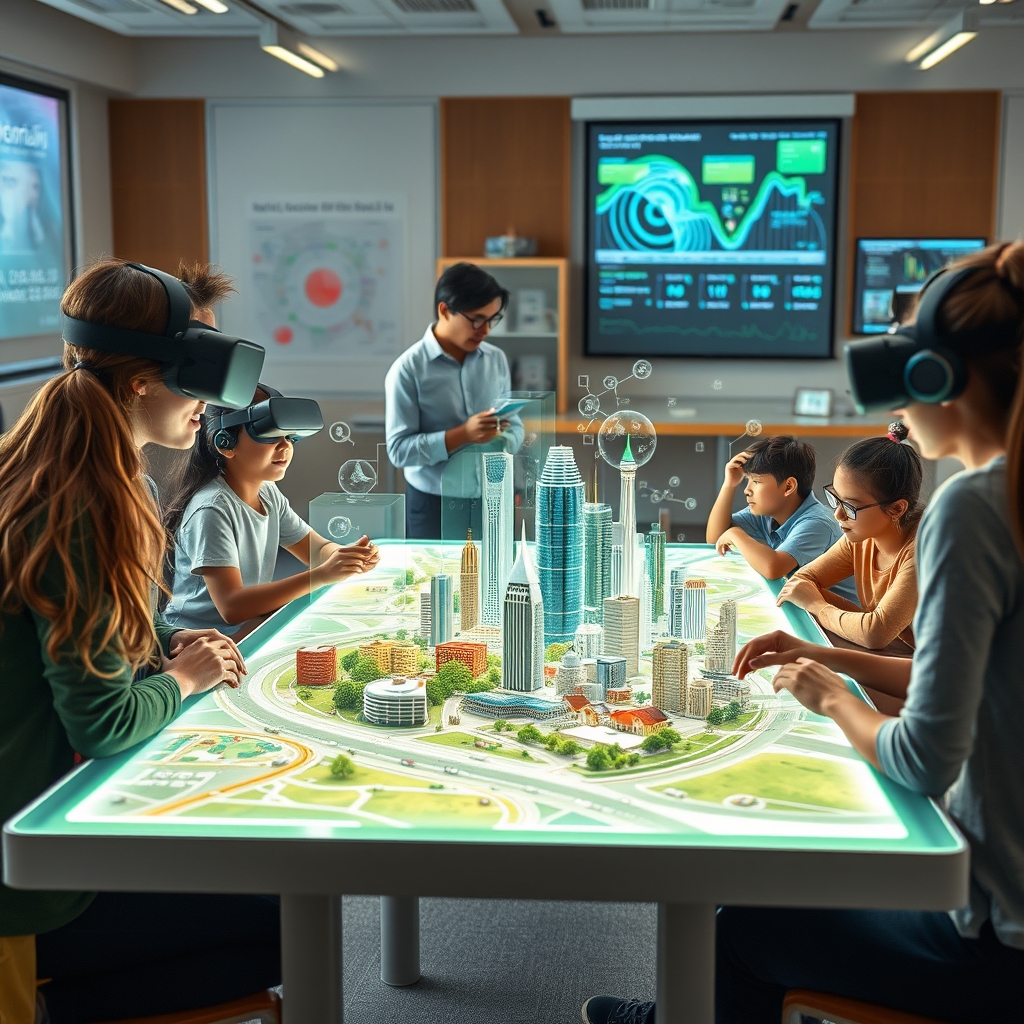
Education is no longer confined to the passive absorption of facts and figures. In an era where information is abundant and easily accessible, the true challenge lies in teaching students how to think critically, solve complex problems, and apply knowledge in real-world contexts. Artificial Intelligence (AI) is emerging as a powerful ally in this mission, particularly when integrated with project-based learning (PBL) and experiential learning. By leveraging AI-driven tools, educators can create dynamic, immersive, and personalized learning experiences that not only engage students but also equip them with the skills needed to thrive in an unpredictable future.
The Shift from Rote Learning to Critical Thinking
Traditional education systems have long emphasized memorization and standardized testing, often at the expense of deeper cognitive skills like analysis, evaluation, and creativity. However, the demands of the modern workforce and the complexities of global challenges require a different approach. Critical thinking—the ability to question assumptions, evaluate evidence, and construct well-reasoned arguments—has become a cornerstone of 21st-century education. AI is playing a pivotal role in this shift by enabling learning environments that prioritize inquiry, experimentation, and reflection.
For instance, AI-powered platforms can analyze student responses in real-time, identifying gaps in understanding and prompting learners to reconsider their assumptions. Tools like intelligent tutoring systems (ITS) provide immediate feedback, guiding students through problem-solving processes rather than simply providing answers. This iterative approach fosters resilience and adaptability, qualities that are essential for navigating an ever-changing world.
Project-Based Learning: Where AI Meets Real-World Application
Project-based learning (PBL) is a pedagogical approach that immerses students in authentic, hands-on projects that require collaboration, research, and creativity. Unlike traditional assignments, PBL tasks are often open-ended, mirroring the complexities of real-world challenges. AI enhances PBL by providing tools that streamline research, facilitate collaboration, and offer personalized support throughout the learning journey.
One of the most significant advantages of AI in PBL is its ability to simulate real-world scenarios. For example, AI-driven simulations can replicate scientific experiments, historical events, or even business challenges, allowing students to explore cause-and-effect relationships in a risk-free environment. These simulations can adapt to student inputs, providing dynamic feedback that deepens understanding and encourages experimentation. Additionally, AI can assist in project management by helping students break down complex tasks, set milestones, and track progress, all while offering suggestions for improvement.
Consider a high school science class working on a project to design a sustainable city. AI tools can analyze environmental data, generate 3D models of proposed solutions, and even predict the long-term impact of design choices. By integrating AI into the project, students are not only learning scientific concepts but also developing critical thinking skills as they evaluate trade-offs, consider ethical implications, and iterate on their designs based on feedback.
The Role of Generative AI in Fostering Creativity
Generative AI tools, such as large language models and AI-powered design platforms, are revolutionizing the creative aspects of PBL. These tools can assist students in brainstorming ideas, drafting project proposals, or even generating visual content. For example, a student working on a history project could use a generative AI tool to create a fictional dialogue between historical figures, helping them explore different perspectives and deepen their understanding of the subject matter.
However, the use of generative AI in education is not without its challenges. There is a fine line between using AI as a tool to enhance creativity and relying on it to do the thinking for the student. Educators must guide students in using these tools responsibly, ensuring that they remain the drivers of their own learning. By framing generative AI as a collaborator rather than a crutch, students can learn to leverage its capabilities while still developing their own critical thinking and problem-solving skills.
Experiential Learning: Bridging the Gap Between Theory and Practice
Experiential learning takes PBL a step further by emphasizing direct experience and reflection. Whether through internships, fieldwork, or simulations, experiential learning encourages students to apply theoretical knowledge in practical settings. AI enhances this approach by creating immersive, adaptive learning environments that respond to student actions and decisions.
For example, AI-powered virtual reality (VR) platforms can transport students to historical sites, scientific laboratories, or even outer space, allowing them to interact with their environment in ways that would be impossible in a traditional classroom. These experiences are not only engaging but also deeply educational, as they require students to think on their feet, adapt to new information, and solve problems in real-time. Moreover, AI can track student performance during these experiences, providing insights into their decision-making processes and areas for improvement.
In higher education, AI-driven experiential learning is particularly valuable in fields like medicine, engineering, and business. Medical students can practice surgical procedures in VR simulations that adapt to their skill level, while engineering students can design and test prototypes in virtual environments. These experiences not only build technical skills but also cultivate the soft skills—such as teamwork, communication, and resilience—that are essential for success in any profession.
Personalized Learning Pathways Through AI
One of the most transformative aspects of AI in education is its ability to personalize learning experiences. Traditional classrooms often struggle to accommodate the diverse needs of students, but AI can tailor instruction to individual learning styles, paces, and interests. In the context of PBL and experiential learning, this personalization ensures that every student is challenged at the appropriate level and supported in areas where they struggle.
For example, an AI-powered learning platform can analyze a student’s performance on a project and recommend additional resources, such as articles, videos, or interactive exercises, to address specific gaps in understanding. It can also adjust the difficulty of tasks in real-time, ensuring that students remain engaged without feeling overwhelmed. This level of personalization not only enhances learning outcomes but also fosters a sense of ownership and motivation, as students see their progress and achievements reflected in their work.
Challenges and Ethical Considerations
While the integration of AI into PBL and experiential learning offers tremendous potential, it also raises important ethical and practical challenges. One of the primary concerns is the digital divide—the gap between students who have access to AI-powered tools and those who do not. Ensuring educational equity requires that schools and policymakers invest in infrastructure, training, and resources to make these technologies accessible to all students, regardless of their socioeconomic background.
Another challenge is the potential for AI to reinforce biases or limit creativity. AI systems are only as good as the data they are trained on, and if that data contains biases, the AI may inadvertently perpetuate them. Educators must be vigilant in selecting and using AI tools, ensuring that they promote inclusivity and diversity. Additionally, there is a risk that over-reliance on AI could stifle human interaction and collaboration, which are critical components of PBL and experiential learning. Balancing the use of AI with opportunities for face-to-face interaction is essential for creating a well-rounded educational experience.
As AI continues to evolve, its role in education will only grow more significant. By integrating AI with project-based and experiential learning, educators can create dynamic, engaging, and personalized learning experiences that prepare students for the challenges of the future. The key lies in using AI not as a replacement for human instruction but as a tool to enhance it, fostering environments where critical thinking, creativity, and collaboration thrive. In doing so, we can cultivate a generation of learners who are not only knowledgeable but also adaptable, resilient, and ready to make a meaningful impact on the world.



