
The Rise of AI in Education: How Generative Tools and Learning Analytics Are Crafting the Future of Digital Literacy and Inclusive Learning
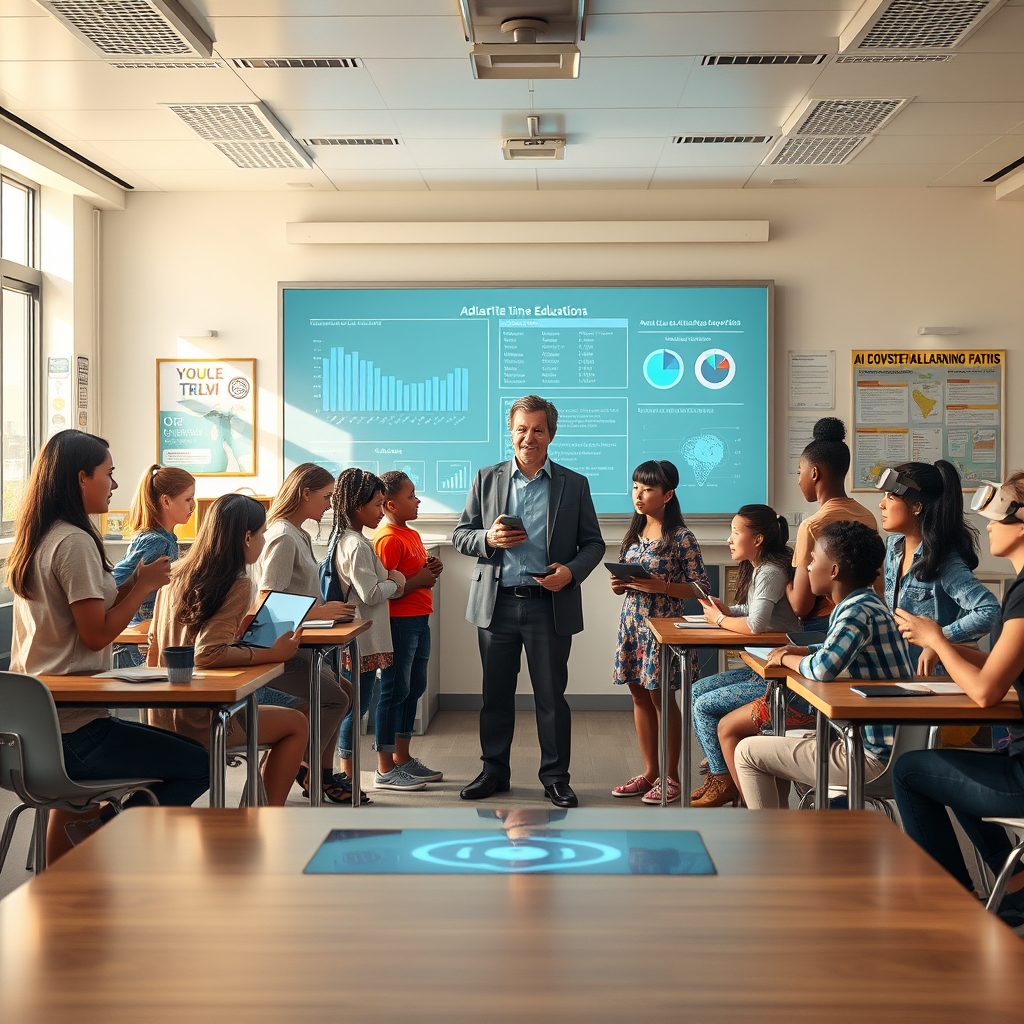
The integration of artificial intelligence into education is not just a trend—it is a fundamental shift in how we approach teaching, learning, and knowledge acquisition. As classrooms evolve into dynamic digital ecosystems, AI-powered tools are redefining the boundaries of personalized learning, making education more adaptive, engaging, and accessible than ever before. At the heart of this transformation lies the synergy between generative AI and learning analytics, two pillars that are reshaping the educational landscape in profound ways.
The Power of Generative AI in Personalized Learning
Generative AI tools, such as large language models and adaptive content creators, are revolutionizing the way educational content is designed and delivered. These systems can generate tailored learning materials, quizzes, and even interactive simulations that align with individual student needs, learning styles, and pace. For instance, a student struggling with algebraic concepts can receive customized explanations, practice problems, and real-time feedback, all generated on the fly by an AI tutor. This level of personalization was once a distant dream but is now becoming a reality in classrooms around the world.
Beyond content creation, generative AI is also enhancing creativity and critical thinking. Tools like AI-powered writing assistants or virtual lab simulations allow students to explore complex ideas, experiment with hypotheses, and refine their reasoning skills in a low-stakes environment. By automating routine tasks, such as grading or content curation, educators are freed to focus on what truly matters: fostering deeper connections with students and guiding them through nuanced, interdisciplinary learning experiences.
Learning Analytics: The Backbone of Data-Driven Education
While generative AI focuses on content and interaction, learning analytics provides the data-driven insights that make personalized learning possible. By collecting and analyzing vast amounts of student data—from engagement patterns to assessment performance—AI systems can identify trends, predict challenges, and recommend interventions before students fall behind. For example, if a learning analytics platform detects that a student is consistently struggling with a particular concept, it can trigger additional resources, adjust the difficulty of future assignments, or even alert the teacher to provide targeted support.
This level of granularity is particularly transformative for inclusive education. Learning analytics can help educators identify and address systemic barriers, ensuring that students with diverse needs—whether due to learning disabilities, language differences, or socioeconomic factors—receive the support they require. By leveraging AI, schools can move beyond one-size-fits-all approaches and create equitable learning environments where every student has the opportunity to thrive.
The Role of Digital Literacy in an AI-Driven World
As AI becomes more embedded in education, digital literacy is no longer just a supplementary skill—it is a necessity. Students must learn not only how to use AI tools but also how to critically evaluate their outputs, understand their limitations, and apply them ethically. For example, while generative AI can assist in writing essays or solving math problems, students must develop the discernment to verify facts, recognize biases, and ensure their work remains original and authentic.
Educators play a crucial role in fostering this literacy. By integrating AI tools into the curriculum, teachers can help students develop a healthy skepticism toward technology while also empowering them to harness its potential. Lessons on digital citizenship, data privacy, and algorithmic bias should be as fundamental as reading, writing, and arithmetic. In doing so, we prepare students not just for academic success but for active participation in a world where AI is ubiquitous.
Blended Learning: The Best of Both Worlds
The rise of AI in education does not mean the end of traditional teaching methods. Instead, it is paving the way for blended learning—a hybrid approach that combines the best of in-person instruction with the flexibility and personalization of digital tools. In a blended classroom, AI can handle adaptive learning paths, real-time feedback, and data analysis, while teachers focus on mentorship, collaboration, and social-emotional learning. This model ensures that technology enhances rather than replaces the human elements of education, such as empathy, creativity, and critical thinking.
For example, a science teacher might use an AI-powered simulation to demonstrate complex concepts like quantum physics, allowing students to interact with virtual experiments. Meanwhile, the teacher facilitates discussions, encourages peer collaboration, and provides one-on-one guidance. This balance ensures that students benefit from both the scalability of AI and the irreplaceable value of human connection.
Challenges and Ethical Considerations
Despite its promise, the integration of AI in education is not without challenges. Data privacy is a significant concern, as learning analytics rely on vast amounts of student data. Schools and edtech companies must prioritize transparency, consent, and security to ensure that sensitive information is protected. Additionally, there is the risk of over-reliance on AI, which could lead to a depersonalization of education if not carefully managed. Teachers must remain at the center of the learning process, using AI as a tool to augment their expertise rather than replace it.
Another critical issue is equity. While AI has the potential to democratize education, it could also exacerbate existing disparities if access to technology is uneven. Schools in underserved communities may lack the infrastructure or resources to implement AI tools effectively, widening the digital divide. Addressing this requires intentional policies, funding, and partnerships to ensure that all students, regardless of background, can benefit from the AI revolution in education.
The Future of AI in Education: A Collaborative Journey
The future of AI in education is not about replacing teachers or traditional learning methods but about creating a collaborative ecosystem where technology and human ingenuity work in harmony. Generative AI and learning analytics are just the beginning—emerging technologies like virtual reality, augmented reality, and intelligent tutoring systems will further blur the lines between physical and digital learning spaces. As these tools evolve, so too must our approach to education, ensuring that it remains inclusive, equitable, and centered on the needs of every learner.
Ultimately, the goal is not just to prepare students for the jobs of the future but to empower them to navigate a world where technology and humanity intersect in complex ways. By embracing AI as a partner in education, we can unlock new possibilities for personalized, experiential, and lifelong learning—paving the way for a generation of critical thinkers, innovators, and problem-solvers who are ready to tackle the challenges of tomorrow.



