
AI and the Transformation of STEM Education: Building Adaptive, Engaging, and Equitable Learning Pathways
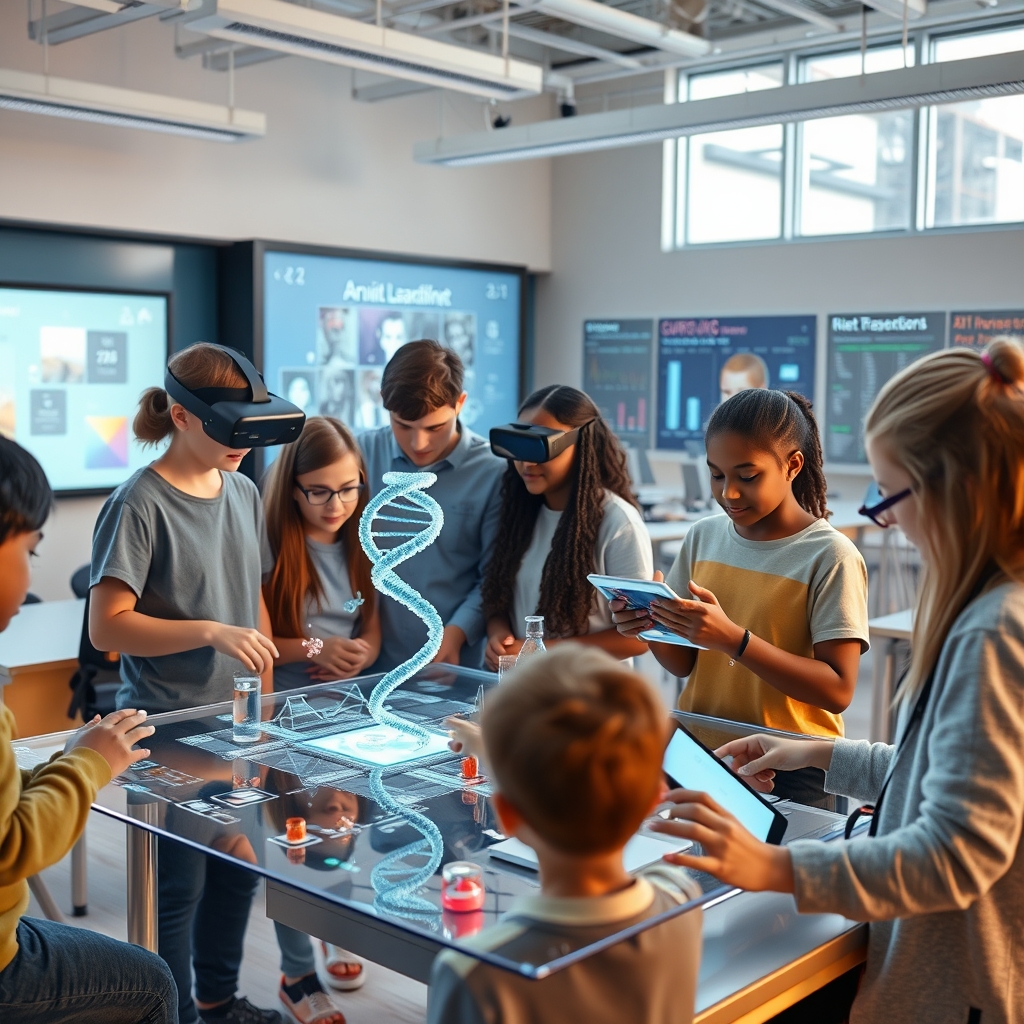
In an era where technology permeates every facet of society, the fields of Science, Technology, Engineering, and Mathematics (STEM) stand at the forefront of innovation. Yet, traditional STEM education often struggles to keep pace with the rapid evolution of these disciplines, leaving students ill-prepared for the challenges of a dynamic, interconnected world. Artificial Intelligence (AI) is emerging as a powerful catalyst in reshaping STEM education, offering tools and methodologies that foster adaptability, engagement, and equity. By integrating AI-driven solutions, educators can create learning environments that not only impart technical knowledge but also cultivate the critical thinking, creativity, and collaboration skills essential for success in the 21st century.
The Shift Toward Adaptive Learning in STEM
One of the most significant contributions of AI to STEM education is the development of adaptive learning systems. These platforms leverage machine learning algorithms to analyze student performance in real-time, identifying strengths, weaknesses, and learning patterns. For instance, an AI-powered tutoring system in a mathematics classroom can adjust the difficulty of problems based on a student’s proficiency, ensuring they are neither overwhelmed nor underchallenged. This personalized approach not only enhances comprehension but also builds confidence, particularly for students who may struggle with traditional, one-size-fits-all teaching methods.
Adaptive learning is particularly transformative in STEM subjects, where conceptual understanding often builds incrementally. AI systems can detect gaps in knowledge—such as a student’s difficulty with algebraic manipulation in a physics problem—and provide targeted interventions, such as additional practice problems or explanatory videos. This level of customization was once the domain of private tutors, but AI is democratizing access to personalized instruction, making high-quality STEM education more equitable.
Enhancing Engagement Through Gamification and Experiential Learning
STEM education has long grappled with the challenge of engaging students, particularly those who perceive these subjects as abstract or intimidating. AI is addressing this issue by integrating gamification and experiential learning into the curriculum. Gamified learning platforms use AI to create interactive, game-like experiences that reward progress, foster competition, and make learning fun. For example, a biology student might use an AI-driven simulation to explore cellular processes in a virtual lab, where they can manipulate variables and observe outcomes in real-time. These immersive experiences not only deepen understanding but also spark curiosity and a love for discovery.
Experiential learning, another cornerstone of AI-enhanced STEM education, allows students to apply theoretical knowledge to real-world problems. AI-powered tools, such as virtual reality (VR) and augmented reality (AR), enable students to conduct experiments, explore engineering designs, or simulate complex mathematical models in a risk-free environment. For instance, an engineering student could use AI-driven VR to test the structural integrity of a bridge design under various conditions, receiving instant feedback on potential flaws. This hands-on approach bridges the gap between theory and practice, preparing students for the practical challenges they will face in their careers.
The Role of Generative AI in Fostering Creativity and Interdisciplinary Connections
Generative AI tools, such as large language models and AI-driven design platforms, are revolutionizing the way students approach problem-solving in STEM. These tools can generate ideas, suggest alternative solutions, or even create prototypes, encouraging students to think outside the box. For example, a student working on a robotics project might use generative AI to brainstorm design concepts or troubleshoot coding errors. By automating routine tasks, generative AI frees students to focus on higher-order thinking, such as analyzing data, evaluating outcomes, and innovating new approaches.
Moreover, generative AI is facilitating interdisciplinary learning by breaking down the silos between STEM disciplines. A project that combines biology, computer science, and engineering, for instance, might use AI to simulate the spread of a disease and model potential interventions. This interdisciplinary approach mirrors the real-world challenges that professionals face, where solutions often require expertise from multiple fields. By fostering collaboration and creativity, generative AI is preparing students to tackle complex, multifaceted problems with confidence.
Promoting Equity and Inclusion in STEM Education
Despite progress, STEM fields continue to grapple with significant equity gaps, with underrepresented groups—such as women, minorities, and students from low-income backgrounds—facing barriers to access and success. AI has the potential to address these disparities by creating more inclusive learning environments. For example, AI-driven tools can provide multilingual support, ensuring that language barriers do not hinder comprehension. Additionally, adaptive learning platforms can tailor instruction to accommodate diverse learning styles, whether visual, auditory, or kinesthetic, ensuring that all students have the opportunity to thrive.
AI can also help identify and mitigate biases in STEM education. For instance, learning analytics can reveal patterns of inequity, such as disparities in participation or performance among different student groups. Armed with this data, educators can implement targeted interventions, such as mentorship programs or culturally responsive teaching strategies, to create a more level playing field. By leveraging AI to promote equity, STEM education can become a gateway to opportunity for all students, regardless of their background.
The Future of STEM Education: Balancing Technology and Human Connection
While AI offers tremendous potential to transform STEM education, its success hinges on striking the right balance between technology and human connection. AI should be viewed as a tool to augment—not replace—the role of educators. Teachers remain essential in guiding students, fostering critical thinking, and nurturing a growth mindset. For example, an AI-powered tutoring system might provide instant feedback on a student’s coding assignment, but a teacher’s encouragement and mentorship are what inspire the student to persist in the face of challenges.
Furthermore, the ethical implications of AI in education must be carefully considered. Issues such as data privacy, algorithmic bias, and the digital divide require thoughtful solutions to ensure that AI-driven tools are used responsibly and equitably. Educators, policymakers, and technologists must collaborate to establish guidelines that prioritize student well-being and foster a culture of transparency and accountability.
As AI continues to evolve, its impact on STEM education will only grow more profound. By embracing adaptive learning, gamification, experiential learning, and interdisciplinary approaches, educators can create dynamic, engaging, and equitable learning experiences that prepare students for the challenges and opportunities of the future. The transformation of STEM education through AI is not just about keeping pace with technological advancements—it is about empowering the next generation of innovators, problem-solvers, and leaders to shape a better world. In this journey, the fusion of human ingenuity and artificial intelligence holds the promise of unlocking limitless potential, ensuring that every student has the tools and opportunities to succeed.



