
The Digital Classroom Revolution: How Hybrid Learning and AI Are Crafting the Future of Educational Equity
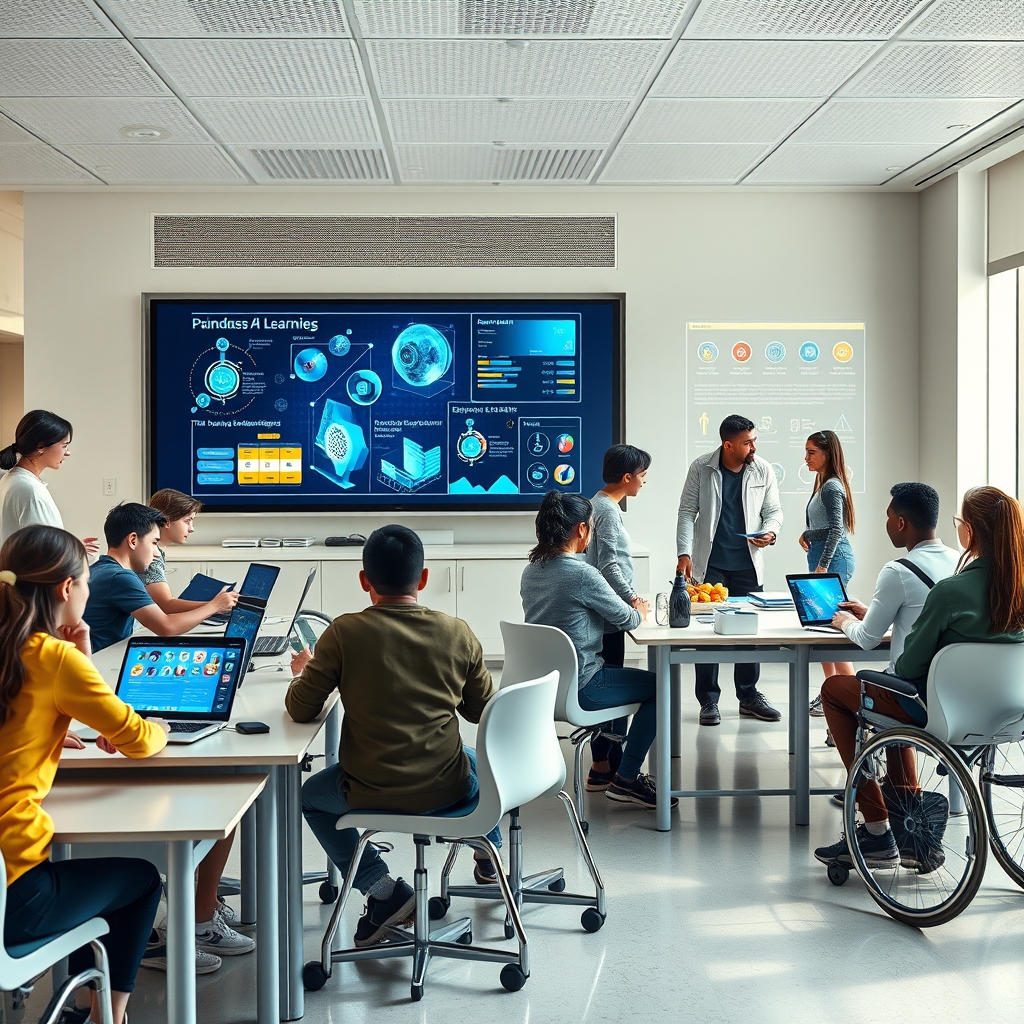
The rapid evolution of technology has ushered in a new era for education, one where the boundaries of traditional classrooms are expanding to embrace the digital frontier. At the heart of this transformation lies hybrid learning—a dynamic blend of in-person and online education that is redefining how knowledge is accessed, absorbed, and applied. When combined with the power of artificial intelligence, hybrid learning is not just a temporary solution but a long-term strategy for fostering educational equity, empowering learners from all backgrounds, and preparing them for the complexities of the modern world.
The Rise of Hybrid Learning: A Flexible Pathway to Inclusion
Hybrid learning has emerged as a cornerstone of modern education, offering a flexible framework that accommodates diverse learning styles, schedules, and needs. Unlike fully online or traditional in-person models, hybrid learning provides the best of both worlds: the structure and social interaction of physical classrooms, coupled with the accessibility and personalization of digital platforms. This dual approach is particularly impactful for students in underserved communities, where geographical, financial, or physical barriers often limit access to quality education.
For instance, rural students who once faced long commutes or limited course offerings can now participate in advanced STEM programs through virtual classrooms. Similarly, working adults pursuing lifelong learning or online degree programs can balance their studies with professional and personal commitments. By breaking down these barriers, hybrid learning is democratizing education, ensuring that opportunities are not confined to those with privilege but extended to all who seek them.
AI as the Great Equalizer: Personalization at Scale
While hybrid learning provides the infrastructure for inclusive education, artificial intelligence is the engine that drives personalization at scale. AI-powered tools, such as intelligent tutoring systems and learning analytics, are transforming how educators understand and respond to individual student needs. These systems analyze vast amounts of data—from engagement patterns to assessment performance—to identify strengths, weaknesses, and learning preferences. The result is a tailored educational experience that adapts in real time, ensuring no student is left behind.
Consider a high school student struggling with algebra. An AI-driven tutoring system can detect specific misconceptions, provide targeted exercises, and even adjust the difficulty of problems in real time. Meanwhile, a gifted student in the same class can be challenged with advanced material, preventing boredom and fostering continuous growth. This level of personalization was once the domain of elite private tutors, but AI is making it accessible to every learner, regardless of their socioeconomic status.
Generative Tools and the Future of Creativity
Beyond personalization, AI is also unlocking new avenues for creativity and critical thinking in education. Generative tools, such as AI-powered writing assistants, design platforms, and coding companions, are enabling students to explore interdisciplinary learning in ways previously unimaginable. For example, a history student can use AI to generate interactive timelines, while a biology student can simulate complex ecosystems. These tools do not replace human creativity but amplify it, allowing students to focus on higher-order thinking while AI handles repetitive or technical tasks.
Moreover, generative AI is fostering experiential learning by enabling students to engage in project-based learning with real-world applications. Imagine a group of students designing a sustainable city using AI-generated models, testing their ideas through simulations, and refining their designs based on feedback. This hands-on approach not only deepens understanding but also cultivates skills like collaboration, problem-solving, and adaptability—skills that are essential for success in the 21st century.
Digital Literacy: The Foundation of Modern Learning
As education becomes increasingly digitized, digital literacy is no longer a supplementary skill but a fundamental requirement. Students must learn to navigate online platforms, evaluate the credibility of digital sources, and use technology ethically and responsibly. Hybrid learning environments provide the perfect sandbox for developing these skills, as students interact with a variety of digital tools, from collaborative documents to virtual labs.
Educators play a crucial role in this process by integrating digital literacy into the curriculum. For example, a science teacher might task students with researching a topic using AI-generated summaries, then critically assessing the accuracy and bias of the information. Similarly, a literature class could explore the ethical implications of AI-generated content, sparking discussions about authorship, originality, and the role of technology in creative fields. By embedding digital literacy into everyday learning, educators are preparing students to thrive in a world where technology is ubiquitous.
Gamified Learning: Making Education Engaging and Effective
One of the most exciting developments in hybrid learning is the integration of gamification—using game design elements to make education more engaging and motivating. Gamified learning platforms leverage AI to create adaptive challenges, rewards, and progress tracking, transforming mundane tasks into exciting quests. For example, a language learning app might use AI to generate personalized vocabulary games, while a math platform could turn problem-solving into a competitive team challenge.
The benefits of gamification extend beyond engagement. Research shows that game-based learning enhances retention, encourages persistence, and fosters a growth mindset. When students see their progress visualized through badges, leaderboards, or virtual rewards, they are more likely to stay motivated and take ownership of their learning. This approach is particularly effective for microlearning—short, focused lessons that fit into busy schedules—making it ideal for lifelong learners and professionals seeking to upskill.
Building a Future of Educational Equity
The fusion of hybrid learning and AI is not just about improving education; it is about reimagining it. By leveraging these technologies, we can create a system that is flexible, inclusive, and responsive to the needs of every learner. However, the true potential of this revolution lies in our ability to address the digital divide. Access to technology, reliable internet, and digital literacy training must be prioritized to ensure that no student is left behind in this new era.
Educators, policymakers, and technologists must work together to design solutions that are equitable by design. This means investing in infrastructure for underserved communities, training teachers to integrate AI tools effectively, and ensuring that digital platforms are accessible to students with disabilities. It also means fostering a culture of lifelong learning, where education is not a one-time event but a continuous journey of growth and discovery.
As we stand on the brink of this digital classroom revolution, the possibilities are limitless. Hybrid learning and AI are not just tools but catalysts for change, capable of transforming education from a privilege into a universal right. By embracing these innovations, we can build a future where every learner—regardless of their background—has the opportunity to unlock their full potential and shape a brighter, more equitable world.



