
The AI Learning Mosaic: How Intelligent Systems Are Crafting Dynamic, Equity-Driven Pathways Through Gamified and Project-Based Learning
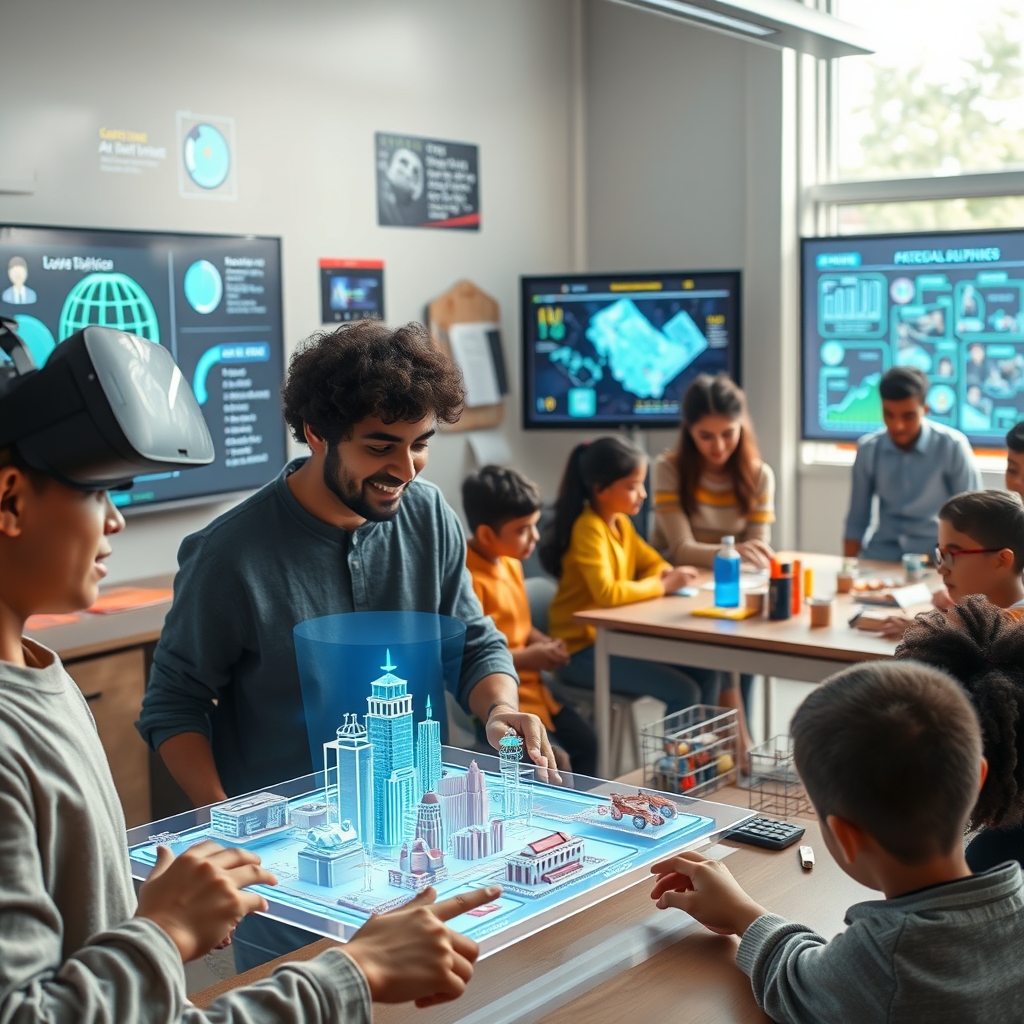
Imagine a classroom where every student’s learning journey is as unique as their fingerprint. A space where lessons adapt in real-time, challenges feel like games, and every project feels like a step toward solving a real-world problem. This isn’t a distant vision of the future—it’s the present, reshaped by the quiet but profound influence of artificial intelligence in education. The traditional one-size-fits-all model is dissolving, replaced by a dynamic mosaic where AI acts as both the brush and the canvas, enabling educators to craft experiences that are not only personalized but also deeply engaging and equitable.
The Gamification of Learning: Play as a Pathway to Mastery
Gamified learning isn’t just about turning education into a game; it’s about leveraging the intrinsic motivation that games naturally evoke. AI-powered platforms are now capable of transforming dry, abstract concepts into interactive challenges that reward curiosity, persistence, and creativity. For instance, a student struggling with algebraic equations might find themselves navigating a virtual city where solving problems unlocks new areas or earns in-game currency. The AI behind the scenes doesn’t just track correct answers—it analyzes patterns in mistakes, adjusts the difficulty in real-time, and even introduces hints or alternative explanations when frustration levels rise.
This approach does more than make learning fun. It builds resilience. Students learn that failure isn’t a dead end but a stepping stone, a lesson reinforced by the immediate feedback loops that gamified systems provide. Moreover, AI-driven gamification can level the playing field for students with diverse learning needs. A child with dyslexia, for example, might engage with the same content through a visually rich, narrative-driven game that bypasses traditional reading barriers. The result? A classroom where every student, regardless of background or ability, can experience the thrill of mastery.
Project-Based Learning: From Theory to Real-World Impact
Project-based learning (PBL) has long been celebrated for its ability to connect classroom theory to real-world application. But when AI enters the equation, PBL evolves from a static pedagogical approach into a living, breathing ecosystem of exploration. Intelligent systems can now curate projects tailored to students’ interests, skill levels, and even local community needs. A group of high school students in an urban setting, for example, might use AI tools to analyze air quality data in their neighborhood, design a prototype for a low-cost air purifier, and even draft a proposal for local policymakers—all while developing skills in data literacy, engineering, and civic engagement.
AI doesn’t just facilitate these projects; it enhances them. Generative tools can help students brainstorm ideas, draft reports, or even simulate the outcomes of their designs. Learning analytics track progress, identify bottlenecks, and suggest resources or collaborators who might offer fresh perspectives. The role of the teacher shifts from a deliverer of content to a facilitator of discovery, guiding students as they navigate complex, interdisciplinary challenges. In this environment, education becomes less about memorizing facts and more about developing the agility to solve problems that don’t yet have answers.
Equity Through Adaptive Personalization
One of the most transformative promises of AI in education is its potential to dismantle long-standing barriers to equity. Traditional classrooms often struggle to accommodate the diverse needs of students, whether due to learning disabilities, language barriers, or socioeconomic disparities. AI, however, thrives on diversity. Intelligent tutoring systems can adapt content delivery to match a student’s preferred learning style—whether auditory, visual, or kinesthetic—while also accounting for their pace and prior knowledge. A student who needs more time to grasp a concept won’t be left behind, and one who masters it quickly won’t be held back.
Moreover, AI can help bridge gaps in access to quality education. In regions where resources are scarce, intelligent systems can provide high-quality, personalized instruction without the need for a physical classroom or a full-time teacher. For example, an AI-powered platform might offer a rural student the same rigorous STEM curriculum as their urban counterpart, complete with interactive simulations and virtual mentors. This isn’t just about democratizing access; it’s about ensuring that every student, regardless of their circumstances, has the opportunity to develop the skills and confidence to thrive in an increasingly complex world.
The Human Element: AI as a Collaborator, Not a Replacement
Amid the excitement surrounding AI’s capabilities, it’s crucial to remember that technology is a tool, not a teacher. The most effective learning experiences emerge from the synergy between human intuition and machine intelligence. AI can analyze data, predict outcomes, and personalize content, but it cannot replicate the empathy, creativity, or moral guidance that educators provide. A teacher’s ability to inspire, to recognize the unspoken struggles of a student, or to foster a sense of community in the classroom remains irreplaceable.
What AI offers is the opportunity to amplify these human strengths. By automating administrative tasks, providing real-time insights into student performance, and offering personalized resources, AI frees educators to focus on what they do best: building relationships, nurturing curiosity, and guiding students toward their full potential. The goal isn’t to create classrooms where machines replace humans but to design learning environments where both can collaborate to create something greater than the sum of their parts.
Crafting the Future, One Student at a Time
The integration of AI into education isn’t just about keeping up with technological advancements; it’s about reimagining what learning can and should be. It’s about moving away from rigid, standardized systems and toward dynamic, student-centered experiences that honor individuality while fostering collective growth. As AI continues to evolve, so too will the possibilities for gamified, project-based, and equity-driven learning. The classrooms of tomorrow won’t be defined by rows of desks or chalkboards but by the limitless potential of students who are empowered to explore, create, and solve problems in ways we’re only beginning to imagine. The question isn’t whether AI will transform education—it’s how far we’re willing to go to ensure that transformation benefits every learner, in every corner of the world.
The journey has only just begun, and the tools are already in our hands. The next step is to wield them with intention, creativity, and an unwavering commitment to the idea that every student deserves a learning experience as unique and extraordinary as they are.



