The AI Learning Lab: How Generative Tools and Experiential Learning Are Cultivating Digital Pioneers for Tomorrow’s Classrooms
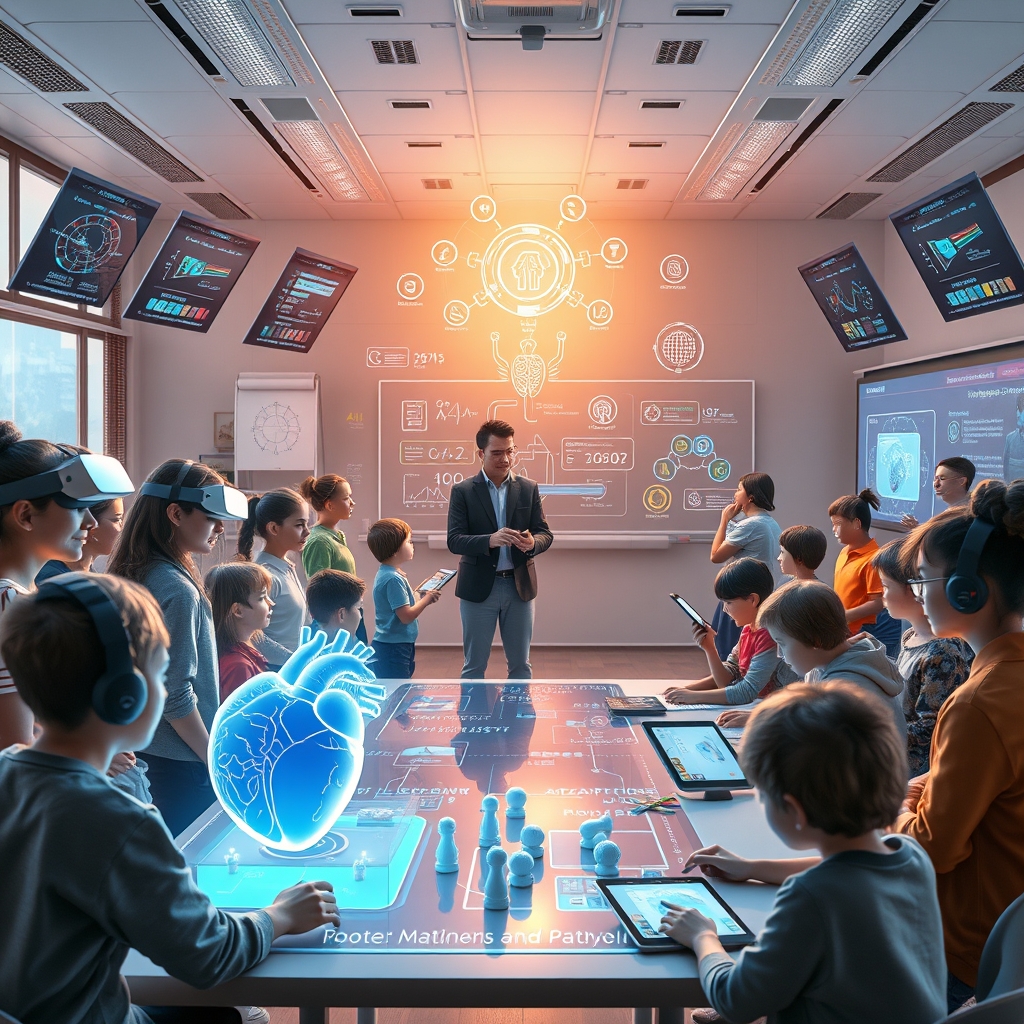
Imagine a classroom where every student’s curiosity is met with a unique, evolving response—where lessons adapt in real time to their strengths, gaps, and even their moods. This is not a distant vision but the emerging reality of education powered by artificial intelligence. As AI reshapes industries from healthcare to finance, its most profound impact may well be in how we learn, unlearning the one-size-fits-all model of the past and replacing it with dynamic, experiential journeys that prepare students for a world where change is the only constant.
The Generative Classroom: Beyond Static Content
Traditional education often relies on static textbooks and standardized curricula, but AI-driven generative tools are turning this paradigm on its head. Platforms like adaptive learning systems can now create personalized content—quizzes, essays, even entire lesson plans—tailored to individual learners. For instance, a student struggling with algebraic concepts might receive a series of interactive problems that adjust in difficulty based on their responses, while another excelling in creative writing could be challenged with AI-generated prompts that push their narrative skills further.
These tools don’t just personalize; they democratize. In classrooms where resources are limited, generative AI can fill gaps by providing high-quality, on-demand materials that rival those of well-funded institutions. The result? A leveling of the educational playing field, where access to excellence is no longer dictated by geography or socioeconomic status.
The Role of Teachers in an AI-Augmented World
Critics often fear that AI will replace educators, but the reality is far more collaborative. Teachers are evolving into learning architects, using AI to handle administrative tasks—grading, attendance, even basic tutoring—freeing them to focus on what humans do best: mentoring, inspiring, and fostering emotional intelligence. In this new ecosystem, AI becomes the invisible assistant, while educators take on the role of guides, helping students navigate the vast landscapes of knowledge that AI unlocks.
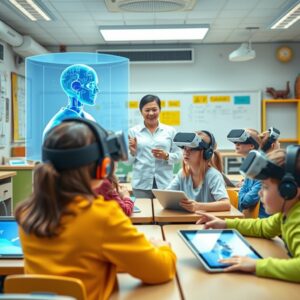
Consider a history teacher using an AI-powered simulation to immerse students in the Renaissance. The AI generates dynamic scenarios—debates between Leonardo da Vinci and Michelangelo, or virtual tours of Florence’s streets—while the teacher facilitates discussions, encourages critical analysis, and connects the past to present-day issues. The synergy between human intuition and machine precision creates a richer, more engaging learning experience.
Experiential Learning: Where AI Meets Real-World Problem Solving
Education is no longer confined to textbooks and lectures. AI is enabling experiential learning at scale, allowing students to tackle real-world challenges in virtual environments. For example, medical students can practice surgeries in AI-simulated operating rooms, while engineering students design and test prototypes in digital labs. These experiences bridge the gap between theory and practice, equipping learners with skills that are immediately applicable in their future careers.
Project-based learning (PBL) is another area where AI shines. By analyzing student performance data, AI can suggest interdisciplinary projects that align with their interests and skill levels. A student passionate about environmental science might collaborate with peers on an AI-generated project to design a sustainable city, integrating knowledge from biology, economics, and urban planning. The result is a deeper, more holistic understanding of complex issues.
The Ethics of AI in Education: Navigating the Challenges
With great power comes great responsibility. The integration of AI in education raises critical questions about data privacy, algorithmic bias, and the digital divide. How do we ensure that AI systems are transparent and equitable? How do we protect student data from misuse? These are not just technical challenges but ethical imperatives that require collaboration between educators, policymakers, and technologists.
One solution lies in designing AI systems with inclusivity at their core. For instance, speech-to-text tools can help students with disabilities participate more fully in classroom discussions, while AI-driven translation services break down language barriers for non-native speakers. By prioritizing accessibility, AI can become a tool for educational equity rather than a source of division.
The Future of Lifelong Learning: AI as a Constant Companion
The concept of education ending with a diploma is becoming obsolete. In a world where skills evolve rapidly, lifelong learning is no longer a luxury but a necessity. AI is making this continuous education more accessible through microlearning—bite-sized lessons delivered via apps, chatbots, or virtual assistants. Whether it’s a professional learning a new programming language or a retiree exploring art history, AI-powered platforms can curate personalized learning paths that fit into busy lives.
Intelligent tutoring systems (ITS) are another game-changer. These AI-driven mentors provide real-time feedback, adapting to a learner’s progress and offering encouragement when motivation wanes. Imagine a language learner practicing Spanish with an AI tutor that not only corrects their grammar but also engages them in culturally relevant conversations. The result is a more immersive, effective learning experience.
As AI continues to evolve, its role in education will only grow more profound. The classrooms of tomorrow will be dynamic, inclusive spaces where technology and human ingenuity converge to unlock the full potential of every learner. The question is no longer whether AI will transform education, but how we can harness its power to create a future where learning knows no limits, and every student is empowered to thrive in an ever-changing world.