
The Unseen Catalyst: How AI and Blended Learning Are Crafting the Future of Digital Fluency and Inclusive Education
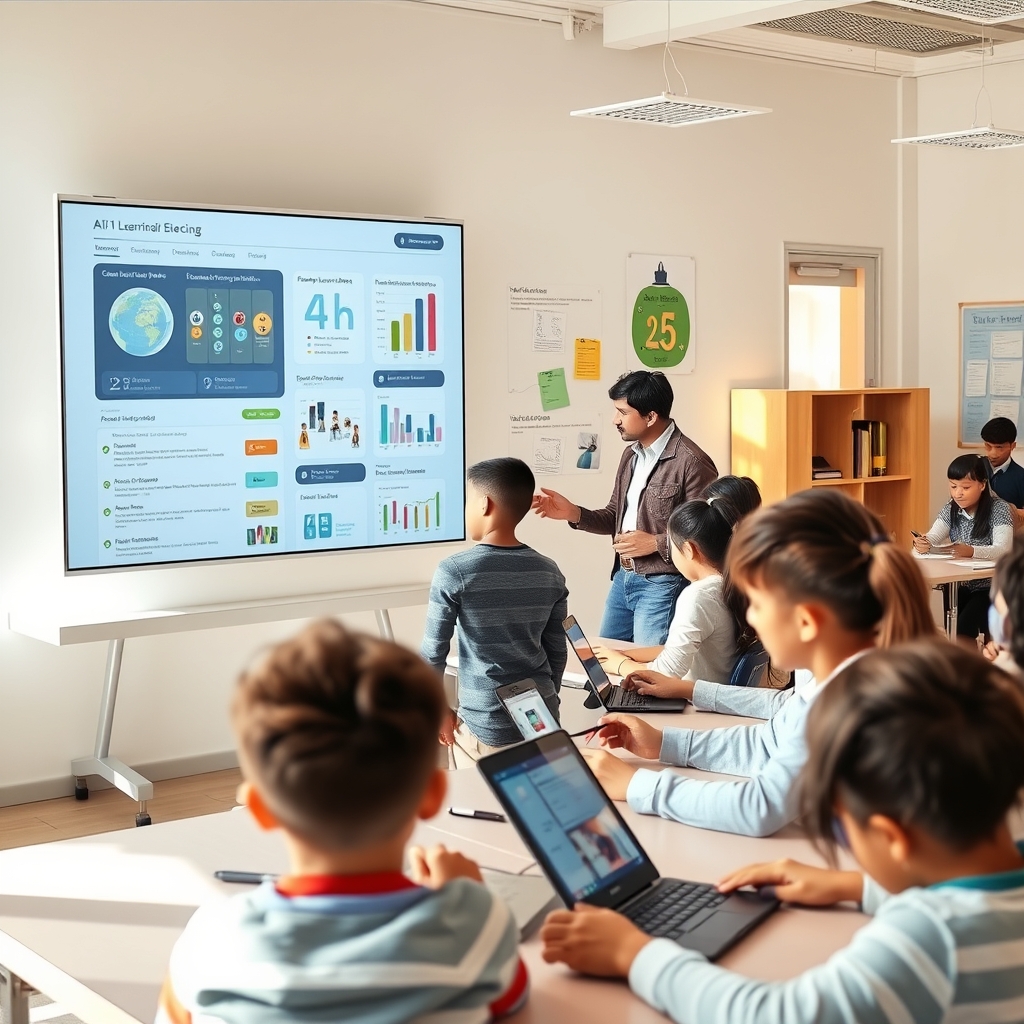
In an era where technology permeates every aspect of our lives, education stands at the precipice of a profound transformation. The integration of artificial intelligence (AI) into learning environments is not merely an upgrade—it is a reimagining of how knowledge is acquired, processed, and applied. Among the most promising frontiers of this evolution is the synergy between AI and blended learning, a dynamic duo that is reshaping digital fluency and fostering inclusive education in ways previously unimaginable.
The Blended Learning Revolution
Blended learning, the harmonious fusion of traditional classroom instruction with digital tools, has long been celebrated for its flexibility and adaptability. However, its true potential is only now being unlocked through the power of AI. By leveraging intelligent systems, educators can create learning experiences that are not only personalized but also deeply responsive to the needs of each student. Imagine a classroom where AI-driven platforms analyze a student’s progress in real-time, adjusting the difficulty of tasks, suggesting resources, and even identifying gaps in understanding before they become obstacles. This is not a distant dream but a reality taking shape in schools and universities worldwide.
The beauty of blended learning lies in its ability to cater to diverse learning styles. Some students thrive in hands-on, experiential environments, while others excel in self-paced, digital settings. AI enhances this versatility by providing tools that adapt to individual preferences, ensuring that no learner is left behind. For instance, an AI-powered tutoring system can offer additional explanations for visual learners, interactive simulations for kinesthetic learners, and audio summaries for auditory learners. This level of personalization was once the domain of one-on-one tutoring, but AI is democratizing it for the masses.
The Role of AI in Cultivating Digital Fluency
Digital fluency—the ability to navigate, evaluate, and create with digital tools—is no longer a luxury but a necessity in the 21st century. AI is playing a pivotal role in cultivating this fluency by embedding digital literacy into the fabric of education. Through generative tools, students can engage with AI to create content, solve problems, and explore complex concepts in ways that were previously inaccessible. For example, AI-driven platforms can help students generate essays, design experiments, or even compose music, all while teaching them the underlying principles of digital creation.
Moreover, AI is helping educators identify and address digital literacy gaps. Learning analytics, powered by AI, can track how students interact with digital tools, highlighting areas where they struggle and suggesting targeted interventions. This data-driven approach ensures that digital fluency is not just a checkbox but a continuous journey of growth and adaptation. As students become more proficient in using AI tools, they also develop critical thinking skills, learning to question, evaluate, and innovate with the technology at their fingertips.
Bridging Gaps: AI and Inclusive Education
One of the most profound impacts of AI in education is its potential to foster inclusivity. Traditional education systems often struggle to accommodate students with diverse needs, whether due to learning disabilities, language barriers, or socioeconomic challenges. AI is changing this narrative by providing tools that level the playing field. For instance, real-time translation tools can break down language barriers, while speech-to-text applications can assist students with dyslexia or other reading difficulties. AI-driven platforms can also adapt content to suit different cognitive abilities, ensuring that every student has access to the same high-quality education.
Inclusive education is not just about accessibility—it is about empowerment. AI enables students to take ownership of their learning journeys, providing them with the tools and resources they need to succeed. For example, an AI-powered learning management system can offer personalized recommendations for supplementary materials, ensuring that students who need extra support receive it without stigma. Similarly, AI can help educators identify unconscious biases in their teaching methods, fostering a more equitable learning environment for all.
The Future of Blended Learning: A Human-AI Partnership
While AI is a powerful tool, its true value lies in its ability to augment, rather than replace, human educators. The future of blended learning is not about machines taking over classrooms but about creating a symbiotic relationship between teachers and AI. Educators bring empathy, creativity, and contextual understanding to the table, while AI provides data-driven insights, scalability, and personalization. Together, they can create learning experiences that are both deeply human and technologically advanced.
Consider the possibilities: AI can handle administrative tasks, freeing up educators to focus on mentorship and student engagement. It can provide real-time feedback on student performance, allowing teachers to intervene early and effectively. AI can also facilitate interdisciplinary learning by connecting concepts across subjects, helping students see the bigger picture. For example, an AI-driven platform could link a history lesson on the Industrial Revolution with a science lesson on technological advancements, creating a richer, more interconnected learning experience.
Challenges and Considerations
Despite its promise, the integration of AI into blended learning is not without challenges. Privacy concerns, data security, and the ethical use of AI are critical issues that must be addressed. Schools and institutions must ensure that student data is protected and that AI tools are used responsibly. Additionally, there is a risk of over-reliance on technology, which could diminish the human element of education. Striking the right balance between AI and human interaction is essential to creating a learning environment that is both innovative and nurturing.
Another consideration is the digital divide. While AI has the potential to democratize education, it also risks exacerbating inequalities if access to technology is not equitable. Schools in underserved communities may lack the infrastructure or resources to implement AI-driven tools, leaving their students at a disadvantage. Addressing this divide requires concerted efforts from policymakers, educators, and technology providers to ensure that AI benefits all learners, not just a privileged few.
The journey of integrating AI into blended learning is still in its early stages, but the possibilities are boundless. As technology continues to evolve, so too will the ways in which we teach and learn. The key lies in embracing AI not as a replacement for human connection but as a catalyst for creating more dynamic, inclusive, and personalized educational experiences. In this new era, the classroom is no longer confined to four walls—it is a limitless space where curiosity is nurtured, potential is unlocked, and every student has the opportunity to thrive. The future of education is not just about what we learn but how we learn, and AI is the unseen force guiding us toward a brighter, more equitable horizon.



