
The Silent Architects: How AI and Digital Transformation Are Crafting the Future of Interdisciplinary and Experiential Learning
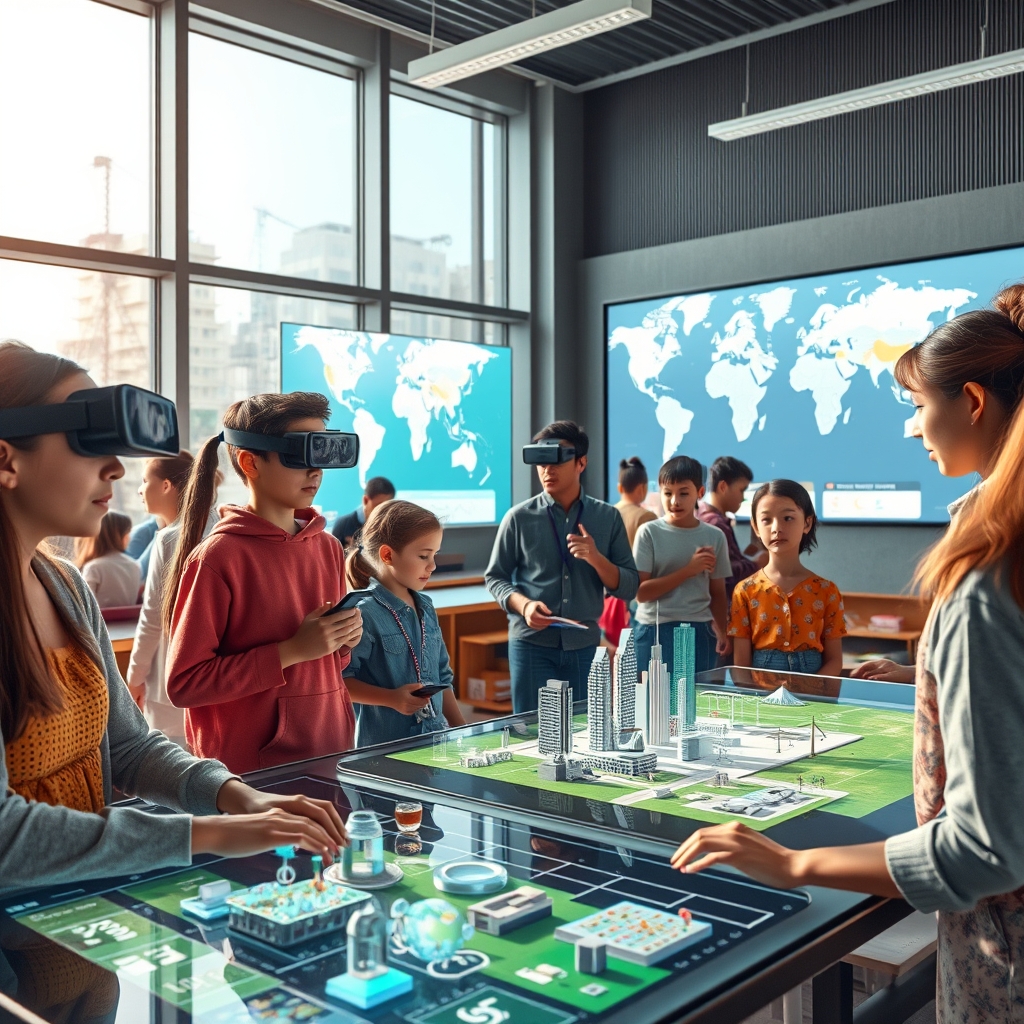
In the ever-evolving landscape of education, the fusion of artificial intelligence (AI) and digital transformation is not just a trend—it is a seismic shift redefining how knowledge is acquired, applied, and mastered. The traditional classroom, once confined by four walls and a chalkboard, is now a dynamic ecosystem where technology and pedagogy intertwine to create learning experiences that are as unique as the students themselves. At the heart of this transformation lies the promise of interdisciplinary and experiential learning, where AI acts as the silent architect, designing pathways that transcend subject silos and immerse learners in real-world problem-solving.
The Rise of Interdisciplinary Learning in the Digital Age
Interdisciplinary learning has long been championed as a way to prepare students for the complexities of the modern world, where challenges rarely fit neatly into a single academic discipline. However, integrating multiple subjects into a cohesive learning experience has often been a logistical challenge for educators. Enter AI, a tool that not only bridges gaps between disciplines but also personalizes the journey for each learner. By analyzing vast amounts of data, AI systems can identify connections between subjects—such as the intersection of mathematics and environmental science in climate modeling—and curate content that highlights these relationships. This approach not only deepens understanding but also fosters the kind of critical thinking required to tackle multifaceted global issues.
For example, platforms like IBM’s Watson Education leverage AI to create adaptive learning environments where students can explore topics like renewable energy through the lenses of physics, economics, and social studies. These systems dynamically adjust content based on a student’s progress, ensuring that learning remains engaging and relevant. The result is a classroom where boundaries between subjects blur, and students are encouraged to think holistically, just as they will need to in their future careers.
Experiential Learning: From Theory to Practice
While interdisciplinary learning breaks down academic barriers, experiential learning brings education to life by immersing students in hands-on, real-world experiences. AI amplifies this approach by providing tools that simulate complex scenarios, from virtual labs for STEM subjects to interactive historical reenactments. These simulations allow students to experiment, fail, and iterate in a risk-free environment, fostering resilience and creativity. For instance, AI-powered virtual reality (VR) platforms like Labster enable students to conduct experiments in a digital lab, complete with realistic equipment and safety protocols. This not only enhances engagement but also democratizes access to high-quality resources, particularly for schools with limited funding.
Moreover, AI-driven experiential learning extends beyond the classroom. Intelligent tutoring systems, such as Carnegie Learning’s MATHia, use AI to provide real-time feedback and guidance, acting as a personal mentor for students as they work through problems. These systems adapt to individual learning styles, offering hints and explanations tailored to each student’s needs. By blending technology with experiential pedagogy, AI ensures that learning is not just passive absorption of information but an active, iterative process of discovery.
The Role of Digital Literacy in an AI-Augmented World
As AI becomes more integrated into education, digital literacy emerges as a foundational skill for students and educators alike. Digital literacy is no longer just about navigating software or conducting online research; it encompasses the ability to critically evaluate information, understand the ethical implications of technology, and leverage digital tools to solve problems. AI plays a dual role in this landscape: it is both a tool for enhancing digital literacy and a subject of study in its own right. For example, AI-powered platforms like NewsGuard help students discern credible sources from misinformation, while tools like Google’s Teachable Machine allow them to explore the basics of machine learning through hands-on projects.
Educators, too, must adapt to this new paradigm. Professional development programs are increasingly incorporating AI literacy, equipping teachers with the skills to integrate technology into their pedagogy effectively. This shift is not about replacing teachers with machines but empowering them to use AI as a collaborator in the learning process. By fostering digital literacy, schools can ensure that students are not just consumers of technology but informed, ethical creators and innovators.
Equity and Inclusion: AI as a Catalyst for Change
One of the most profound impacts of AI in education is its potential to address long-standing inequities. Traditional education systems often struggle to accommodate diverse learning needs, leaving many students behind. AI, however, can level the playing field by providing personalized support to learners with varying abilities, backgrounds, and learning styles. For example, speech-to-text and text-to-speech tools powered by AI can assist students with disabilities, while translation services break down language barriers for non-native speakers. These technologies ensure that every student has the opportunity to thrive, regardless of their circumstances.
Furthermore, AI-driven learning analytics can identify at-risk students early, allowing educators to intervene with targeted support. Platforms like DreamBox Learning use AI to adapt math lessons in real time, ensuring that students who struggle with foundational concepts receive the help they need before falling behind. By making education more inclusive, AI is not just transforming how we teach but also who we reach.
The Future of Learning: A Collaborative Ecosystem
The integration of AI into education is not a solitary endeavor but a collaborative effort involving educators, students, policymakers, and technologists. As AI continues to evolve, so too must our approach to learning. The future of education lies in creating ecosystems where technology and human ingenuity coexist, each enhancing the other. For instance, AI can handle administrative tasks like grading and scheduling, freeing educators to focus on what they do best: inspiring and mentoring students. Meanwhile, students can leverage AI to explore their passions, whether through generative tools that help them create art or intelligent tutors that guide them through complex scientific concepts.
Yet, as we embrace this digital transformation, it is crucial to remain mindful of the ethical implications. AI systems must be designed with transparency, fairness, and accountability in mind to avoid perpetuating biases or reinforcing inequalities. Educators and technologists must work together to ensure that AI serves as a force for good, amplifying human potential rather than replacing it. In this way, the silent architects of AI can help craft a future where education is not just a means to an end but a lifelong journey of discovery, collaboration, and growth.
The classrooms of tomorrow are being shaped today, not by the limitations of the past, but by the boundless possibilities of technology and human creativity. As AI continues to weave its way into the fabric of education, it offers a unique opportunity to reimagine learning as an inclusive, interdisciplinary, and deeply experiential endeavor. The question is no longer whether AI will transform education, but how we will harness its power to create a future where every learner can thrive.



