
The Synergy of AI and Project-Based Learning: Cultivating Real-World Problem Solvers in the Digital Age
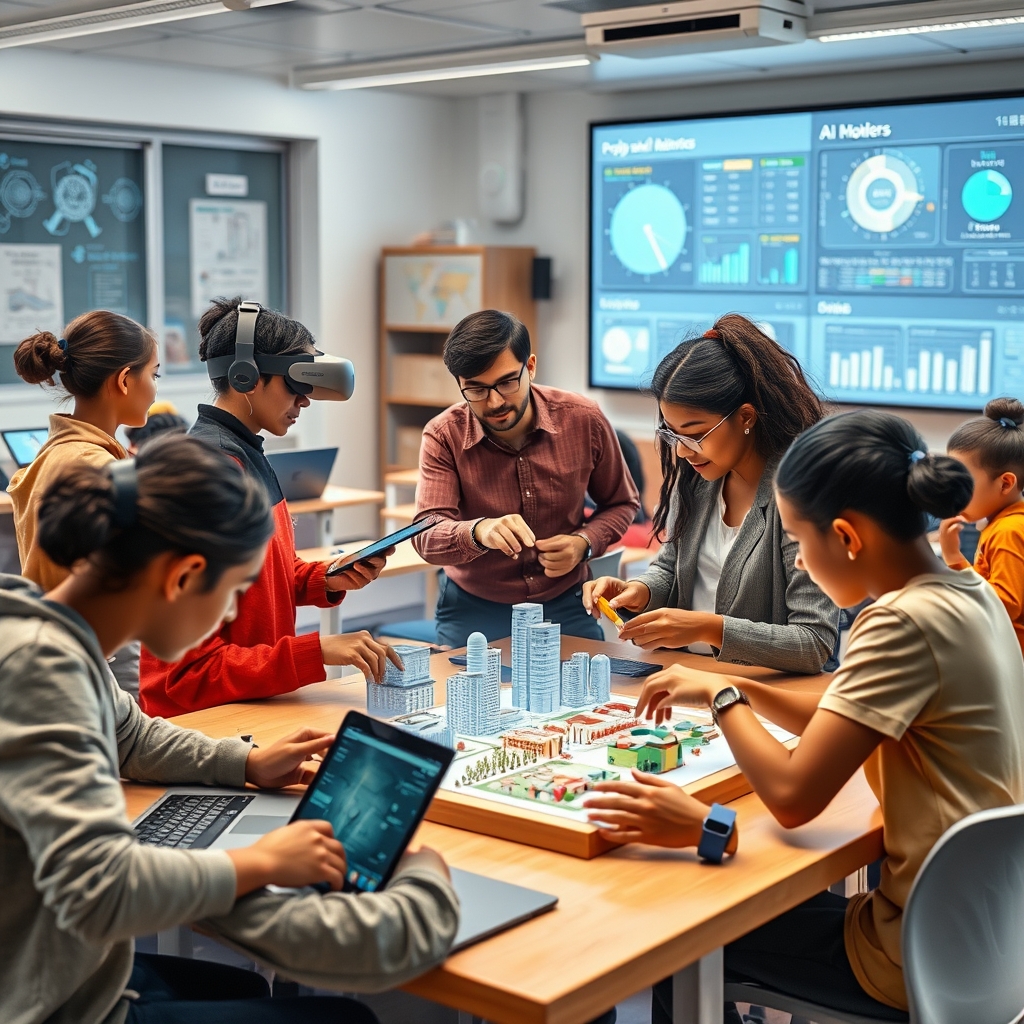
In an era where information is abundant but attention spans are fragmented, education must evolve beyond rote memorization and standardized testing. The integration of artificial intelligence (AI) with project-based learning (PBL) is emerging as a transformative force, equipping students with the skills to navigate complexity, collaborate effectively, and innovate in an increasingly digital world. This fusion is not just about leveraging technology—it’s about reimagining how students engage with knowledge, apply it to real-world challenges, and develop the critical thinking necessary to thrive in the 21st century.
The Core of Project-Based Learning
Project-based learning shifts the focus from passive absorption of facts to active exploration of problems. Students work on extended projects that require them to investigate questions, design solutions, and present their findings. Unlike traditional assignments, PBL emphasizes interdisciplinary connections, collaboration, and the application of knowledge in authentic contexts. For example, a project on climate change might integrate science, mathematics, social studies, and even art, as students analyze data, propose policy solutions, and create awareness campaigns.
However, PBL is not without its challenges. Teachers often struggle with designing projects that are both rigorous and engaging, ensuring all students participate meaningfully, and providing timely, personalized feedback. This is where AI steps in, not as a replacement for human educators, but as a powerful ally that enhances the learning experience.
AI as the Catalyst for Personalized PBL
One of the most significant advantages of AI in education is its ability to personalize learning. In a PBL environment, AI can analyze student performance in real-time, identifying strengths, weaknesses, and learning preferences. For instance, an intelligent tutoring system might detect that a student is struggling with data analysis in a science project and provide targeted resources, such as interactive simulations or step-by-step guides, to help them master the concept. This level of personalization ensures that no student is left behind, while also challenging advanced learners with more complex tasks.
AI also streamlines the feedback process, which is critical in PBL. Traditionally, teachers spend hours grading projects and providing written feedback, often leading to delays that diminish the impact of their insights. AI-powered tools can automate parts of this process, such as assessing written components for clarity, coherence, and depth of analysis. This allows teachers to focus on higher-order feedback, such as guiding students in refining their problem-solving strategies or encouraging creative thinking. Moreover, AI can facilitate peer feedback by matching students with complementary skills, fostering a collaborative learning culture.
Generative AI: A Tool for Creativity and Innovation
Generative AI tools, such as large language models and AI-driven design platforms, are opening new frontiers in PBL. These tools enable students to brainstorm ideas, generate prototypes, and even simulate real-world scenarios. For example, in a project on urban planning, students could use AI to create 3D models of sustainable cities, test different design solutions, and receive instant feedback on their feasibility. Similarly, AI can help students draft project proposals, refine their arguments, or even generate code for a software development project.
However, the use of generative AI in PBL raises important questions about academic integrity and the role of human creativity. Educators must guide students in using these tools ethically, emphasizing that AI is a collaborator, not a crutch. The goal is to teach students how to leverage AI to enhance their work while maintaining their unique voice and critical perspective. This approach not only prepares them for a future where AI is ubiquitous but also cultivates a mindset of responsible innovation.
Bridging the Gap Between Classroom and Real World
One of the most compelling aspects of AI-enhanced PBL is its ability to bridge the gap between classroom learning and real-world application. AI can simulate complex scenarios that would be difficult or impossible to replicate in a traditional classroom. For instance, students studying public health could use AI to model the spread of a disease, analyze the impact of different intervention strategies, and present their findings to a virtual panel of experts. These immersive experiences not only deepen understanding but also build confidence in tackling real-world challenges.
Furthermore, AI can connect students with external resources and experts. For example, an AI-powered platform could match students with mentors in their field of interest, facilitate virtual internships, or provide access to global datasets for research projects. This exposure to real-world contexts and professionals enriches the learning experience, making it more relevant and inspiring for students.
Equity and Inclusion in AI-Enhanced PBL
While AI has the potential to democratize education, it also risks exacerbating existing inequities if not implemented thoughtfully. Access to technology, digital literacy, and the quality of AI tools can vary widely across schools and communities. To ensure that AI-enhanced PBL benefits all students, educators and policymakers must prioritize equitable access to resources, training, and support. This includes providing devices and reliable internet access, offering professional development for teachers, and designing AI tools that are inclusive and culturally responsive.
Inclusive AI tools can adapt to diverse learning needs, such as providing multilingual support for English language learners or offering alternative formats for students with disabilities. For example, AI-powered speech-to-text tools can help students with dyslexia participate fully in written projects, while visual aids and simulations can make complex concepts more accessible to students with different learning styles. By prioritizing equity, AI-enhanced PBL can create learning environments where every student has the opportunity to succeed.
The Future of AI and Project-Based Learning
As AI continues to evolve, its integration with PBL will only deepen, offering even more sophisticated tools for learning and collaboration. Imagine a future where AI-powered virtual reality (VR) environments allow students to step into historical events, conduct virtual science experiments, or collaborate with peers from around the world in real-time. These advancements will further blur the lines between education and real-world problem-solving, preparing students for careers that may not yet exist.
Yet, the success of AI-enhanced PBL ultimately depends on the human element. Teachers play a crucial role in designing meaningful projects, fostering a growth mindset, and nurturing the social-emotional skills that AI cannot replicate. The most effective learning experiences will always be those that combine the best of technology with the irreplaceable guidance, empathy, and inspiration of educators. As we navigate this digital transformation, the goal remains clear: to empower students to become not just consumers of knowledge, but creators, innovators, and problem solvers who can shape a better future for all.
The journey of integrating AI with project-based learning is just beginning, but its potential to transform education is undeniable. By embracing this synergy, we can move beyond traditional paradigms and create learning experiences that are dynamic, inclusive, and deeply connected to the world beyond the classroom. The students of today will be the leaders of tomorrow, and it is our responsibility to equip them with the tools, skills, and mindset they need to thrive in an ever-changing landscape. The fusion of AI and PBL is not just about preparing students for the future—it’s about empowering them to create it.



