
The Dawn of AI-Augmented Interdisciplinary Learning: Breaking Silos and Building Bridges in Education
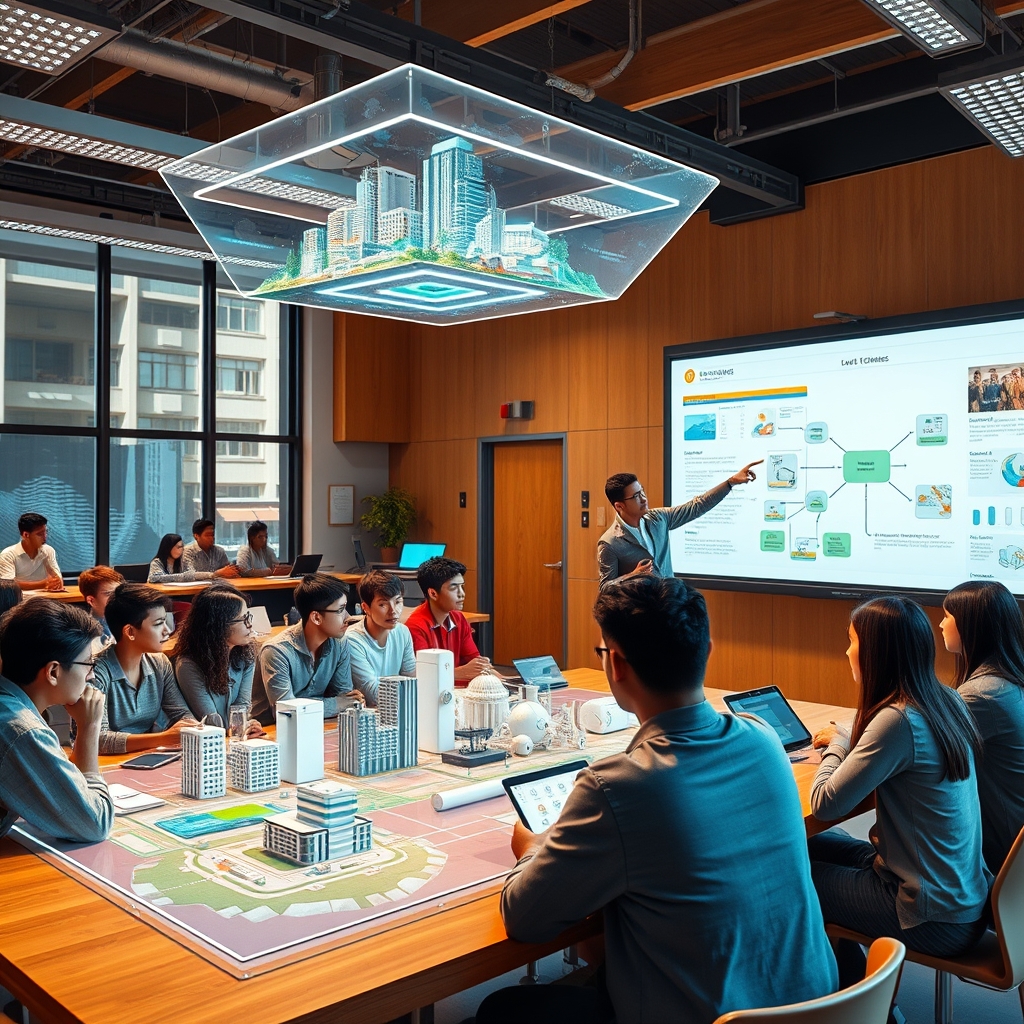
The traditional boundaries of education are dissolving. For centuries, subjects like mathematics, science, literature, and history have been taught in isolated silos, reinforcing the idea that knowledge exists in discrete, unrelated compartments. Yet, the challenges of the 21st century—climate change, global health crises, technological disruption—demand a different kind of thinking. These are not problems that can be solved through a single lens. They require interdisciplinary collaboration, the ability to synthesize ideas from multiple fields, and the creativity to apply knowledge in novel ways. Artificial intelligence is emerging as a powerful catalyst in this transformation, enabling educators to design learning experiences that transcend disciplinary boundaries and prepare students for a world where complexity is the norm.
The Limitations of Siloed Learning
For decades, the education system has operated under a model that prioritizes specialization. Students are often funneled into tracks—STEM, humanities, arts—long before they have the opportunity to explore how these fields intersect. While specialization has its merits, this approach can inadvertently stifle creativity and limit problem-solving abilities. When students are taught to see subjects as separate entities, they struggle to make connections between them, missing out on the rich interplay of ideas that drives innovation. For example, a student studying environmental science might never explore how policy, economics, or even art can influence sustainability efforts. Similarly, a computer science student might overlook the ethical implications of AI or the role of storytelling in designing user-friendly technology.
The consequences of siloed learning extend beyond the classroom. In the workforce, professionals are increasingly expected to collaborate across disciplines, yet many lack the experience or confidence to do so effectively. Employers report that graduates often struggle with adaptability, critical thinking, and the ability to apply knowledge in real-world contexts. These skills are not innate; they must be cultivated through intentional, interdisciplinary learning experiences. The question, then, is how to create an educational environment that fosters these abilities without sacrificing depth of knowledge in any one area.
AI as the Bridge Between Disciplines
Artificial intelligence is uniquely positioned to address this challenge. Unlike traditional educational tools, AI can analyze vast amounts of data, identify patterns, and generate insights that span multiple disciplines. This capability makes it an invaluable resource for designing interdisciplinary learning experiences that are both engaging and effective. For instance, AI-powered platforms can curate personalized learning pathways that weave together concepts from different subjects, helping students see the connections between them. A student studying the history of the Industrial Revolution, for example, might be guided to explore its impact on economics, technology, and even literature, with AI suggesting relevant resources and activities tailored to their interests and learning style.
Generative AI tools take this a step further by enabling students to create interdisciplinary projects that reflect their unique perspectives. Imagine a high school student using AI to design a sustainable city. The project could integrate principles of engineering, environmental science, urban planning, and even sociology, with AI assisting in everything from generating 3D models to analyzing data on energy consumption. Such projects not only deepen understanding but also foster critical thinking, as students must evaluate trade-offs, consider ethical implications, and iterate on their designs based on feedback. In this way, AI acts as a collaborator, helping students navigate the complexities of interdisciplinary work while encouraging them to take ownership of their learning.
The Role of Learning Analytics in Interdisciplinary Education
Learning analytics, another AI-driven tool, plays a crucial role in supporting interdisciplinary education by providing educators with real-time insights into student progress. Traditional assessment methods, such as standardized tests, often fail to capture the nuanced skills developed through interdisciplinary learning, such as collaboration, creativity, and systems thinking. AI-powered analytics, however, can track these competencies by analyzing data from a variety of sources, including project outcomes, peer feedback, and self-reflections. This allows educators to identify gaps in understanding, tailor instruction to individual needs, and measure the effectiveness of interdisciplinary approaches.
For example, an AI system might detect that a student excels in scientific reasoning but struggles with integrating historical context into their projects. The system could then recommend targeted resources or activities to help the student strengthen this skill, ensuring a more balanced and holistic learning experience. Over time, these insights can inform curriculum design, helping educators refine interdisciplinary programs to better meet the needs of their students. By leveraging learning analytics, schools can move beyond one-size-fits-all education and create dynamic, responsive learning environments that prepare students for the interconnected world they will inherit.
Fostering Inclusive and Equitable Interdisciplinary Learning
While AI holds immense promise for interdisciplinary education, its potential can only be fully realized if it is implemented in a way that prioritizes equity and inclusion. Historically, access to interdisciplinary learning opportunities has been uneven, with students from under-resourced schools often lacking the same exposure to advanced courses, extracurricular activities, or technology as their peers. AI has the power to democratize these experiences, but only if it is designed and deployed with intentionality. This means ensuring that AI tools are accessible to all students, regardless of their background, and that they are used to amplify diverse voices and perspectives rather than reinforce existing biases.
One way to achieve this is by integrating AI into project-based learning (PBL) frameworks that emphasize real-world problem-solving. PBL naturally lends itself to interdisciplinary work, as it requires students to draw on multiple fields to address complex challenges. AI can enhance PBL by providing students with access to global datasets, virtual collaboration tools, and personalized feedback, leveling the playing field for those who might not otherwise have these resources. For instance, a group of students in a rural school could use AI to analyze climate data from around the world, collaborate with peers in other countries, and develop a community-based sustainability plan. Such experiences not only build interdisciplinary skills but also empower students to see themselves as agents of change in their own communities.
Preparing Educators for the AI-Augmented Classroom
The success of AI-augmented interdisciplinary learning hinges on the ability of educators to integrate these tools effectively into their teaching. This requires more than just technical training; it demands a shift in mindset. Teachers must move from being the sole source of knowledge in the classroom to facilitators of learning, guiding students as they explore interdisciplinary connections and apply their knowledge in meaningful ways. Professional development programs must equip educators with the skills to design AI-enhanced curricula, interpret learning analytics, and foster inclusive, student-centered learning environments.
Moreover, educators must be empowered to critically evaluate AI tools, ensuring that they align with pedagogical goals and ethical standards. Not all AI is created equal, and some tools may inadvertently perpetuate biases or limit student agency. By involving teachers in the selection and implementation process, schools can ensure that AI is used in ways that enhance, rather than undermine, educational equity. This collaborative approach also fosters a culture of innovation, where educators feel supported in experimenting with new technologies and sharing best practices with their peers.
The Future of Learning: A Tapestry of Ideas
The shift toward AI-augmented interdisciplinary learning is not just about preparing students for the jobs of the future; it is about cultivating a generation of thinkers who can navigate the complexities of an interconnected world with curiosity, creativity, and compassion. By breaking down the silos that have long defined education, AI is helping to create a learning environment where knowledge is not fragmented but woven together into a rich tapestry of ideas. This approach does not diminish the importance of deep expertise in any one field. Rather, it recognizes that true mastery lies in the ability to connect, synthesize, and apply knowledge across disciplines. As AI continues to evolve, so too will the possibilities for interdisciplinary education, offering students the tools they need to tackle the challenges of tomorrow with confidence and ingenuity. The classroom of the future is not a place where subjects are taught in isolation, but a dynamic space where boundaries blur, ideas collide, and learning knows no limits.



